
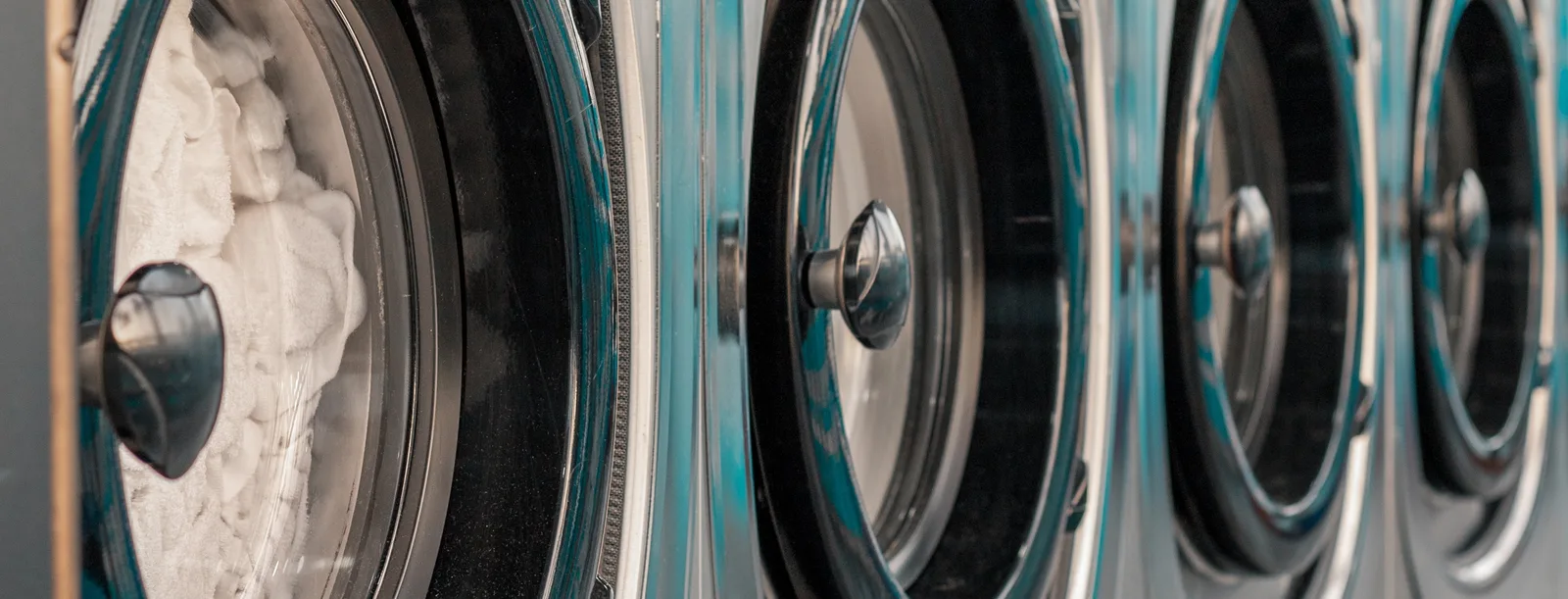

A commercial laundry serving hotels and healthcare facilities needs insurance that matches the volume of linens in its care, the value of a plant built for continuous production, and the contracts that come with large accounts. The core program includes property and equipment breakdown, business income, coverage for customers’ goods, general liability, commercial auto, and workers’ compensation, with umbrella limits as accounts grow.
Why commercial laundries are a different risk
A commercial laundry is closer to a factory than to a laundromat. Linens arrive by the truckload, move through high-capacity washers and dryers, and leave folded on a schedule set by the customer. Accounts may include hotels, resorts, hospitals, clinics, long-term care homes, and athletic facilities.
That model concentrates value and dependency. At any moment the plant may hold a large volume of linens belonging to several customers, and those customers may rely on the plant every day. Our guide to laundry business insurance covers laundry operations broadly, while this post focuses on plants that serve hospitality and healthcare accounts.
Linens in your care
The biggest exposure in a commercial laundry is other people’s property. Hotel and healthcare linens may be owned by the customer, rented from you, or rented from an outside rental company. Each arrangement changes who bears the loss if a fire, flood, or theft destroys a load.
Customer-owned linens need bailee’s coverage or a similar coverage for goods in your care. Set the limit by the value on hand at your busiest moment, not an average day, and include linens in transit and staged on carts. Our bailee’s coverage explainer walks through the concept.
Protecting a production plant
Commercial plants run tunnel washers, large dryers, flatwork ironers, folders, conveyors, boilers, and compressors. Replacing that equipment takes time as well as money. Property insurance should carry limits based on current replacement cost, and building coverage should reflect the specialized utilities a plant needs.
Fire remains the most serious property risk, often starting in dryer exhaust and lint accumulation. Routine cleaning and inspection, described in our dryer-lint fire prevention checklist, matter as much in a plant as in a storefront. Mechanical failure needs equipment breakdown coverage, because the basic property form does not respond to it.
When accounts depend on you
A hotel cannot pause housekeeping and a hospital cannot pause patient care while a laundry rebuilds. If your plant goes down, customers will find another source quickly, and some may not come back. Business income coverage replaces lost income and pays continuing expenses after a covered loss. Extra expense coverage pays the cost of keeping service going, such as processing at another plant or renting temporary equipment.
Ask how the policy handles a shutdown caused by equipment breakdown or by a utility failure away from your premises, and how long the coverage lasts after the plant reopens while accounts return. Our guide to business income coverage explains the mechanics.
Healthcare linens and worker safety
Healthcare accounts bring handling expectations for soiled linen. Workers in sorting areas may encounter contaminated items, sharps left in linens, and chemical exposure from cleaning agents. These are worker safety questions above all, and they shape the workers’ compensation side of the program.
Written procedures, protective equipment, training, and clear separation of soiled and clean areas reduce injuries. The OSHA and NIOSH resources on laundry and drycleaning hazards are useful references for plant safety programs. Underwriters will ask about these practices, and documented programs usually present better at renewal.
Real-World Scenario: A commercial laundry serves several hotels and a regional hospital. A fire starts in a dryer exhaust duct overnight and spreads through the finishing area, destroying a large volume of hotel-owned linens and idling the plant. The property policy pays for the building and equipment, bailee’s coverage pays the hotels for their linens, and business income with extra expense pays to have work processed at another plant for several weeks. Because service never stopped, the hotels and the hospital stay on as accounts.
Contracts with hotels and hospitals
Large accounts arrive with service agreements. Expect requests for additional insured status, stated limits for general liability and auto, waivers of subrogation, and indemnity clauses. Healthcare agreements may add handling and documentation expectations. Each clause is a promise your policies must support.
Our post on laundromat business insurance requirements explains how to read these terms. Send each contract to your agent before signing, and track certificate renewals by account. General liability and umbrella limits are often set by the largest contract on your books.
Delivery fleets
Commercial laundries usually run their own trucks or vans. Each vehicle needs commercial auto coverage, with drivers listed and records checked. Linens in the truck need coverage too, since auto liability does not pay for cargo. Our post on commercial auto for multiple vehicles covers fleet management and scheduling questions.
Drivers for commercial laundries often work early mornings and tight windows at hotel loading docks and hospital service entrances. Backing accidents, dock injuries, and damage to customer property during delivery are common. Driver training, dock procedures agreed with each account, and a clear process for reporting incidents on the spot help keep those claims small. Ask your agent whether damage your driver causes at a customer’s dock falls under auto or general liability, because the answer depends on whether the vehicle was involved.
Linens in the truck deserve the same attention as linens in the plant. A truck fire, a rollover, or a theft from a parked trailer can destroy a full delivery. Confirm that coverage for customers’ goods extends to goods in transit and to loaded trailers parked overnight, and that the transit limit fits your largest delivery. A plant that ships to hotels and hospitals on the same truck should size that limit for the combined load rather than for a typical stop.
When a fire hits the finishing floor
Fire in a commercial laundry rarely stays small. Lint collects in exhaust ducts, on beams, and behind equipment, and a spark in a dryer can travel quickly. A serious fire can destroy equipment, the building, and customer linens at the same time, while also stopping service to every account.
That is why the program has to be coordinated. Property coverage pays for the building and equipment, bailee’s coverage pays customers for their linens, business income replaces lost earnings, and extra expense keeps deliveries moving. If any piece is missing or undersized, the gap shows up at the worst moment. Our post on what laundromat insurance pays after a dryer fire explains how those coverages work together after a loss, and the same principles apply at plant scale.
Ask your agent to walk through a fire scenario with you before renewal. Picture the busiest day of the week, the largest accounts on the floor, and a plant that cannot run for a long stretch. Then check whether each limit would hold.
Choosing limits for a high-volume plant
Limits for a commercial laundry should be set by peak exposure, not averages. The value of linens in care on a busy day, the replacement cost of a full production line, and the income at risk if your largest account leaves after a shutdown are the numbers that matter. Each should be estimated with your own records and reviewed as accounts change.
Liability limits are often set by contracts. A hotel group or hospital system may require limits that exceed what a smaller laundry would choose on its own, and an umbrella is the usual way to reach them. Our post on umbrella insurance for laundromats explains how those higher limits sit above general liability, auto, and employers liability.
Revisit limits at every renewal and whenever you sign a significant account. A plant that adds a large healthcare contract mid-year may outgrow its program well before the policy comes up for renewal.
How to build the program
Inventory the plant, its equipment, the linens in care at peak, the fleet, the workforce, and every account contract. Match each to a coverage and size limits for a busy day. Confirm how business income would respond if the plant were down for an extended period.
The SBA guide to business insurance and the NAIC glossary of insurance terms are helpful general references. If your plant also runs linen or uniform routes, our linen service insurance guide covers route-specific issues. When you want a commercial laundry program built around your accounts, request a quote and include the insurance sections of your largest contracts.