
States we serve · Washington
Washington Laundromat Insurance
A Washington laundromat carries a structure a national package never sizes — workers’ compensation bought from the state fund rather than a carrier, earthquake excluded from the base property form, and the wash-dry-fold bailee gap general liability leaves open across the Puget Sound corridor.
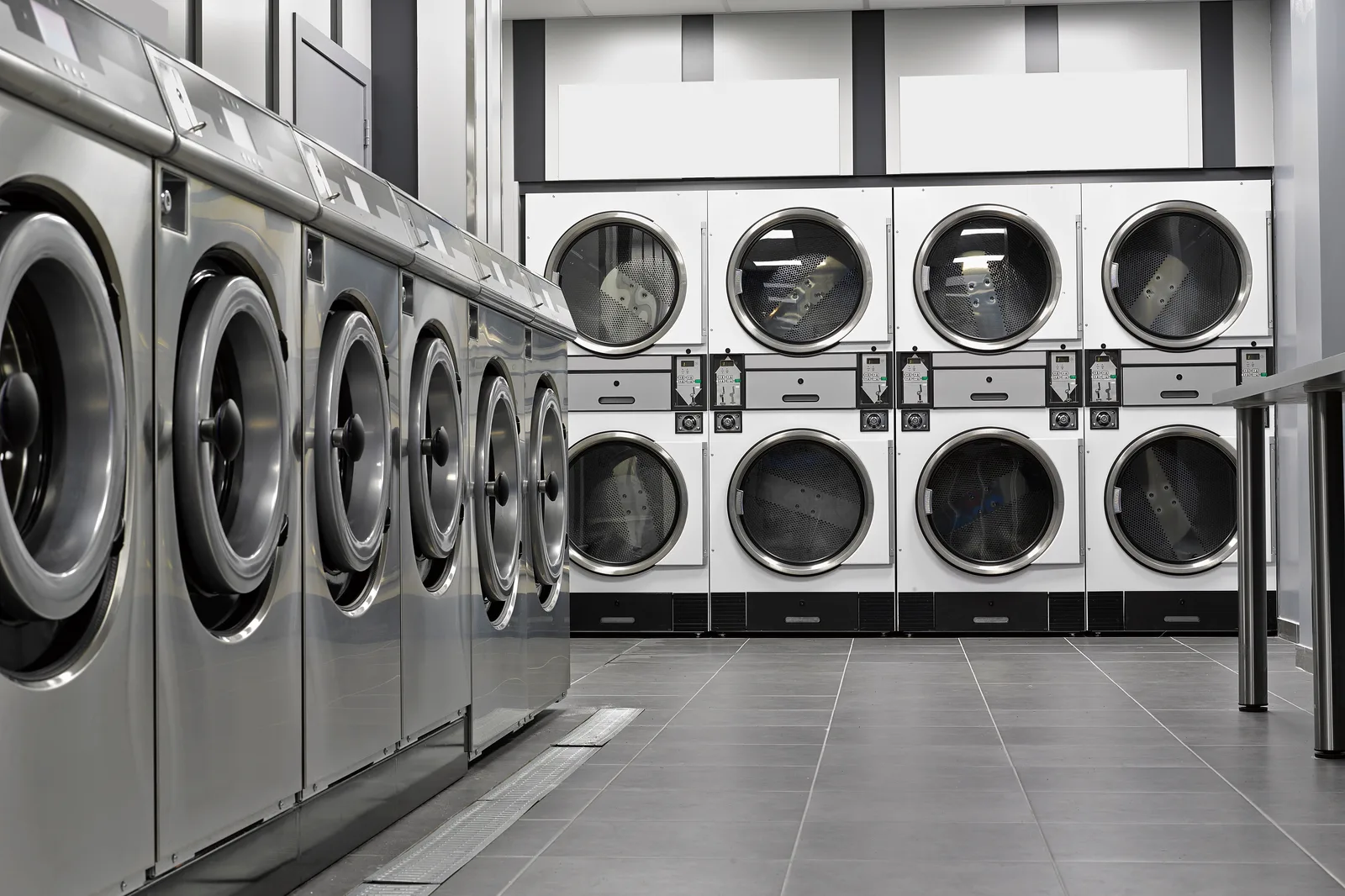

Washington is one of a small handful of states where a laundromat owner cannot buy workers’ compensation from an insurance company at all. The coverage is sold by the state, through the Department of Labor and Industries, and that single fact reshapes how an attended laundromat program is built — the carrier package covers the liability, property, and customer-laundry exposures, while the staff-injury line routes somewhere else entirely.
Layered on top of that structure is the seismic reality of the Puget Sound metro. The Cascadia subduction zone offshore and the Seattle fault running beneath the urban core put a real earthquake exposure under Seattle, Tacoma, and Bellevue — and the base property form excludes the peril. A laundromat here needs the shake risk on the building and the anchored machine fleet addressed deliberately, not assumed.
This page walks through what a Washington laundromat policy costs to build, the state regulators and the exclusive-fund structure that move it, the coverage lines that make it up, the risks specific to operating here, the claims we see, and the major markets where the exposure concentrates.
- 48 states licensed and writing laundromat coverage, Washington included
- 15+ specialty markets on the panel
- 1–2 hr quote turnaround on most submissions
- WA exclusive-fund and Cascadia-seismic specialists
Running an attended site in the Puget Sound metro and unsure how the L&I workers’ compensation piece fits alongside your carrier package? Start a quote and we will structure both halves.
What Washington Laundromat Insurance Costs
There is no single price for Washington laundromat coverage, because the premium is assembled from the operation’s specifics. The drivers below are what move the number — and the workers’ compensation piece sits outside the carrier premium entirely.
- Seismic profile. The fault exposure under the Puget Sound metro is one of the largest single property-rate drivers. A Seattle or Tacoma address carries an earthquake loading a low-seismic inland county does not.
- Workers’ compensation through L&I. An attended site’s workers’ compensation cost is set by the Department of Labor and Industries and tracks payroll and the laundry-attendant risk class — a separate line item from the carrier package, not bundled into it.
- Wash-dry-fold volume. The bailee limit is sized to how much customer laundry moves through the operation — higher order volume means a higher bailee exposure.
- Machine count, age, and value. The property and equipment-breakdown premium tracks the number, age, and replacement value of the washers and dryers.
- Construction type and commercial rent. Square footage, build, and the rent the business income limit replaces all feed the property rate — and Eastside rents push that limit up sharply.
- Freeze exposure. An eastern Washington address carries a continental winter freeze profile that raises the burst-pipe and water-damage exposure the maritime west side largely avoids.
Washington Laundromat Regulations & Licensing
Insurance regulation
Commercial policy forms in the state are filed under and regulated by the Washington State Office of the Insurance Commissioner — note the "Office of the Commissioner" structure rather than a department-of-insurance model. The OIC oversees rate filings, carrier licensing, and the consumer-complaint process for the laundromat lines.
City and county overlays
Washington laundromats answer to local business licensing, zoning, and signage rules that vary across the Puget Sound cities and the eastern counties.
Workers’ compensation — exclusive state fund
Washington is an exclusive-state, or monopoly, workers’ compensation jurisdiction. An attended laundromat buys the coverage from the Washington Department of Labor and Industries — the state fund — rather than from a commercial carrier, with qualified employers permitted to self-insure. That structure splits a full-service program: the liability, property, equipment-breakdown, and bailee lines come from the specialty market, while the staff-injury coverage routes through L&I. Federal worker-safety rules on the laundry floor follow the OSHA 29 CFR 1910 General Industry Standards for machine guarding and lockout/tagout.
Environmental and solvent oversight
Dry-cleaner solvent and pollution oversight runs through the Washington State Department of Ecology. A combined laundromat and dry-cleaner operation needs the pollution exposure underwritten to the solvent system in use, and the federal dry-cleaning solvent-emission standard is the EPA Perchloroethylene Air Emission Standard for Dry Cleaning Facilities (40 CFR Part 63, Subpart M).
Fire and building safety
Dryer-lint fire is a leading laundromat loss, and fire-prevention standards are administered through the Washington State Fire Marshal’s Office within the Washington State Patrol, alongside local fire authorities. A documented duct-cleaning schedule is one of the first items a property underwriter asks about.
Tax and sales
Washington applies its business-and-occupation tax and sales-tax treatment to self-service laundry, wash-dry-fold, and vending revenue by service type. The classification affects the revenue base the business income limit is built on, so it belongs in the conversation when the program is sized.
Coverage Lines for a Washington Laundromat
A Washington laundromat program is built from four core lines, with the workers’ compensation piece coordinated through the state fund.
- General liability. Third-party bodily injury and property damage — most commonly the customer who slips on a wet floor. High-traffic Seattle and Tacoma counters carry elevated slip frequency.
- Property insurance with equipment breakdown. The building, contents, and machines against fire, water damage, theft, and vandalism — and the equipment-breakdown sub-coverage for the mechanical and electrical failure of washers, dryers, and water-heating systems. Earthquake is excluded from the base form and added as a separate layer.
- Bailee’s coverage. Damage to or loss of customers’ wash-dry-fold and drop-off laundry while it is in your care — the exposure general liability excludes by design, sized to the order volume.
- Workers’ compensation. Employee medical care and lost wages for attendant injuries — purchased through the Department of Labor and Industries fund in Washington, not from a commercial carrier.
One line sits outside this list: a laundromat running pickup-and-delivery routes needs a separate commercial auto policy for the vehicle, while the bailee transit sublimit covers the customer laundry riding inside it.
Weighing a coin-op to wash-dry-fold upgrade? Compare the self-service program with the attended full-service model, then request a Washington quote.
Common Laundromat Risks in Washington
The exposures that move a Washington laundromat program cluster around the seismic and freeze perils unique to the state, layered on top of the fire and customer-property risks every laundromat carries.
- Earthquake. The Cascadia subduction zone and the Seattle fault put the building, the anchored machine fleet, and the rebuild window at the center of the property conversation — and the base form excludes the peril. The structural and equipment loss runs to a layered property placement with equipment breakdown.
- Attendant injury under the state fund. Lifting heavy wet wash-dry-fold orders, reaching into hot dryer drums, and long folding shifts drive the injuries an attended site files — and in Washington those claims run through the L&I workers’ compensation fund rather than a carrier.
- Slip-and-fall. High-traffic attended counters in the Puget Sound metro keep more people moving across wet floors, raising the third-party injury frequency that runs to general liability.
- Dryer-lint fire. Lint buildup in dryer ducts is a leading laundromat fire cause statewide, and a missing duct-cleaning schedule narrows the carrier set quickly.
- Winter freeze and burst pipes. An eastern Washington site faces a continental freeze profile, and a burst supply line floods the wash floor and closes the operation — a property and business income exposure.
- Customer-laundry loss. A ruined or lost wash-dry-fold order is a bailee claim, not a general-liability one — the line every Puget Sound full-service site needs sized to its order volume.
Common Washington Laundromat Claims We See
The claims that come through a Washington program are qualitative below — appetite and adjuster handling vary across the specialty market, and none name specific carriers.
- Seismic structural and equipment loss. A shake event cracks the structure and shifts the anchored machine fleet. The earthquake layer responds to the physical loss and the business income while the site is closed for repairs.
- Attendant injury through L&I. A back strain lifting a heavy order or a burn from a hot dryer drum. The Department of Labor and Industries fund pays medical and lost wages — the staff line every attended Washington site coordinates.
- Ruined or lost wash-dry-fold order. A drop-off load processed on the wrong cycle or a bag that cannot be reconciled to the intake ticket. The bailee line responds and the ticket is the record the carrier works from.
- Customer slip-and-fall. A customer goes down on a wet floor at a high-traffic Seattle or Tacoma counter. General liability handles the bodily-injury claim and any settlement.
- Winter burst-pipe shutdown. A frozen supply line ruptures at an eastern Washington site and floods the wash floor. Property pays the physical damage; business income replaces the lost revenue during repairs.
- Equipment breakdown. A washer motor burns out or a water-heating system ruptures mid-shift. Equipment breakdown pays to repair or replace the unit and can pay the income loss while it is down.
Major Washington Laundromat Markets
We write laundromat coverage across Washington. The submarkets below each carry a distinct underwriting profile.
Seattle
Seattle sits directly over the Seattle fault and inside the Cascadia subduction zone, so the seismic structural and anchored-equipment exposure dominates the property underwriting — earthquake is excluded from the base form and has to be layered in for both the building and the machine fleet.
Tacoma
Tacoma combines its port-and-industrial corridor density with the same Puget Sound seismic profile, producing high-traffic attended laundromats whose slip-and-fall liability frequency and earthquake layer both run above a low-density inland site.
Bellevue and the Eastside
Bellevue and the Eastside carry some of the highest commercial rents in the state, which pushes the business income limit up — a covered closure here has to replace a larger monthly rent obligation while the operation rebuilds, so that limit gets the most attention at quote.
Everett and Snohomish County
Everett anchors a growing Snohomish County residential base that supports neighborhood wash-dry-fold demand, so the bailee exposure on customer laundry — and the attendant headcount feeding the L&I workers’ compensation account — both scale with the order volume here.
Spokane and Eastern Washington
Spokane runs a continental freeze profile that the maritime west side does not, so the burst-pipe and supply-line water-damage exposure on the property program is the distinct driver — frozen-pipe loss and the resulting business income closure are underwritten with that winter risk in view.
Vancouver and the I-5 Corridor
Vancouver sits at the southern end of the I-5 corridor on the Columbia River, where cross-border traffic and a dense south-county population support high-volume laundromats whose elevated foot traffic raises the general-liability slip frequency above a rural site.
Olympia and the South Sound
Olympia, the state capital, carries a steady institutional and residential laundromat base on softer South Sound soils that can amplify seismic shaking, so the earthquake layer is sized to the local soil profile rather than a statewide average.
Why Washington Laundromat Owners Choose Laundromat Guard Insurance
We place laundromat coverage across 48 U.S. states through a 15-carrier specialty panel that writes the laundromat and dry-cleaner classes specifically. For Washington that means structuring the program around the exclusive-fund reality — coordinating workers’ compensation through the Department of Labor and Industries while the carrier package carries the general liability, property, and bailee lines — and layering the Cascadia and Seattle-fault earthquake exposure separately for the building and machine fleet.
A generic agent quoting a strip-mall package treats workers’ compensation as just another carrier line and leaves the seismic and bailee gaps open. We build both halves of the Washington structure, size the earthquake layer to the rebuild window, and underwrite a combined dry-cleaning operation’s solvent exposure to the system actually in use.
The placement work is done by a CPCU-credentialed broker — the senior property and casualty credential the industry awards — and the panel is reviewed quarterly so carrier appetite shifts do not surprise you at renewal.
Related Reading
Washington shares its West-Coast seismic profile with California:
- California laundromat insurance — LA Basin and Bay Area seismic exposure and the CARB perc transition.
Other states we write:
- Ohio laundromat insurance — another exclusive-fund workers’ compensation state.
- Texas laundromat insurance
Primary-source authorities for the Washington laundromat exposure:
- Washington State Office of the Insurance Commissioner — the regulator overseeing the commercial forms a laundromat program is filed under.
- Washington State Department of Labor and Industries — the exclusive-state workers’ compensation fund.
- EPA Perchloroethylene Air Emission Standard (40 CFR Part 63, Subpart M) — the federal solvent-emission standard for dry-cleaning facilities.
- OSHA 29 CFR 1910 General Industry Standards — machine-guarding and worker-safety rules for the laundry floor.
Washington Laundromat Insurance FAQs
How does Washington workers’ compensation work for a laundromat?
Washington is an exclusive-state workers’ compensation jurisdiction, which means an attended laundromat does not buy the coverage from a commercial carrier. Coverage is purchased from the Washington Department of Labor and Industries, the state fund, while only qualified employers can self-insure. That split changes how a full-service program is placed: the liability, property, and bailee lines come from the specialty market, but the workers’ compensation piece routes through L&I.
Does the L&I monopoly change how my laundromat program is structured?
It does. A broker assembling a full-service Washington laundromat program builds the general liability, property, equipment-breakdown, and bailee lines through commercial markets, then coordinates the workers’ compensation coverage through the Department of Labor and Industries fund rather than bundling it into a single carrier package. An out-of-state agent who treats workers’ compensation as just another line on the quote misses the structure entirely.
How does Washington earthquake exposure affect a laundromat policy?
The Cascadia subduction zone and the Seattle fault put a real seismic exposure under the Puget Sound metro, and standard property forms exclude earthquake. A laundromat in Seattle, Tacoma, or Bellevue needs the shake peril addressed separately for the building, the anchored machine fleet, and the business income lost during structural repairs. A broker who writes the class sizes the earthquake layer to the equipment value and the rebuild timeline.
What does bailee’s coverage handle at a Washington laundromat?
Bailee’s coverage pays for damage to or loss of customers’ wash-dry-fold and drop-off laundry while it sits in your care, custody, or control. General liability excludes that property by design, so a ruined load, a lost garment from a multi-bag order, or a color-bleed event is paid out of pocket without the bailee line. A Puget Sound operation accepting tickets should size the limit to actual order volume rather than rely on a token property sublimit.
Does a combined dry-cleaning operation need extra coverage in Washington?
Yes. A dry-cleaning operation carries solvent and pollution exposure a coin laundry does not, and Washington dry-cleaner environmental oversight runs through the Department of Ecology. The pollution piece has to be underwritten to the solvent system actually in use, and the per-piece bailee value at a dry cleaner runs higher than a typical wash-dry-fold mix, so the limits are sized to match.
Why is Washington laundromat insurance different from a generic package?
A national package misses the exclusive-state workers’ compensation structure, leaves the wash-dry-fold bailee gap open, and rarely sizes the Cascadia and Seattle-fault seismic exposure that the base property form excludes. A program built to Washington routes workers’ compensation through the state fund, places the earthquake layer separately, and sizes the bailee limit to the order volume — rather than leaving each to surface at claim time.
How much does laundromat insurance cost in Washington?
There is no single number, because the premium is built from the operation’s specifics — square footage and construction type, the seismic profile of the Puget Sound address, machine count and age, wash-dry-fold volume, and prior claims. Workers’ compensation is a separate cost handled through the Department of Labor and Industries rather than bundled into the carrier premium. The fastest path to a real number is a quote routed to the specialty markets that write the class.
Get a real Washington laundromat insurance quote
Tell us about your operation — location and seismic zone, wash-dry-fold volume, attendant headcount for the L&I account, machine count, prior claims if any — and we will route it to the carriers in our panel that fit the exposure.