Coverage line
General Liability Insurance for Laundromat Owners
A customer slips on a wet floor in front of the dryers and lands wrong. Six months later, the demand letter arrives — medical bills, lost wages, and a pain-and-suffering number that climbs every time the case moves toward arbitration. General liability is the line that responds to that claim and pays the defense costs that, on a contested slip-and-fall, often outweigh the claim itself.
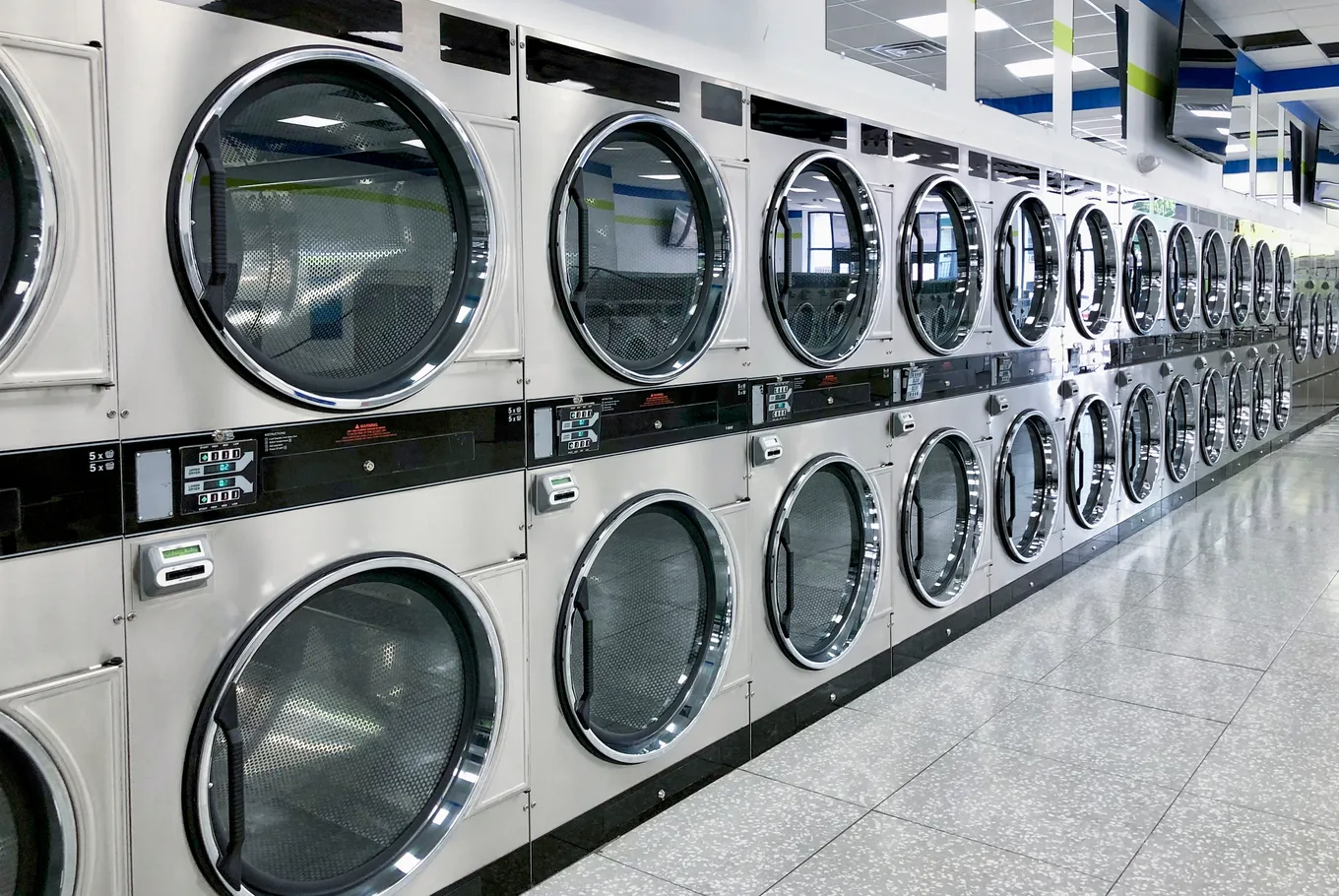

General liability is the policy that responds when somebody who is not your employee gets hurt or has their belongings damaged because of how your laundromat operates. The wet-floor slip-and-fall is the line’s lead exposure at every laundromat — coin-op, full-service, or attended — and the claim type that most often forces a coverage tender, a recorded statement, and a defense team retained on day one.
The policy form pays for bodily injury, property damage to third parties, premises medical for minor on-site injuries, products and completed operations for finished wash-dry-fold orders, and personal and advertising injury. On a standard occurrence-form policy, the carrier also pays defense costs IN ADDITION to the per-occurrence limit. On a contested slip-and-fall that lands in arbitration, that defense provision is often what makes the premium worth carrying.
What general liability does not do is fix damage to your own building, your washers, your dryers, your boilers, or your water heaters — those losses belong on the property line (with equipment breakdown as the marquee sub-coverage). It also will not pay for damage to customer clothing on a wash-dry-fold ticket — that exposure belongs on bailee’s coverage.
What it covers and what it does not cover
A laundromat general liability policy is built around five named coverages. Each is a separate response the carrier will or will not make. This page maps the line and how it is placed; for a worked walkthrough of how a claim actually proceeds and how each exclusion is argued, read what general liability covers and what it does not.
What it covers
- Bodily injury and property damage to third parties — a customer slipping on a wet floor, a soap-shelf bracket dropping a bottle on a customer’s foot, a delivery driver tripping on a transition strip.
- Premises medical payments — a no-fault sublimit that closes out minor customer medical bills before they ripen into litigated claims.
- Products and completed operations — exposure that follows finished work out the door. A wash-dry-fold order going home and triggering a skin reaction or damaging other clothing is a products-and-completed-ops claim.
- Personal and advertising injury — libel, slander, copyright in advertising. Not zero for owners running social-media promotions or signage referencing competitors.
- Damage to premises rented to you — a sublimit that responds when fire or another covered peril damages the building space you lease. Critical for owners who do not own the building.
What it does not cover
- Damage to your own laundromat, machines, or equipment — belongs on property and equipment breakdown.
- Customer goods in your care, custody, and control — wash-dry-fold and drop-off bailment goes on bailee’s coverage.
- Employee injury — an attendant burned on a dryer or straining a back lifting a customer order is a workers’ compensation claim.
- Assault, battery, and physical altercation — typically excluded or hard-sublimited.
- Prior knowledge and intentional acts — if customers reported the floor drain backing up and the issue went unaddressed, the carrier’s prior-knowledge defense kicks in.
- Professional services — alterations or specialty cleaning advice opens a professional-liability exposure GL does not reach. Relevant for any operation crossing into dry-cleaning service.
How it works specifically for laundromats
Generic commercial general liability is written for an office, a retail shop, a contractor — not a laundromat. The line bends in a few specific ways here.
Wet floors are an always-on exposure
Every operating laundromat has a wet floor somewhere most of the day. What separates a defensible slip-and-fall file from an indefensible one is what gets documented BEFORE the claim: posted wet-floor signs, a mop-and-log schedule the attendant initials by the hour, surveillance with date-and-time overlay, and a floor surface with a documented slip-resistance rating. Those four pieces win or lose the arbitration. The policy pays defense and indemnity within limits — defendability is decided at the operating level.
Customer burns at the dryer
Dryer door trim can stay hot enough to burn a hand for several minutes after a cycle ends. A customer reaching in for a fallen sock and contacting hot trim or a hot drum edge is a general liability claim. Underwriters look for posted hot-surface signage and door-trim guarding.
Parking-lot incidents test the premises boundary
The parking lot is part of the premises. A pothole that damages suspension, a falling sign that dents a hood, a flooded drain that lifts a car — those are premises claims. Damage caused by another customer’s vehicle is not. Theft from a customer vehicle generally is not, unless attended parking was advertised.
After-hours self-service magnifies the assault-and-battery question
Late-hour and 24-hour operations run an exposure attended operations do not — a customer-on-customer altercation inside an unattended laundromat. Most carriers exclude assault and battery outright or impose a hard sublimit. Locked-vestibule entry after a certain hour, posted hours, surveillance, exterior lighting, and panic-button monitoring move the needle. A self-service operating model needs those controls on the application or the quote either excludes the exposure or declines.
Common claim categories
Four claim categories drive most laundromat general liability frequency. Severities vary by jurisdiction, demographics, and the defense file.
Wet-floor slip-and-fall
The category. A customer slips, hits their head or breaks a wrist, and the demand letter arrives weeks later. The carrier requests sign placement, the mop-and-log record, the surveillance clip, and the floor-surface specs. Files with those four corroborating the operator close quickly; files without them run long and settle high.
Customer burn at the dryer
Lower frequency than slip-and-fall, but severity climbs fast when the customer is a child or older adult. The carrier evaluates posted hot-surface warnings, door-trim condition, and the cycle-end alert.
Parking-lot vehicle damage from a premises condition
Pothole, falling sign, broken parking-block claims. Lower-severity than bodily injury but a steady drumbeat at older sites. The carrier wants the maintenance schedule and a photo record of the lot.
After-hours assault, battery, or altercation
Lowest frequency, highest severity, frequently excluded outright. When coverage exists, the carrier examines lighting, locked-vestibule timing, posted hours, and surveillance. Operations without those controls find the carrier denying or invoking a sublimit that leaves the owner exposed for the bulk of the demand.
Limits and structure
A laundromat general liability policy is a stack. Each tier responds to a different shape of loss and the carrier prices each tier separately.
Per-occurrence and aggregates
The per-occurrence limit caps any single claim. The general aggregate caps all claims in the term — once it erodes, the next claim erodes the primary even on otherwise-defendable files. A separate products-and-completed-operations aggregate responds to claims from finished work; full-service and drop-off operations need this sized to their volume.
Per-location vs shared aggregate, and the rented-premises sublimit
Multi-location owners need to confirm whether the aggregate applies per location or is shared across the schedule — a shared aggregate erodes faster than most operators expect. The damage-to-premises-rented sublimit pays for fire or other covered-peril damage to leased space and needs sizing to suite rebuild cost, not the default.
Umbrella attachment and deductible
An umbrella sits over the GL, commercial auto if any, and workers’ compensation primaries. The attachment point needs to be uniform or the umbrella has gaps. Most programs run a low or zero per-claim deductible on bodily injury; owners with frequency issues end up with a higher retention imposed at renewal.
What an underwriter looks at before quoting a laundromat
General liability for this class is not rated off square footage alone. The underwriter is building a picture of how often a stranger is on your floor, how wet that floor is, and who is watching. Eight inputs do most of the work, and every one of them is something you control or can document.
Operating model, and the hours attached to it
The first question is whether the site is attended, and when. A staffed daytime operation, a self-service floor that runs unattended after a certain hour, and a full-service counter taking in customer orders are three different risks that happen to share a building. Posted hours matter as much as the model — an underwriter treats a site that locks at nine differently from one that runs overnight, even when the machines and the floor plan are identical.
Floor surface, and whether you can prove how it is maintained
The surface itself is an input: a documented slip-resistant specification reads differently from bare polished tile. What carries more weight is the maintenance record attached to it. A mop-and-log schedule the attendant initials, dated signage placement, and a wet-floor protocol that survives a busy Saturday are the difference between a rated risk and a guessed one.
Security controls on the unattended hours
Exterior lighting, interior camera coverage with a date-and-time overlay, locked-vestibule or fob entry after hours, and posted-hours enforcement are the controls that decide how the assault-and-battery question gets answered. Their absence rarely produces a decline on its own; it produces an exclusion, and the exclusion is what the owner discovers later.
Payment system and cash on the premises
A card or app-based system changes the profile of who is on the floor at two in the morning and how much cash sits in the building. Coin operations are written every day, but the coin box is a draw, and an underwriter reads the collection routine and the box hardware as part of the premises picture rather than as a crime-coverage question alone.
Whether you own the building or lease it
Ownership decides whether the damage-to-premises-rented sublimit is decorative or load-bearing. A leased suite makes that sublimit a live exposure sized against what the lease obligates you to restore, and it usually brings a landlord additional-insured requirement with its own limit floor.
Adjacent service lines the base class does not contemplate
A café, beer service, alterations, specialty garment care, or a dry-cleaning drop station each pull a different exclusion into play — liquor, professional services, or a pollution question that has nothing to do with the wet floor. Adding a service line without re-declaring it is one of the most common reasons a claim meets an exclusion the owner did not know was in the form.
Loss history, and the shape of it
Loss runs matter less for their total than for their pattern. One severe slip-and-fall with a clean file around it reads very differently from a steady trickle of small premises claims, which reads as a maintenance signal rather than bad luck. Owners with no available loss runs are quoted as unknowns, and unknowns are priced conservatively.
Whether customer goods ever enter your care
The moment a ticket is written, part of the exposure leaves general liability entirely and becomes a bailee’s question. Underwriters ask because the answer changes which lines have to be placed together, not because it changes the general liability rate on its own.
What restricts, sublimits, or declines a laundromat submission
Very little about a laundromat is uninsurable. What actually happens is narrowing: the submission stops fitting the broad markets and lands with the smaller set that writes the class deliberately. Knowing which of these applies to you before you go to market is the difference between one quote and a real comparison.
- Overnight unattended operation with no access control — the single most common driver of an assault-and-battery exclusion rather than a sublimit or a buy-back.
- A prior assault-and-battery loss — narrows the market sharply and usually survives on the loss runs longer than the owner expects.
- Open slip-and-fall litigation — an unresolved file makes pricing speculative, and many markets will decline to quote until it closes rather than guess at the reserve.
- Residential occupancy above or beside the suite — a water event that travels into a dwelling converts a routine property loss into a third-party liability claim with a different severity profile.
- Food, beverage, or alcohol service on the floor — pulls in exclusions the laundromat class was never rated for and frequently requires a separate placement.
- Alterations or specialty garment care — crosses from handling into professional judgment, which the professional-services exclusion removes from the policy.
- Documented deferred maintenance — a chronically backing floor drain or a known leak in the file is a prior-knowledge defense handed to the carrier in advance.
- No loss runs, or a gap in coverage history — a lapse reads as an unpriced period and is treated as one.
None of these is a verdict. Each is a reason the submission needs to reach a carrier whose appetite already accounts for it, with the mitigating controls attached to the application rather than offered afterward.
How to compare two general liability quotes
Two laundromat quotes can carry the same per-occurrence limit at nearly the same premium and behave completely differently on the claim that actually arrives. The premium is the least informative number on the page. A real comparison reads the terms below, in this order.
Is defense paid in addition to the limit, or does it erode it?
This is the term that most often separates two otherwise-identical quotes. On a contested premises claim, legal expense can rival the underlying demand. Defense paid in addition leaves the limit intact for the settlement; defense inside the limit means the money funding your lawyer is the same money that would have paid the claimant.
How is assault and battery treated?
Excluded outright, sublimited, or available as a buy-back — and if sublimited, at what level relative to the per-occurrence limit. For any operation with unattended hours this single line item deserves more scrutiny than the premium difference between the two quotes.
Is the general aggregate per location or shared?
A multi-site owner with a shared aggregate is one bad year at one location away from an eroded limit everywhere else. On a single-site placement this term is inert; on a schedule it is one of the most consequential words in the policy.
Occurrence form or claims-made?
Premises liability claims surface after the fact. An occurrence form responds to injury that happened during the policy period whenever the claim is reported; a claims-made form responds only while the policy or its tail is alive. Comparing the two on price alone compares different products.
Is the damage-to-premises-rented sublimit sized to the lease?
Leased-space operators frequently carry the default sublimit and discover it does not approach the restoration obligation in their lease. Read the lease clause and the sublimit side by side before comparing anything else on the quote.
Is the products and completed operations aggregate sized to the service volume?
A pure coin-op floor barely touches this aggregate. A wash-dry-fold operation sending finished orders home does, and the aggregate needs to reflect that rather than sit at whatever the base class defaults to.
What is on the endorsement schedule that is not on the quote summary?
The summary page is a marketing artifact. The endorsement list is the policy. Habitational exclusions, protective-safeguard warranties that void coverage if a control lapses, and class-limitation endorsements all live there and none of them appear on the front page.
Why Laundromat Guard Insurance
We are an independent agency built around the laundromat and dry-cleaner class. Carriers that write laundromat general liability run different appetites for after-hours self-service vs attended hours vs wash-dry-fold — and carriers that quote one model decline the next. An independent panel of fifteen markets actively quoting the class means we move a risk to the carrier whose appetite matches it.
The assault-and-battery exclusion wording, the sublimits, and the underwriting controls the carrier will credit for vary by market. We read the forms before we bind so the owner knows what the policy actually does on the claims that matter. The renewal posture after a single contested slip-and-fall is brutal at carriers without specialty appetite for this class — owners coming off a claim need a placement strategy, not just a quote.
Learn more
General liability sits inside a broader laundromat program. The other coverage lines that respond to the same incidents from different angles:
- Property insurance — pays for damage to your building, contents, and equipment. The water-damage event that triggers a slip-and-fall almost always triggers a property claim too. Equipment breakdown for your washers, your dryers, your boilers, and your water heaters lives inside this line.
- Bailee’s coverage — pays for damage to customer clothing while it is in your care on a wash-dry-fold or drop-off ticket. The gap general liability does not fill.
- Workers’ compensation — pays for employee injury. The line that responds when an attendant is burned by the dryer or strains their back on a customer order.
Operating models we write
Primary-source references
- NAIC State Insurance Departments Directory — state DOIs regulate commercial general liability rate and form filings in every state.
- NFPA Codes and Standards — NFPA 1 (Fire Code) is adopted by state fire marshals and covers premises egress, slip-resistant surfaces, and exit lighting.
- USFA State Fire Agency Points of Contact — directory of state fire-marshal offices that enforce the premises-safety codes referenced in general liability defense files.
Frequently asked questions about General Liability
Does general liability cover a slip-and-fall on a wet floor?
Yes — customer bodily injury from a wet-floor slip is the textbook laundromat general liability claim. The carrier pays medical bills, lost wages, pain-and-suffering, and legal defense. What it cannot do is overcome a documented absence of wet-floor signs, surveillance, or mop-and-log discipline.
Does general liability cover damage to my building, washers, or dryers?
No. General liability covers injury and damage to THIRD parties only. Damage to your own building, your washers, your dryers, your boilers, or your water heaters belongs on the property policy — and mechanical or electrical failure belongs on the equipment-breakdown sub-coverage inside property.
Does general liability cover customer clothing in wash-dry-fold or drop-off?
Usually no. Customer goods on a wash-dry-fold or drop-off ticket are in your care, custody, and control — typically excluded under GL. That gap is filled by bailee’s coverage, sold as a separate line on attended and full-service operations.
What is the assault-and-battery exclusion and why does it matter for after-hours self-service?
Many laundromat GL policies carry an assault-and-battery exclusion or hard sublimit. For unattended self-service open late or 24-hour, that exclusion turns an after-hours customer-on-customer incident into a coverage fight. Lighting, surveillance, locked-vestibule entry, and posted hours change what the underwriter will write.
How are general liability limits structured for a laundromat?
A per-occurrence limit, a general aggregate, a products and completed operations aggregate, and a damage-to-premises-rented sublimit. Multi-location owners need to confirm whether the aggregate is per location or shared across the schedule. An umbrella sits over GL, commercial auto if any, and workers’ compensation primaries at a uniform attachment point.
What makes one laundromat general liability quote better than another at the same premium?
Four terms decide it, and none of them is the premium. Whether defense is paid in addition to the limit or erodes it. Whether assault and battery is excluded, sublimited, or bought back. Whether the general aggregate applies per location or is shared across a schedule. And whether the damage-to-premises-rented sublimit matches what the lease actually obligates you to rebuild. Two quotes can carry the same limit and the same price and behave completely differently on the claim that arrives.
Which laundromats are hardest to place for general liability?
Unattended sites open overnight without access control, sites with a prior assault-and-battery loss, sites with open slip-and-fall litigation, and sites that have added a service line the base class does not contemplate — a café, alterations, or a dry-cleaning drop station. None of these is automatically a decline, but each moves the submission to a narrower set of markets and each needs its controls documented on the application rather than described in a phone call.
What do I need to have ready before asking for a general liability quote?
Operating model and posted hours, whether the site is attended and when, the payment system, whether you own or lease the building and what the lease requires you to carry, loss runs for the prior policy periods, your floor surface and the maintenance cadence you run on it, your security controls, and whether you take in any customer goods on a ticket. An underwriter who has those in front of them prices the risk. An underwriter who does not prices the uncertainty.
Do I need general liability if my lease already requires it?
The lease requirement sets a floor, not a program. Landlord certificates typically specify a per-occurrence limit and additional-insured status, and satisfying that says nothing about whether your assault-and-battery treatment, your aggregate basis, or your damage-to-premises-rented sublimit fit the operation. Placing to the certificate and stopping there is how owners end up compliant with the lease and exposed on the claim.
Does general liability pay my legal defense costs?
Yes — defense is paid by the carrier in addition to the policy limit on a standard occurrence-form policy. On a contested slip-and-fall, defense costs routinely exceed the underlying medical demand. That defense provision is often what makes the premium worth carrying.
Get a real general liability quote for your laundromat
Tell us about your operating model, your hours, your floor surface, and your prior-claims history if any — and we will route it to the carriers in our panel whose appetite matches the risk.