
States we serve · Georgia
Georgia Laundromat Insurance
Metro Atlanta interstate-corridor density, spring tornado and hail from Columbus to Macon, Savannah coastal wind, and a single regulator that is both insurance commissioner and State Fire Marshal — a Georgia laundromat program has to account for all of it. We place it across 48 states through a specialty panel that writes the class.
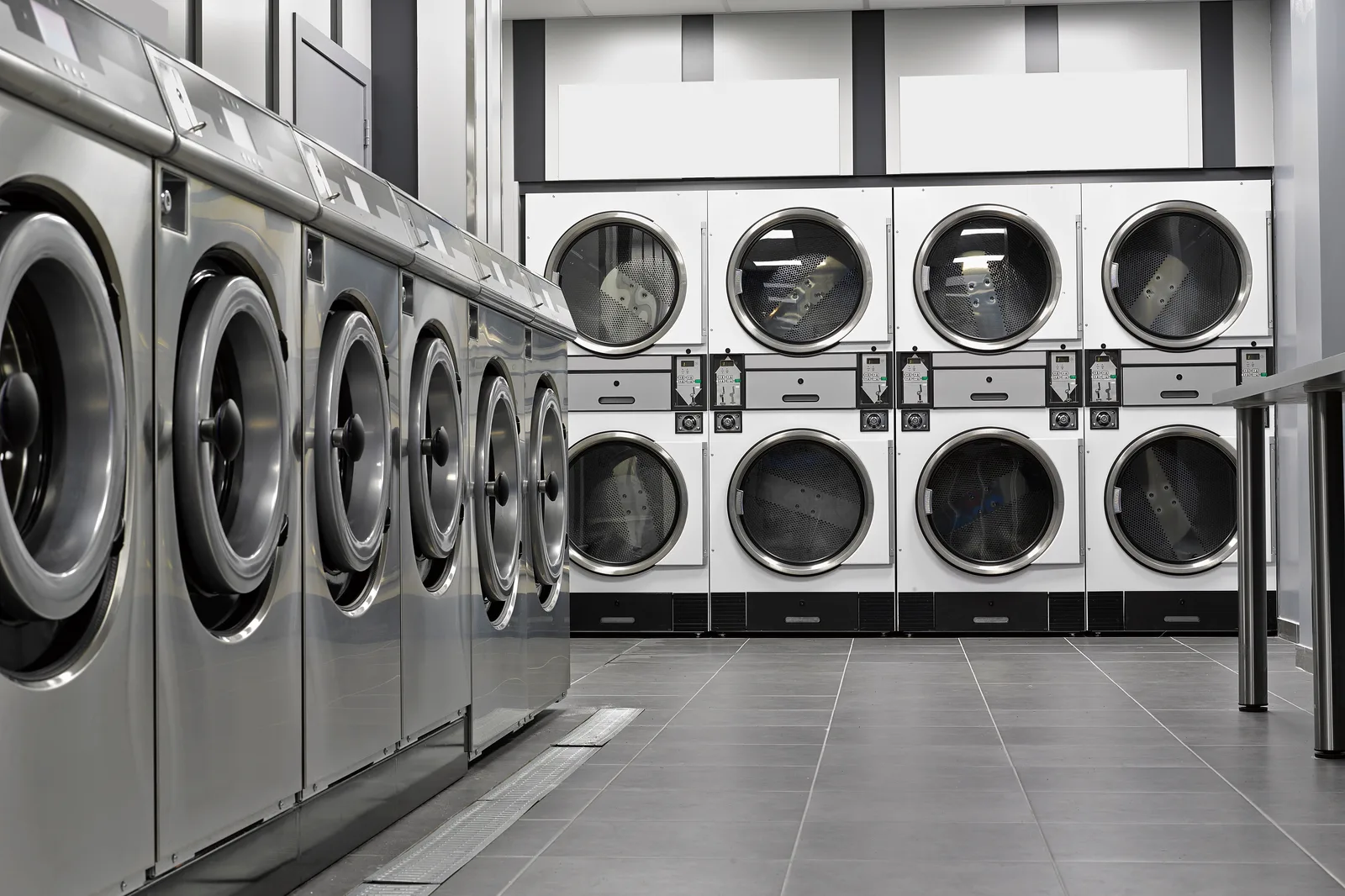

Georgia concentrates a large share of its laundromat base inside one metro. The Atlanta region — ringed by I-285 and threaded by I-75 and I-85 — carries dense, high-traffic coin and full-service sites where premises-liability frequency is the leading exposure. Outside the metro, the picture shifts to spring tornado and hail in Columbus and Macon and to Atlantic hurricane wind on the Savannah coast.
The state also runs a regulatory structure worth understanding up front. Georgia combines the insurance commissioner and the State Fire Marshal into a single Office of Commissioner of Insurance and Safety Fire — so the authority that reviews the insurance forms behind a laundromat program is the same one that oversees the fire-safety standards governing the dryer-lint exposure. That consolidation is distinctive among the states, and it means a laundromat’s fire-prevention record and its insurance file effectively sit under one statewide roof rather than two separate agencies.
Geography then layers a second set of considerations on top of the metro question. Georgia runs from the Blue Ridge foothills in the north down across the Fall Line cities of Columbus, Macon, and Augusta to the Atlantic coast at Savannah, and the laundromat exposure changes at each band. The northern suburbs are growth-driven and bailee-heavy as wash-dry-fold spreads; the Fall Line corridor sits in the spring severe-weather belt; and the coast carries hurricane wind the inland metros never see. A program written to one band rarely fits another.
This page walks through what drives the cost, the regulators and licensing layers that apply, the four coverage lines that build the program, the risks and claims we see most in Georgia, and the major metro markets where the underwriting actually changes.
- 48 states licensed and writing laundromat coverage
- 15+ markets specialty carriers on the panel
- 1–2 hr quote turnaround on most submissions
- GA metro Atlanta, Fall Line, and coastal coverage
On the Atlanta interstate ring or the Savannah coast? Start a Georgia quote and we will weight the liability and property layers to your location.
What Georgia Laundromat Insurance Costs
There is no published price for Georgia laundromat insurance, because the premium is assembled from the operation’s specifics. The drivers below are what move the number — a quote sizes them to the actual operation rather than a template.
- Location and traffic density. A high-traffic site on the metro Atlanta interstate ring carries higher slip-and-fall frequency, and therefore a higher general liability rate, than a lower-traffic site in a smaller market.
- Tornado, hail, and coastal wind. Spring tornado and hail across the inland metros and Atlantic wind on the Savannah coast feed the property rate; a coastal site carries a wind loading an Atlanta site does not.
- Attended payroll. Workers’ compensation is rated on attendant payroll, so headcount and wages move the premium.
- Wash-dry-fold volume. The bailee limit is sized to how much customer property moves through the operation.
- Machine count, age, and value. The property and equipment-breakdown premium tracks the number, age, and replacement value of the washers and dryers.
- Claims history. Prior slip-and-fall, bailee, or storm losses move the rate and can narrow the carrier set.
Georgia Laundromat Regulations & Licensing
Insurance and fire — one combined office
Georgia consolidates insurance regulation and the State Fire Marshal into the Office of Commissioner of Insurance and Safety Fire. The same statewide office reviews insurance forms and rates and sets the fire-safety standards relevant to the dryer-lint fire exposure — so both halves of a laundromat program trace back to one regulator. This combined structure is unusual among the states and worth confirming before a build-out, because fire-marshal inspection requirements and insurance considerations sit under the same authority.
City and county overlays
Beyond the state layer, Georgia laundromats operate under municipal certificate-of-occupancy, signage, and zoning rules that vary by jurisdiction. Confirm the local certificate-of-occupancy and any wastewater-discharge permit before signing a lease.
Environmental — dry-cleaner solvents
Operations running a dry-cleaning side fall under the Georgia Environmental Protection Division (EPD), within the Department of Natural Resources, which oversees solvent handling and contamination from perchloroethylene. The federal EPA Perc NESHAP rule (40 CFR Part 63 Subpart M) sets the air-emission baseline. A dry-cleaner operation carries this exposure; a pure wash-dry-fold laundromat does not.
Workers’ compensation and worker safety
The Georgia State Board of Workers’ Compensation administers the employee-injury system, separately from the insurance commissioner’s office. Worker-safety conditions on an attended floor fall under federal OSHA 29 CFR 1910 general-industry standards — machine guarding, lockout/tagout, and hot-surface handling.
Tax
Georgia levies a state personal income tax and applies sales tax with specific treatment for laundry services. Confirm the current classification for coin-operated versus attended laundry with a Georgia tax professional before opening.
Georgia Laundromat Coverage Lines
A Georgia laundromat program is built from four core lines, each sized to the state’s traffic-density and storm profile.
- General liability. Third-party bodily injury and property damage — most commonly a customer slip-and-fall on a wet floor, the leading exposure at high-traffic metro Atlanta sites.
- Property insurance. The building, contents, and machines against fire, wind, hail, and water — including the spring tornado and hail exposure inland and the Atlantic wind loading on the coast. Equipment breakdown within this line pays for the mechanical failure of washers and dryers, and business income replaces revenue while a storm-damaged site is closed.
- Bailee’s coverage. Damage to or loss of customers’ wash-dry-fold and drop-off goods while in your care — the exposure general liability excludes by design.
- Workers’ compensation. Employee medical and lost wages for attendant injuries — lifting strains, dryer burns, and slips on wet floors at an attended site.
Adding wash-dry-fold to a metro Atlanta coin site? Start from the self-service program, then request a full-service quote.
Common Laundromat Risks in Georgia
The risks that shape a Georgia program cluster around metro traffic density and the state’s storm pattern.
- High-traffic slip-and-fall. Dense customer traffic along the metro Atlanta interstate ring drives wet-floor injury claims handled under general liability.
- Spring tornado and hail. Severe spring weather across Atlanta, Columbus, and Macon damages roofs and rooftop equipment — a frequent property claim inland.
- Coastal hurricane wind. Atlantic wind on the Savannah coast damages roofs and can close a site for repairs, triggering a business-income consideration.
- Wash-dry-fold loss. A ruined or lost drop-off order is a bailee claim that general liability will not pay.
- Attendant injury. Lifting strains and dryer burns at an attended site, handled under workers’ compensation.
- Dryer-lint fire. Lint buildup in dryer ducts remains a leading cause of laundromat fires, under the same office that regulates the insurance.
Common Georgia Laundromat Claims We See
The descriptions below are qualitative — appetite and adjuster handling vary across the specialty market, and none name specific carriers.
- Metro slip-and-fall. A customer goes down on a wet floor at a high-traffic I-285-corridor site; general liability handles the bodily-injury claim, and the cleaning log and signage support the defense.
- Spring storm roof loss. A tornado or hailstorm strips roofing and damages rooftop equipment on an Atlanta-area site; property pays the physical damage, and equipment breakdown picks up the mechanical failure that follows.
- Coastal wind closure. An Atlantic storm damages a Savannah site’s roof and closes it for repairs; property pays the damage and business income bridges the revenue gap.
- Ruined wash-dry-fold order. A drop-off load processed on the wrong cycle comes back damaged; the bailee line responds, and the intake ticket is the record.
- Attendant injury. An attendant strains a back lifting a heavy wet order; workers’ compensation pays medical and lost wages, and the claim runs through the Georgia State Board of Workers’ Compensation rather than the insurance commissioner’s office.
- Equipment breakdown at a high-utilization site. A washer motor or water-heating system fails mid-shift at a heavily used metro location; equipment breakdown within the property program pays to repair the machine and can pick up the income lost while it is down.
Major Georgia Laundromat Markets
Underwriting changes by metro across Georgia. The submarkets below each carry a distinct exposure that moves the program.
The I-285 perimeter & inner Atlanta
The I-285 perimeter ring concentrates the densest high-traffic laundromat base in the state, where slip-and-fall liability frequency runs highest and carriers weigh floor-maintenance and signage controls more heavily than weather in rating the risk.
The I-75 / I-85 northern suburbs
The I-75 and I-85 corridors north of the perimeter carry fast suburban growth and new mixed-use sites, producing attended operations where rising wash-dry-fold bailee volume and the resulting limit-sizing question lead the underwriting conversation.
Savannah & the Atlantic coast
Savannah and the Chatham County coast sit in the Atlantic hurricane wind band, the only Georgia market where a named-storm wind loading and business-income sizing for a post-storm closure become the dominant part of the property placement.
Columbus & the Chattahoochee Fall Line
Columbus sits on the Chattahoochee River Fall Line in the spring tornado belt, where the combination of severe-weather roof exposure and a value-conscious high-utilization residential base shapes both the property and the equipment-breakdown rating.
Macon & the central tornado belt
Macon anchors the central-Georgia severe-weather corridor, where spring tornado and hail frequency is the leading property driver and underwriters scrutinize roof age and construction type before they quote.
Augusta & the I-20 corridor
Augusta and the I-20 corridor toward the South Carolina line combine cross-state commuter traffic with a stable residential laundromat base, so premises-liability frequency and machine-wear equipment-breakdown exposure, rather than catastrophe peril, drive the rating here.
Athens & the university-town base
Athens carries a transient university-driven customer base with sharp seasonal turnover, producing utilization swings that affect both the wash-dry-fold bailee volume and the slip-and-fall liability frequency carriers price into the program.
Why Georgia Laundromat Owners Choose Laundromat Guard Insurance
We place laundromat coverage across 48 U.S. states through a 15-carrier specialty panel that writes the laundromat and dry-cleaner classes specifically. In Georgia that means we weight the program to the metro Atlanta slip-and-fall frequency, the inland spring-storm exposure, and the Savannah coastal wind — and we work the combined insurance-and-fire-marshal regulator as one authority rather than two.
A generic agent quoting a strip-mall package rarely sizes the liability layer to real metro traffic density or the bailee limit to a working wash-dry-fold operation. We do both, we add the commercial-auto layer when pickup-and-delivery routes run across the metro, and we structure the equipment-breakdown and business-income components to the machines and revenue at stake.
The placement work is done by a CPCU-credentialed broker — the senior property and casualty credential the industry awards — and the panel is reviewed quarterly so carrier appetite shifts do not surprise you at renewal.
Related Reading
Georgia shares its coastal wind exposure with the rest of the South. Compare the program structure in Florida, where named-storm deductibles run statewide, and Texas, where Gulf wind meets the non-subscriber workers’ comp election. For shared Atlantic hurricane context up the coast, see North Carolina.
On the operating-model side, most Georgia programs start from a self-service footprint and add the full-service bailee and workers’ comp lines as wash-dry-fold volume grows; a dry-cleaner side brings the EPD solvent considerations into the program.
Georgia Laundromat Insurance FAQs
Who regulates laundromat insurance in Georgia?
Georgia runs an unusual combined structure: the Office of Commissioner of Insurance and Safety Fire holds both the insurance-commissioner role and the State Fire Marshal role in one office. That means the same statewide authority that reviews insurance forms and rates also oversees the fire-safety standards relevant to the dryer-lint fire exposure every laundromat carries. For a laundromat owner, both halves of the program touch the same regulator.
What does laundromat insurance cost in Georgia?
There is no single number. The premium is assembled from the operation’s specifics — location and metro, machine count and age, attended payroll, wash-dry-fold volume, and prior claims. A high-traffic site on the metro Atlanta interstate ring carries different liability frequency than a smaller site in Macon or Augusta, and a coastal Savannah operation adds a wind loading. A quote routed to the specialty markets that write the laundromat class in Georgia is the fastest path to a real figure.
Does metro Atlanta traffic raise my premises liability exposure?
It does. Laundromats clustered along the I-285 perimeter and the I-75 and I-85 corridors see high customer foot traffic, and that volume drives slip-and-fall frequency on wet floors. General liability is the line that responds, and carriers weigh location traffic, floor maintenance, and wet-floor signage when they rate a metro Atlanta site. Documented cleaning logs and signage strengthen both the placement and the defense if a claim is filed.
Is workers’ compensation required for a Georgia laundromat?
For an attended full-service operation, generally yes once you reach the employee threshold the state sets. The Georgia State Board of Workers’ Compensation administers the system, separately from the insurance commissioner’s office. It covers attendant medical care and lost wages for the injuries an attended laundry produces — lifting strains, dryer burns, and slips on wet floors. A pure unattended coin site with no employees has a narrower obligation.
Does Georgia regulate dry-cleaner solvents?
Yes. The Georgia Environmental Protection Division, within the Department of Natural Resources, oversees solvent handling and contamination from perchloroethylene, and the federal EPA Perc NESHAP rule sets the air-emission baseline. A laundromat that also runs a dry-cleaning side carries this exposure; a pure wash-dry-fold site without solvent equipment does not. Any solvent use moves the operation into that regulated tier.
Do laundromats on the Georgia coast need hurricane coverage?
Savannah and the Georgia coast carry Atlantic hurricane wind exposure, so a coastal laundromat’s property layer includes a wind consideration the inland Atlanta metro does not face. The named-storm wind can damage roofs and rooftop equipment and close a site for repairs, which is where business income within the property program becomes relevant. Inland sites in Atlanta, Columbus, and Macon weigh spring tornado and hail instead.
Do I need bailee’s coverage if I take wash-dry-fold orders in Georgia?
Yes. The moment an attendant accepts a drop-off bag or a wash-dry-fold ticket, the customer’s laundry becomes property in your care, custody, or control — and general liability excludes exactly that. A ruined load or a lost garment is paid out of pocket without bailee’s coverage. The limit is sized to order volume, with a separate transit sublimit if pickup-and-delivery routes run across the metro Atlanta interstate ring.
Get a real Georgia laundromat insurance quote
Tell us about your operation — metro and location, attended hours and payroll, wash-dry-fold volume, machine count, and prior claims if any — and we will route it to the carriers in our panel that fit the Georgia exposure.