
Operations we insure
Full-Service Laundromat Insurance
An attended wash-dry-fold and drop-off operation carries two exposures a coin-only site does not — customers’ laundry in your care and employees on the floor. Full-service insurance is built around the bailee and workers’ compensation lines those exposures demand.
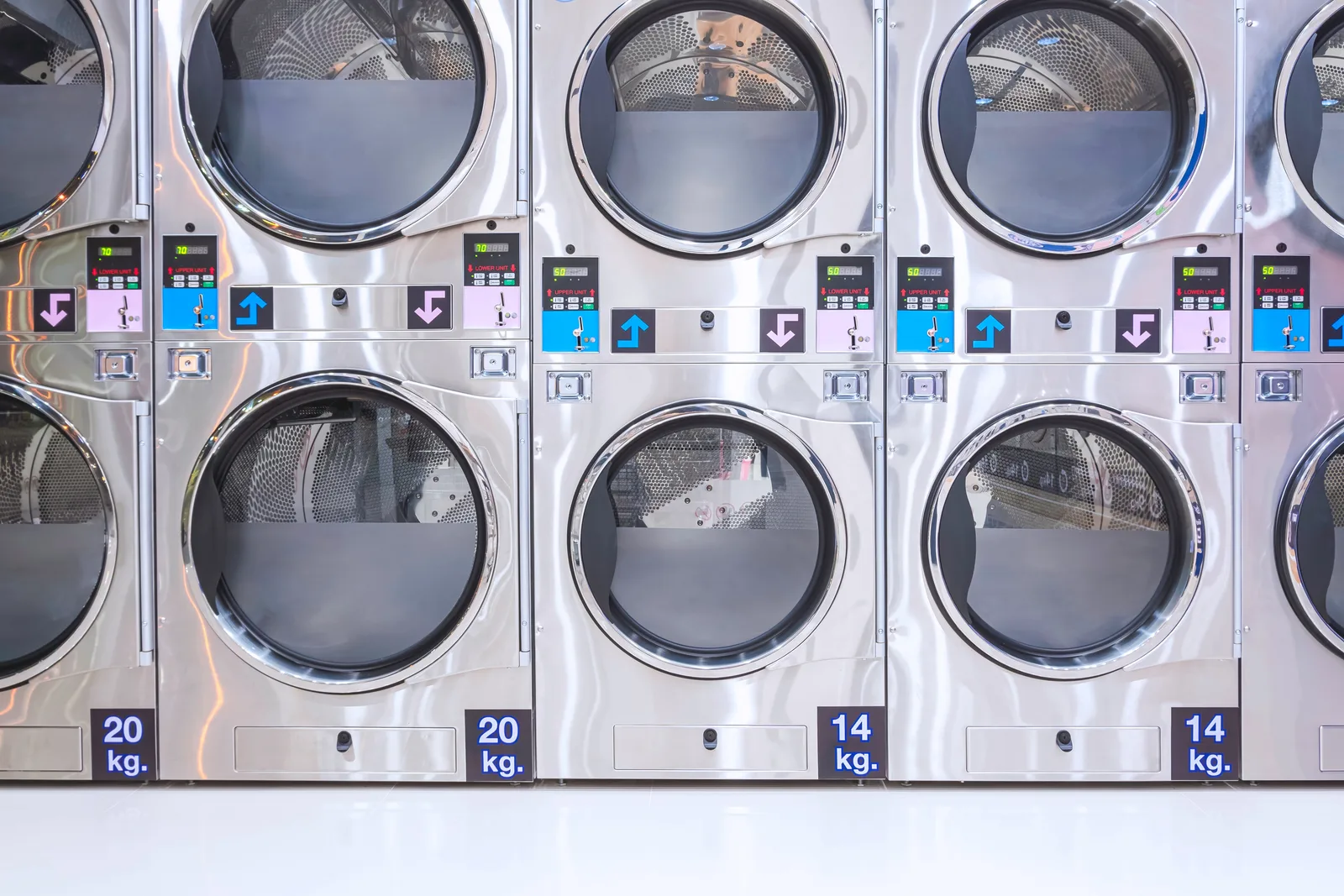

A full-service laundromat is an attended operation. Someone is behind the counter taking wash-dry-fold orders, accepting drop-off bags, running the machines, folding, and — on many sites — loading a van for pickup-and-delivery routes. That attended model is what separates the full-service archetype from a coin-only site, and it is exactly what reshapes the insurance program.
Two exposures define the full-service model. The first is bailee — the moment an attendant accepts a wash-dry-fold ticket or a drop-off bag, the customer’s laundry becomes property in your care, custody, or control, and a ruined or lost load is your financial responsibility. The second is workers’ compensation — an attended operation means employees, and an attendant who strains a back lifting a heavy order or burns a hand on a hot dryer drum is a covered claim. Neither exposure exists in a meaningful way at a pure self-service site.
Around those two load-bearing lines sit the coverages every laundromat carries: liability for the customer who slips on a wet floor, property for the building, contents, and the machines themselves, equipment-breakdown protection for the washers and dryers, and business income to replace revenue while the doors are closed for repairs after a water-damage event or a fire.
This page walks through what makes full-service insurance distinct, the state and regulatory considerations that move the program, the coverage lines that build it, the cost drivers that determine the premium, the claims that actually come through, and the underwriting realities that decide whether a carrier writes the risk.
- 48 states licensed and writing laundromat coverage
- 15+ specialty markets on the panel
- 1–2 hr quote turnaround on most submissions
- Wash-dry-fold & bailee full-service specialists
Running wash-dry-fold or drop-off and not sure your bailee limit is sized right? Start a quote and we will size it to the actual order volume.
What Makes Full-Service Laundromat Insurance Different
A generic commercial package written for a strip-mall tenant misses the full-service laundromat in two specific places, and both are the places where the largest claims come from.
The first is the laundry itself. A standard package treats customer property as a small courtesy sublimit on the property policy — a few hundred dollars of personal property of others, never sized for a real wash-dry-fold operation. But an attended site accepting drop-off bags is handling customer goods all day, and the legal liability for those goods sits with the operator the entire time they are in the building. The correct placement is a dedicated bailee’s coverage line sized to the order volume, not a token sublimit. A four-bag drop-off that comes back as three bags, or a white load that picks up dye from a stray red garment, is a bailee claim — and general liability explicitly excludes it. An operation that also takes in tailored garments and formalwear edges toward the dry-cleaner tier, where the per-piece value runs higher and the bailee limit is sized to match.
The second is the staff. Attended hours mean attendants, and attendants get hurt doing exactly the things a laundromat requires: lifting heavy wet orders, reaching into hot dryer drums, standing for long folding shifts, and moving across wet floors. Workers’ compensation is mandatory in nearly every state the moment you hire your first attendant, and a package built for an unattended coin site simply does not carry it. The transition from self-service to full-service is, in insurance terms, the transition from a property-and-liability program to a property-liability-bailee-workers’-comp program.
Both of those lines are why a full-service program needs a broker who writes the laundromat class specifically. The coverage gaps are not obvious on a standard quote — they show up at claim time, when the bailee sublimit is exhausted in a single ruined-load event or when an injured attendant has no workers’ compensation policy to respond.
State & Regulatory Considerations
Because the full-service model is employee-heavy, the regulatory picture is driven mostly by how each state handles workers’ compensation — and the rules vary enough to change how the program is placed.
Ohio is the clearest example. It is a workers’-compensation monopoly-fund state, which means the workers’ compensation policy is purchased from the state Bureau of Workers’ Compensation rather than from a commercial carrier. A full-service laundromat operating there buys its liability, property, and bailee lines from the specialty market but routes the workers’ compensation coverage through the state fund — a split a broker who does not work the class regularly can miss.
Other states run the coverage through commercial carriers but apply their own rate structures, audit rules, and classification codes for laundry attendants. A high-volume attended operation in New York or California faces different payroll-classification and audit exposure than a smaller site in Texas or Florida, and the property side carries its own state-specific catastrophe loading — wind and named-storm considerations on the Gulf and Atlantic coasts, for instance. The right program is built to the state the operation actually sits in, not to a national average.
Coverage Breakdown
A full-service laundromat program is built from four core lines. Each one links to its full coverage page below.
- Bailee’s coverage. The defining line for the full-service model. It pays for damage to or loss of customers’ wash-dry-fold and drop-off goods while those goods are in your care — the exposure general liability excludes by design. The limit is sized to order volume, with a separate transit sublimit if pickup-and-delivery routes are part of the operation.
- Workers’ compensation. The second load-bearing line. It covers employee medical care and lost wages for attendant injuries — lifting strains, dryer burns, repetitive-motion folding injuries, and slip-and-falls on the work floor. Required in nearly every state once you hire your first attendant.
- General liability. Third-party bodily injury and property damage — most commonly the customer who slips on a wet floor. Full-service sites carry elevated slip exposure because attended traffic and folding stations keep more people moving through the space.
- Property insurance. The building, contents, and the machines themselves against fire, water damage, theft, and vandalism. Equipment breakdown — the marquee sub-coverage for a laundromat — sits inside the property program and pays for the mechanical and electrical failure of washers, dryers, boilers, and control systems that the base property form excludes. The business income component within this line replaces revenue while the operation is closed for covered repairs.
One line that sits outside this list: if the operation runs pickup-and-delivery routes, the delivery vehicle needs a separate commercial auto policy. Commercial auto covers the vehicle — liability and physical damage — while the bailee transit sublimit covers the customers’ goods riding inside it. A personal auto policy will not respond to a business-use loss, so the two policies work together: one for the van, one for the laundry it carries.
Upgrading a coin site to wash-dry-fold? See the self-service program you are starting from, then request a full-service quote.
What Full-Service Laundromat Insurance Costs
There is no single price for full-service coverage, because the premium is assembled from the operation’s specifics. The drivers below are what move the number up or down — a quote sizes them to the actual operation.
- Payroll and headcount. Workers’ compensation is rated on payroll, so the number of attendants and total wages is one of the largest single drivers on a full-service program. A site with extended attended hours and several staff carries more workers’ comp premium than one with a single part-time attendant.
- Wash-dry-fold and drop-off volume. The bailee limit is sized to how much customer property moves through the operation. Higher order volume means a higher bailee exposure and a limit structured to match.
- Machine count, age, and value. The property and equipment-breakdown premium tracks the number, age, and replacement value of the washers and dryers. Older machines carry more breakdown exposure.
- Pickup-and-delivery routes. Running routes adds the commercial auto line and a bailee transit sublimit — both add premium that an in-store-only operation does not carry.
- Building, location, and catastrophe exposure. Square footage, construction type, and the state-specific peril profile — wind, hail, flood — all feed the property rate.
- Claims history. Prior bailee, liability, or workers’ comp claims move the rate and can narrow the set of carriers willing to quote.
Claims Scenarios
The claims that come through a full-service program cluster around the attended, customer-property side of the operation. The descriptions below are qualitative — appetite and adjuster handling vary across the specialty market, and none name specific carriers.
- Ruined or lost wash-dry-fold order. A drop-off load processed on the wrong cycle, a bleach event that hit colored garments, or a bag that cannot be reconciled to the intake ticket at pickup. The bailee line responds; the intake ticket is the record the carrier works from.
- Attendant injury. A back strain lifting a heavy wet order, a burn from a hot dryer drum, or a repetitive-motion folding injury. Workers’ compensation pays medical and lost wages — and these are among the most common full-service claims because the work is physical.
- Customer slip-and-fall. A customer goes down on a wet floor near the folding stations. General liability handles the bodily-injury claim and any settlement; wet-floor signage and a cleaning log support the defense.
- Water-damage shutdown. A supply-line failure or sewer backup floods the wash floor and closes the operation for weeks of repairs. Property pays the physical damage; business income replaces the lost revenue while the doors are closed.
- Equipment breakdown. A washer motor burns out or a water-heating system ruptures mid-shift. Equipment breakdown pays to repair or replace the machine and can pay the income loss while it is down.
- In-transit delivery loss. A bag of finished wash-dry-fold goes missing from the delivery van or is damaged in an accident en route. The bailee transit sublimit covers the goods; the commercial auto policy covers the vehicle.
Underwriting Realities
Carriers writing the full-service laundromat class look hardest at the two exposures the model adds — the customer-property handling and the staff — alongside the fire and water risk every laundromat carries.
- Wash-dry-fold intake discipline. Underwriters want to see that drop-off orders are logged on tickets with weight or piece counts and condition notes. A documented intake process keeps bailee claims clean and signals a well-run operation.
- Dryer-lint fire prevention. Lint buildup in dryer ducts is a leading cause of laundromat fires. A documented duct-cleaning schedule is one of the first things a property underwriter asks about, and a missing one narrows the carrier set quickly.
- Workers’ comp classification and safety. Correct payroll classification for laundry attendants, plus basic safety practices — machine guarding, training on hot-surface handling, wet-floor protocols — affect both the rate and whether the risk is accepted.
- Machine age and maintenance. A fleet of aging washers and dryers raises both the breakdown and the water-damage exposure. A maintenance log helps; deferred maintenance is a common reason a property risk is declined or non-renewed.
- Claims history and route exposure. Repeated bailee or slip-and-fall losses, or an expanding pickup-and-delivery operation with no commercial auto in place, are the patterns that move a risk from standard to surplus appetite.
Why Laundromat Guard Insurance
We place laundromat coverage across 48 U.S. states through a 15-carrier specialty panel that writes the laundromat and dry-cleaner classes specifically. For the full-service model that means we build the program around the two lines that define it — bailee’s coverage sized to actual wash-dry-fold volume and workers’ compensation placed correctly for the state, including the monopoly-fund states where it routes through a state fund.
A generic agent quoting a strip-mall package leaves both of those gaps open. We size the bailee limit to the order volume rather than dropping a token sublimit on the property policy, we add the commercial-auto layer when routes are part of the operation, and we structure the equipment-breakdown and business-income components to the machines and revenue at stake.
The placement work is done by a CPCU-credentialed broker — the senior property and casualty credential the industry awards — and the panel is reviewed quarterly so carrier appetite shifts do not surprise you at renewal.
Learn more
Coverage lines that build a full-service laundromat program:
- General Liability
- Property Insurance
- Bailee’s Coverage
- Workers’ Compensation
- Professional Liability
- Commercial Auto
- Employment Practices Liability
Other laundromat operating models we insure:
Primary-source authorities for the employee, fire, and regulatory side of a full-service operation:
- OSHA 29 CFR 1910 General Industry Standards — machine guarding, lockout/tagout, and worker-safety rules that apply to an attended laundry floor.
- U.S. Department of Labor — Workers’ Compensation State Programs — how each state administers workers’ compensation, including the monopoly-fund states.
- U.S. Fire Administration State Fire Agency Contacts — fire-prevention authorities relevant to the dryer-lint fire exposure.
- NAIC State Insurance Departments Directory — the state regulators that oversee the commercial policy forms a laundromat program is filed under.
Frequently asked questions about Full-Service Laundromat insurance
What insurance does a full-service laundromat need that a self-service site doesn’t?
A full-service laundromat is attended and processes wash-dry-fold and drop-off orders, which adds two lines that a pure self-service site can mostly skip. The first is bailee’s coverage, because the moment an attendant accepts a ticket the customer’s laundry becomes property in your care, custody, or control. The second is workers’ compensation, because an attended operation means employees — and attendant injuries, burns, back strain, and slips are now a covered exposure. Both lines sit on top of the general liability and property coverage every laundromat carries.
Why does wash-dry-fold create a bailee’s coverage exposure?
When a customer hands over a drop-off bag or starts a wash-dry-fold ticket, you take constructive possession of their laundry. From that moment until pickup, the goods are in your care, custody, or control — and general liability specifically excludes damage to property in your care. A ruined load, a lost garment from a multi-bag order, or a color-bleed event is paid out of pocket unless bailee’s coverage is in place. It is the load-bearing line for the full-service model.
Do I need workers’ compensation for a small full-service laundromat?
In most states, the answer is yes the moment you have an employee — including a single part-time attendant. Workers’ compensation pays for employee medical care and lost wages when an attendant is injured on the job: a back strain lifting a heavy wash-dry-fold order, a burn from a hot dryer drum, a repetitive-motion injury from folding, or a slip on a wet floor. A handful of states run the coverage through a state fund rather than commercial carriers, which changes how the policy is placed but not whether it is required.
My laundromat runs pickup-and-delivery routes. What covers the van?
Two different policies handle the two different exposures. Commercial auto covers the vehicle itself — liability if the van is in an accident, and physical damage to the van. The bailee transit sublimit covers the customers’ laundry being carried inside the van, which is usually a smaller limit than the on-premises bailee limit. A personal auto policy will not respond to a business-use loss, so a dedicated commercial auto policy is the correct placement for any route operation.
What happens to my income if a water-damage event shuts the laundromat down?
Business income coverage — written as part of the property program — replaces lost revenue and pays continuing expenses while the operation is closed for covered repairs. A supply-line failure, a sewer backup, or a fire that takes the wash floor offline for weeks stops cash flow immediately, while rent, loan payments, and base payroll keep running. Business income is the line that bridges the gap between the loss date and the day the doors reopen.
Does equipment breakdown cover my washers and dryers, or is that the property policy?
Equipment breakdown is a sub-coverage of the property program, and it covers the mechanical and electrical failure of your machines — a motor that burns out, a control board that fails, a boiler or water-heating system that ruptures. A standard property policy pays for damage from external perils like fire and water, but it excludes internal breakdown. Equipment breakdown fills that gap, and it can also pay the business income loss while a failed machine is down.
How does a slip-and-fall claim at a full-service laundromat get handled?
A slip-and-fall on a wet floor is a general liability claim — third-party bodily injury on your premises. The policy responds to medical costs and any liability settlement. Full-service sites carry elevated slip exposure because attended traffic, folding stations, and pickup-and-delivery handoffs keep more people moving through the floor. Documented wet-floor signage and a cleaning log strengthen the defense, but the liability policy is the line that pays the claim.
How much does full-service laundromat insurance cost?
We do not publish a single number because the premium is built from the operation’s specifics — square footage, machine count and age, wash-dry-fold and drop-off volume, attended hours, payroll for the workers’ compensation line, whether pickup-and-delivery routes run, and prior claims history. A full-service site carries more lines than a self-service site, so the program is structured to the actual exposure rather than a template. The fastest path to a real number is a quote routed to the specialty markets that write the laundromat class.
Get a real full-service laundromat insurance quote
Tell us about your operation — attended hours, wash-dry-fold and drop-off volume, attendant payroll, pickup-and-delivery routes, machine count, prior claims if any — and we will route it to the carriers in our panel that fit the exposure.