
States we serve · New Jersey
New Jersey Laundromat Insurance
New Jersey runs dense urban laundromat corridors through Newark, Jersey City, and Paterson and a coastal Shore market still shaped by Superstorm Sandy. We place the bailee, liability, property, and workers’ compensation lines both ends of that market need.
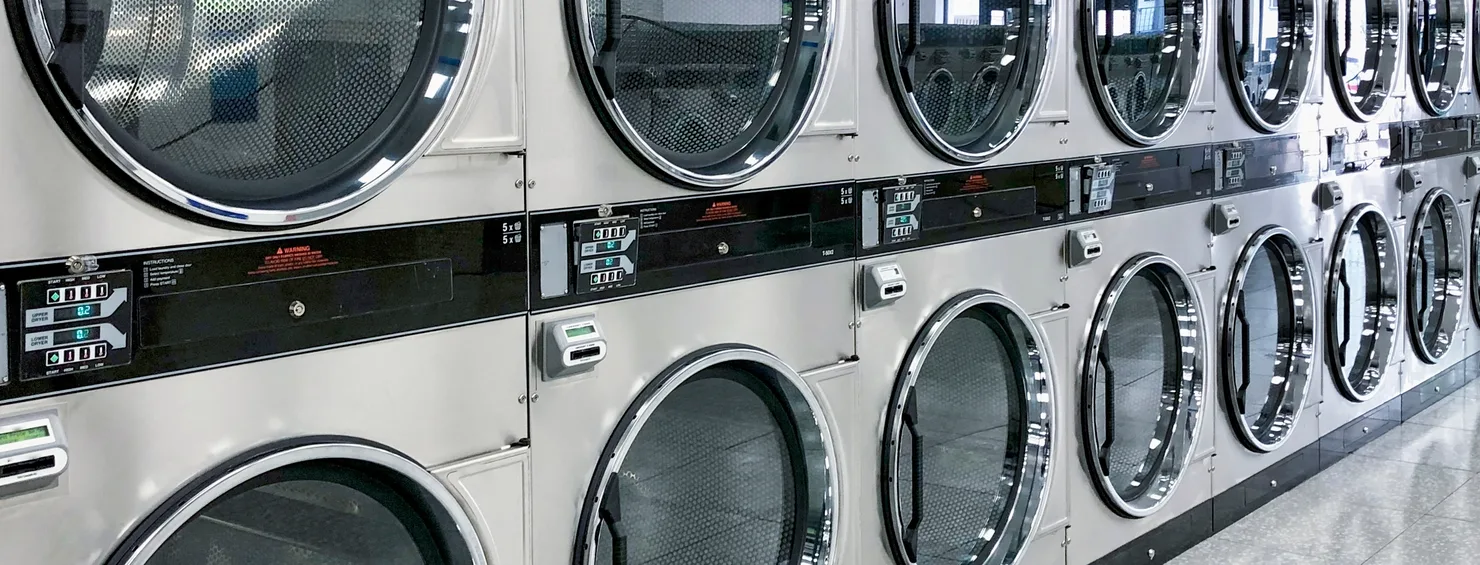

New Jersey packs one of the densest laundromat markets in the Northeast into a small footprint. The northern urban corridors — Newark and Essex County, Jersey City and the Hudson County waterfront, Paterson — sustain a wall-to-wall storefront coin-laundry trade serving high-rentership neighborhoods, while South Jersey leans toward the Camden and near-Philadelphia metro and the Route 1 corridor carries suburban strip-mall sites between the two metros.
The first distinctive exposure is coastal. The Jersey Shore — Atlantic City, Asbury Park, the barrier-island towns — sits in a wind and flood zone that Superstorm Sandy permanently changed in the eyes of property underwriters. A Shore-area laundromat faces wind-deductible structures and flood-zone questions that an inland site never sees, and flood typically rides on a separate policy from the property program.
The second is the dense-corridor business-interruption problem. High property values and steep fixed costs in Newark, Jersey City, and Paterson mean a fire or water-damage shutdown stops revenue while rent and loan payments keep running. Both halves of the state share dryer-lint fire risk, which the New Jersey Division of Fire Safety tracks as a commercial-fire cause and which every property underwriter asks about. The rest of this page walks through the cost drivers, the New Jersey agencies that shape the program, the coverage lines, and the claims we actually see.
- 48 states licensed and writing laundromat coverage, New Jersey included
- 15+ specialty markets on the panel
- 1–2 hr quote turnaround on most submissions
- Corridor + Shore from Hudson County storefronts to coastal flood zones
Running an urban-corridor storefront or a Shore-area site and want a number sized to the real exposure? Start a New Jersey quote and we will route it to the markets that write the class.
What New Jersey Laundromat Insurance Costs
There is no single New Jersey price, because the premium is assembled from your operation and your location. The drivers below move the number; a quote sizes them to the actual site.
- Coastal vs. inland location. A Jersey Shore site carries wind and flood loadings on the property program that an inland Newark corridor storefront does not, and flood typically rides on a separate placement.
- Urban property values. High Hudson County and Essex County property values and fixed costs raise the business income exposure inside the property program.
- Operating model. A pure self-service coin operation carries fewer lines than an attended full-service site running wash-dry-fold, which adds the bailee and workers’ comp lines.
- Payroll and attended hours. Workers’ compensation is rated on attendant payroll, so headcount and hours are a major full-service driver.
- Machine count, age, and value. The property and equipment-breakdown premium tracks the number, age, and replacement value of the washers and dryers.
- Claims history. Prior bailee, slip-and-fall, or workers’ comp losses move the rate and can narrow the carriers willing to quote.
New Jersey Laundromat Regulations & Licensing
New Jersey runs its insurance, environmental, fire, and workers’ compensation oversight through distinct state agencies. The ones below are the agencies that actually shape a laundromat program.
Insurance regulator — New Jersey Department of Banking and Insurance
New Jersey combines banking and insurance regulation in one agency. The New Jersey Department of Banking and Insurance (NJDOBI) reviews the commercial policy forms and rate filings the carriers in our panel use to write laundromat risk across the state.
Local registration
New Jersey laundromats register at the municipal level for business, zoning, and fire-inspection purposes rather than through a single statewide laundry license. The exact local requirement varies by municipality, so confirm it with the town clerk where the site sits — registration status does not change whether the operation needs insurance.
Environmental — dry-cleaner perchloroethylene remediation
The New Jersey Department of Environmental Protection (NJDEP) runs an active site-remediation program that covers dry-cleaner solvent contamination, and the federal EPA Perchloroethylene Dry Cleaning NESHAP (40 CFR Part 63, Subpart M) governs perc air emissions. A dry-cleaner program coordinates with these considerations; the laundromat lines do not.
Fire — New Jersey Division of Fire Safety
The New Jersey Division of Fire Safety, within the Department of Community Affairs and home of the State Fire Marshal, develops and enforces the state Uniform Fire Code. Dryer-lint buildup is a leading laundromat fire cause, and a documented duct-cleaning schedule is one of the first items a property underwriter asks about.
Workers’ compensation — New Jersey Division of Workers’ Compensation
The New Jersey Division of Workers’ Compensation, within the Department of Labor and Workforce Development, administers the state system. An attended full-service laundromat needs a workers’ compensation policy once it hires its first attendant. Federal worker-safety rules under OSHA 29 CFR 1910 — machine guarding and hot-surface handling — apply to the laundry floor as well.
Tax and registration
A laundromat registers with the New Jersey Division of Revenue and Enterprise Services for sales-tax and employer obligations like any commercial business. These registrations sit alongside the coverage program; they do not replace it.
Coverage Lines for New Jersey Laundromats
A New Jersey laundromat program is built from four core lines. Each links to its full coverage page.
- General liability. Third-party bodily injury and property damage — most often a customer who slips on a wet floor. Dense urban-corridor foot traffic raises the slip exposure.
- Property insurance. Building, contents, and machines against fire, water damage, theft, and vandalism, with equipment breakdown covering the mechanical and electrical failure of washers, dryers, and water-heating systems. The business income component replaces revenue during a covered shutdown — the line that carries the most weight under high urban fixed costs, and the one that coordinates with a separate flood placement on the Shore.
- Bailee’s coverage. Pays for damage to or loss of customers’ wash-dry-fold and drop-off goods while in your care — the exposure general liability excludes by design. Sized to order volume for an attended site.
- Workers’ compensation. Employee medical care and lost wages for attendant injuries — lifting strains, dryer burns, and slips. Required through the New Jersey Division of Workers’ Compensation once you hire.
Adding wash-dry-fold to a Hudson County storefront? See the full-service program the attended model needs, then request a New Jersey quote.
Common Laundromat Risks in New Jersey
The New Jersey risk picture splits between the dense urban corridors and the coastal Shore, with a few exposures shared across both.
- Coastal wind and flood. Jersey Shore sites carry wind-deductible and flood-zone exposure that Sandy left on every coastal property submission; the property program coordinates with a separate flood placement.
- Urban business interruption. High Newark and Hudson County property values and fixed costs mean a fire or water-damage shutdown stops revenue while rent keeps running — the business income line bridges the gap.
- Slip-and-fall on wet floors. Steady all-day foot traffic across a wet floor in a Paterson or Jersey City storefront is the most common general liability exposure.
- Dryer-lint fire. Lint buildup in dryer ducts is a recurring laundromat fire cause statewide; a documented duct-cleaning schedule keeps the property risk insurable.
- Customer-goods loss on wash-dry-fold. A ruined or lost wash-dry-fold order is a bailee’s coverage claim, not a liability claim.
- Attendant injury. Back strain, dryer burns, and folding-line repetitive injury on an attended floor route to workers’ compensation.
Common New Jersey Laundromat Claims We See
The claims that come through a New Jersey laundromat program cluster into a few recurring categories. The descriptions below are qualitative — appetite and adjuster handling vary across the specialty market, and none name a specific carrier.
- Coastal storm damage. A Shore-area site takes wind and flood damage in a coastal storm. The carriers in our panel coordinate the property claim with the separate flood placement, and the wind deductible structures how the loss settles.
- Urban-storefront slip-and-fall. A customer goes down on a wet floor in a high-traffic corridor storefront. An admitted carrier handles the bodily-injury claim; wet-floor signage and a cleaning log support the defense.
- Ruined wash-dry-fold load. A drop-off order processed on the wrong cycle or a multi-bag order that cannot be reconciled at pickup. The bailee line responds and the intake ticket is the record the carrier works from.
- Equipment breakdown. A washer motor burns out or a water-heating system ruptures mid-shift. The equipment-breakdown sub-coverage pays to repair or replace the machine and can pay the income loss while it is down.
Major New Jersey Laundromat Markets
We write laundromat coverage across New Jersey. The submarkets below each carry a distinct underwriting signature.
Newark — Essex County corridors
High-rentership Essex County neighborhoods sustain wall-to-wall storefront coin-laundry trade, and steep urban property values concentrate the business-interruption exposure when a fire closes a site while fixed costs keep running.
Jersey City — Hudson County waterfront
Rapid Hudson County redevelopment puts laundromats in mixed-use buildings where a water loss on an upper floor reaches the ground-floor space, driving the building-water-damage exposure that controls Jersey City property submissions.
Paterson — Passaic River basin
Older Passaic River-basin building stock pairs dense renter foot traffic with aging water-heating systems, so slip-and-fall frequency and equipment-breakdown risk both run high on a Paterson storefront program.
Jersey Shore — Atlantic and barrier-island towns
Coastal wind and flood zones along the Shore carry the wind-deductible and flood-placement structure Sandy left behind, the single largest property-underwriting factor distinguishing a Shore submission from any inland site.
Camden — South Jersey / Philadelphia metro
South Jersey sites in the near-Philadelphia metro draw cross-river commuter traffic and serve a high-rentership base, which sustains wash-dry-fold demand and lifts the bailee exposure on Camden-area attended operations.
Route 1 corridor — Middlesex County
Suburban strip-mall laundromats along the Route 1 corridor carry higher building and contents values than dense city storefronts, shifting the property limit toward replacement-cost considerations rather than the theft profile of an urban block.
Trenton — Mercer County
The state-capital market mixes older downtown storefronts with surrounding suburban sites, so a Mercer County program spans the urban fire-and-water profile and the suburban replacement-cost profile in a single submission.
Elizabeth — Union County
Dense Union County renter neighborhoods near the port district sustain steady self-service volume, and the heavy all-hours foot traffic keeps the slip-and-fall liability driver at the front of an Elizabeth storefront placement.
Why New Jersey Laundromat Owners Choose Laundromat Guard Insurance
We place laundromat coverage across 48 U.S. states through a 15-carrier specialty panel that writes the laundromat and dry-cleaner classes specifically. In New Jersey that means we structure the program to the site — coordinating a separate flood placement and wind-deductible structure for a Shore-area submission, and sizing the business income line to the high fixed costs of a Newark or Hudson County corridor storefront.
For an attended full-service operation we size the bailee limit to actual wash-dry-fold volume and place workers’ compensation correctly through the New Jersey Division of Workers’ Compensation. A pure self-service site carries a leaner program built to its real exposure.
The placement work is done by a CPCU-credentialed broker — the senior property and casualty credential the industry awards — and the panel is reviewed quarterly so carrier appetite shifts do not surprise you at renewal.
Related Reading
- Property insurance & equipment breakdown — the line that coordinates with coastal flood and carries business-interruption losses.
- Workers’ compensation — the attendant-injury line for an attended Newark or Camden site.
- New York laundromat insurance — the neighboring five-borough storefront market across the Hudson.
- Pennsylvania laundromat insurance — the cross-river Philadelphia metro on the Camden side.
New Jersey Laundromat Insurance FAQs
Is laundromat insurance required in New Jersey?
No statute mandates a single laundromat policy, but the requirements stack up in practice. Workers’ compensation is mandatory through the New Jersey Division of Workers’ Compensation once you hire an attendant. A commercial lease in a Newark or Jersey City storefront almost always requires general liability and property coverage naming the landlord. If you accept wash-dry-fold or drop-off, bailee’s coverage protects the customer goods in your care that liability excludes.
How are laundromat insurance rates set in New Jersey?
The New Jersey Department of Banking and Insurance reviews the commercial forms and rate filings carriers use here, but your premium is built from your operation. A dense Hudson County storefront carries different theft and business-interruption exposure than a Jersey Shore site facing coastal wind and flood. Machine count and age, attended hours, attendant payroll, the operating model, and prior claims all move the number.
How does the Jersey Shore coastal exposure affect a laundromat policy?
Coastal wind and flood are the defining property considerations on the Shore. Superstorm Sandy left a lasting mark on how carriers underwrite property near the coast, so a Shore-area laundromat sees wind-deductible and flood-zone questions that an inland Newark site does not. Flood is typically a separate policy from the property program, and the property and equipment-breakdown lines coordinate with that flood placement on a coastal submission.
Does my New Jersey general liability policy cover damaged customer laundry?
No. General liability covers third-party bodily injury and property damage — most commonly a customer who slips on a wet floor in your storefront. It excludes damage to property in your care, custody, or control, which is what a customer’s wash-dry-fold load becomes the moment you accept the ticket. Bailee’s coverage is the separate line that pays for a ruined or lost load, and the two policies cover different exposures.
I run a dry-cleaning operation alongside the laundromat. Does that change my New Jersey coverage?
Yes. New Jersey runs an active dry-cleaner site-remediation program through the New Jersey Department of Environmental Protection, and the federal Perc NESHAP standard governs perchloroethylene air emissions. The bailee limit is sized higher for the tailored garments a dry cleaner handles, and the program coordinates with the pollution and remediation considerations specific to solvent use. The laundromat lines do not map one-to-one to the dry-cleaning side.
Do I need workers’ compensation for a small New Jersey laundromat?
In most cases yes, the moment you have an employee — including a single part-time attendant. The New Jersey Division of Workers’ Compensation, within the Department of Labor and Workforce Development, administers the system, and the policy pays attendant medical care and lost wages for injuries like back strain lifting heavy wash-dry-fold orders, dryer burns, and slips on wet floors. Attendant payroll is the rating basis.
What property risks should a dense-corridor New Jersey laundromat plan for?
High-value urban storefronts in Newark, Jersey City, and Paterson carry concentrated property and business-interruption exposure — rent and fixed costs keep running while a fire or water-damage event closes the site for repairs. Older multi-story buildings raise the odds that a loss on another floor reaches the laundromat. Property insurance with equipment breakdown and a business income component is the line built for that exposure.
What does equipment breakdown cover for a New Jersey laundromat?
Equipment breakdown is a sub-coverage inside the property program. It pays for the mechanical and electrical failure of your machines — a washer motor that burns out, a control board that fails, a water-heating system that ruptures. A base property policy covers external perils like fire and water but excludes internal breakdown, so equipment breakdown fills that gap and can also pay the business income loss while a failed machine is down.
Get a real New Jersey laundromat insurance quote
Tell us about your operation — corridor or Shore location, self-service or attended hours, wash-dry-fold volume, attendant payroll, machine count, prior claims if any — and we will route it to the carriers in our panel that fit the exposure.