Operations we insure
Self-Service Laundromat Insurance
A coin-op or card-op laundromat runs for hours with no one on the floor — and that unattended fact reshapes every coverage line on the program. The slip-and-fall nobody is there to prevent, the water leak discovered late, the overnight dryer-lint fire: self-service insurance is built around the attendant-absent exposure.
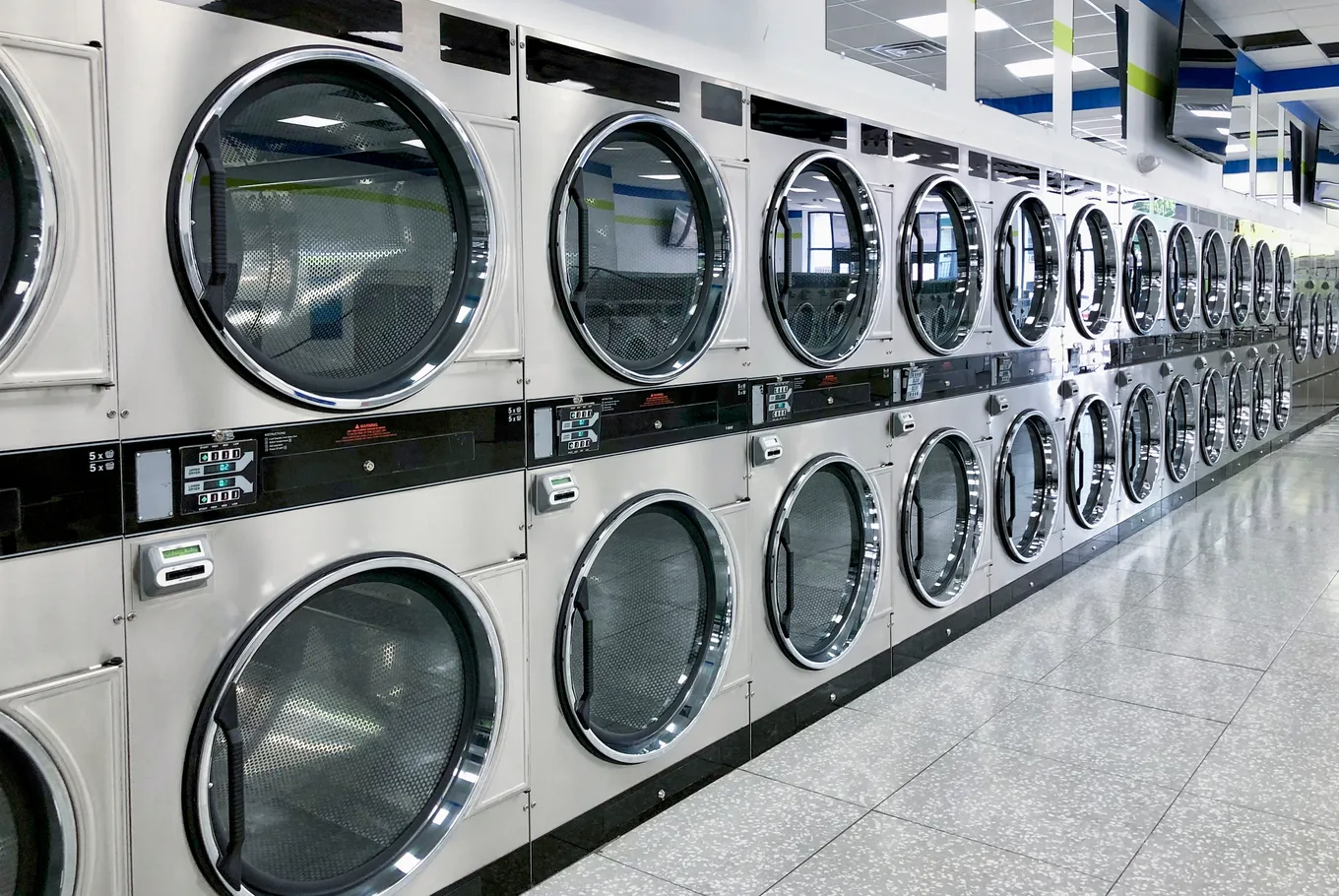

A self-service laundromat is the unattended end of the laundry business. Customers walk in, run their own loads in your washers and dryers, pay through a coin box or a card system, and leave — often when no one from your operation is on site at all. That single operating fact, the absence of an attendant, is what makes the insurance distinct from any other small commercial property.
The two signature exposures both come straight out of the unattended model. The first is premises liability: a customer slips on a wet floor with no staff present to mop the spill, flag the hazard, or render aid. The second is late-discovery property loss: a supply line behind a washer fails on a Sunday night and runs until Monday morning, or a dryer-lint fire starts during overnight hours when the site is empty. Neither would be a major claim at an attended business where someone is on the floor to catch it early.
The self-service model does have an upside on the program. With little or no staff on payroll, the employee-injury exposure that drives the workers’ compensation line shrinks, and because customers keep their own laundry, the care-custody-and-control exposure that drives a full bailee placement stays small. The model trims two lines while it loads two others.
This page walks through what makes self-service laundromat insurance different, the state and regulatory considerations that touch coin and card vending, the coverage lines the model needs, the drivers that move cost, the claims that actually come through, and the underwriting realities that decide what gets written and what gets declined.
- 48 stateslicensed to place coverage
- 15+ marketsspecialty carrier panel
- 1–2 hrquote turnaround
- Unattended-riskcoin-op and card-op specialists
Running a coin-op or card-op location? Start a self-service laundromat quote and we will route it to the carriers in our panel that write the unattended class.
What Makes Self-Service Laundromat Insurance Different
A generic small-commercial property form is written for a business with people in it during operating hours. A self-service laundromat breaks that assumption. The floor is open and wet and electrified for long stretches with no employee present, which inverts the usual relationship between liability and property loss — the exposures that a staffed business contains are the exposures a coin-op leaves running.
Premises liability is the line where the difference shows first. A wet-floor general liability slip-and-fall is the lead anxiety of every self-service owner, because the standard mitigation — an attendant who mops a spill and posts a wet-floor sign — is exactly what the model removes. Carriers respond by pricing the unattended-premises exposure higher and by rewarding the substitutes: camera coverage, lighting, a documented cleaning cadence, and locking or staffed hours that close the highest-risk windows.
Property loss is the second axis. Your washers, dryers, water heaters, and boilers are both your revenue engine and your largest contents value, and a coin-op runs them hard. A leak behind a machine, a water-heater failure, or a boiler problem can run undiscovered for hours on an unattended site, turning a minor event into a major water-damage claim. That is why the property insurance placement for a coin-op leans on the equipment-breakdown endorsement — it is the sub-coverage that responds when a machine fails from an internal cause rather than a named peril.
Bailee exposure runs the other way. Because self-service customers stay with their own laundry, the care-custody-and-control exposure is small — most coin-op operations carry only a modest bailee’s coverage sublimit for edge cases like abandoned laundry or a bag held at the counter. Owners who later add attended wash-dry-fold cross into the full-service exposure profile, where a real bailee placement becomes load-bearing. Owners who go further and add solvent-based garment cleaning step into the dry cleaner profile, which carries its own pollution and environmental exposure on top of the laundry lines.
State & Regulatory Considerations
Self-service laundromats sit at the intersection of two regulatory regimes most small-commercial owners never think about until an inspector arrives. The first is weights and measures: coin and card vending devices are metrology-regulated, and most states require price posting and device accuracy on machines that take money for a measured service. The second is the fire code, which treats commercial dryers and their lint accumulation as a recognized fire hazard subject to inspection.
The specifics vary substantially by state, and a few of the largest laundromat markets each handle the rules differently:
- New York — dense urban storefront operations, with city-level fire-code enforcement and weights-and-measures inspection on coin and card devices.
- California — active local fire-marshal involvement and state weights-and-measures programs that inspect vended-service pricing.
- Texas — a large, growing laundromat base where county and municipal rules layer onto state device-accuracy requirements.
- Florida — high-humidity operating conditions that sharpen the water-damage and electrical-corrosion exposure carriers watch.
- Illinois — Chicago-area storefront density with municipal inspection regimes on both fire and vending devices.
None of these regimes is the insurance policy, but they shape it. A weights-and-measures violation or a fire-code citation surfaces in underwriting, and a clean inspection record is one of the markers that makes a self-service file easier to place in the specialty market.
Coverage Breakdown
A self-service laundromat program is built from a small number of lines, weighted toward property and premises liability rather than the staff-driven lines an attended business carries.
- General liability — the foundation line, responding to the wet-floor slip-and-fall that is the signature self-service claim, along with other third-party bodily-injury and property-damage events on your premises. On an unattended site this is the line carriers scrutinize hardest.
- Property insurance — covers your building (or your tenant improvements), your contents, and your business income if a covered loss shuts you down. The marquee sub-coverage here is equipment breakdown, which protects your washers, dryers, water heaters, and boilers against internal mechanical and electrical failure that a standard property form excludes.
- Crime coverage — theft and vandalism of the coin boxes and card systems, the cash-handling exposure unique to a vended-service business. A break-in that empties the coin boxes and damages the machines is a recurring self-service loss.
- Workers’ compensation — light or absent for a pure self-service operation with no staff, but mandatory in most states the moment you put even a part-time attendant or cleaner on the floor. Operators planning to add staff should size this line for where the business is headed.
- Bailee’s coverage — a modest sublimit only, since self-service customers keep their own laundry. It covers edge cases like abandoned laundry you store; it is not the load-bearing line it becomes on a wash-dry-fold operation.
Not sure which lines your coin-op actually needs? Send us the details and a CPCU-credentialed broker will structure the program to the unattended exposure.
What Self-Service Laundromat Insurance Costs
We do not publish premium figures, because a self-service quote is driven by the specifics of the site rather than by a class average. What we can describe is the framework — the drivers that move cost up or down for a coin-op or card-op operation.
- Operating model and hours. A fully unattended location open around the clock carries more premises-liability exposure than one with staffed or locked hours. The size of the attendant-absent window is a primary driver.
- Building and tenancy. Whether you own the building or lease it, the age of the structure, the condition of the electrical service, and the plumbing all move the property side of the quote.
- Machine fleet. The count, age, and maintenance history of your washers and dryers drive both the contents value and the equipment-breakdown exposure. Newer, well-maintained machines rate differently than an aging fleet.
- Loss-control posture. Lighting, interior and exterior cameras, a documented wet-floor cleaning schedule, lint-trap cleaning logs, and water-shutoff arrangements all reduce the exposure carriers are pricing.
- Crime exposure. The cash-handling profile of the coin boxes and card systems, the neighborhood, and prior theft or vandalism history move the crime line.
- Claims history. Prior water-damage, fire, slip-and-fall, or theft claims weigh heavily on where a self-service file can be placed and at what terms.
The practical takeaway: the operators who control their loss-control posture — lighting, cameras, cleaning logs, and machine maintenance — are the ones the specialty market competes for, and that competition is what moves price.
Claims Scenarios
The claims that come through a self-service program cluster into a handful of recurring shapes. The descriptions below are qualitative and name no carriers — appetite and adjuster handling vary across the specialty market.
- Unattended slip-and-fall. A customer slips on water tracked across the floor late in the evening, with no attendant present to have mopped it or posted a sign. The general liability line responds, and the carrier reviews camera footage and the documented cleaning schedule.
- Late-discovered water-damage event. A supply line or hose behind a washer fails overnight and runs for hours before the morning open. The property line responds to the building and contents damage; the equipment-breakdown endorsement responds if a machine failure caused it.
- Equipment breakdown. A motor burnout, an electrical arc, or a water-heater failure takes a bank of machines offline. The equipment-breakdown sub-coverage responds to the machine repair and, where covered, to the lost income while the machines are down.
- Coin-box or card-system theft and vandalism. A break-in during unattended hours empties the coin boxes, pries open the card systems, and damages the machines in the process. The crime and property lines respond together.
- Dryer-lint fire. Lint accumulation in a dryer or duct ignites during overnight hours when the site is empty, before anyone can intervene. The property line responds to the fire damage; the loss-control record on lint-trap cleaning is part of the file.
Underwriting Realities
Carriers in the laundromat market read a self-service submission through one question: what stands in for the attendant who is not there? The answer is a set of physical and procedural controls, and the file that documents them is the file that gets written on competitive terms.
The markers that move a self-service file include the lighting level and whether the exterior is lit at night, the presence and coverage of interior and exterior cameras, whether the location locks or is staffed during the highest-risk overnight window, and a documented cleaning schedule that shows the wet floors are managed. On the property side, the age and maintenance history of the machines, the condition of the electrical service, the plumbing, and the lint-trap cleaning logs all carry weight. The water-shutoff arrangement — whether there is an automatic shutoff or an accessible manual valve — speaks directly to the late-discovery water exposure.
What gets declined or non-renewed tends to share a profile: an unmonitored, poorly lit site with no cameras, an aging unmaintained machine fleet, a history of water or fire claims, or open weights-and-measures or fire-code violations. A coin-op that arrives with cameras, lighting, clean maintenance and cleaning logs, and a clean inspection record is a fundamentally different risk to the market than one that arrives with none of those, even when the two sites look identical from the street.
Why Laundromat Guard Insurance
We place self-service, coin-op, and card-op laundromat coverage across 48 U.S. states through a 15-carrier specialty panel that writes the unattended laundromat class specifically. A generic agent quoting a coin-op off a strip-mall commercial template misses the two things that define the risk — the unattended-premises liability and the late-discovery water exposure — and the quote that comes back is priced for a business that does not exist.
We structure the program around the model you actually run. For a pure self-service site, that means weighting the placement toward premises liability and property with equipment breakdown, keeping the bailee sublimit modest, and right-sizing or zeroing the workers’ compensation line to match the staffing. When an owner is planning to add attended full-service wash-dry-fold, we build the program to where the business is going, not just where it is today.
The placement work is done by a CPCU-credentialed broker — the senior property and casualty credential the industry awards — and the panel is reviewed quarterly so carrier appetite shifts on the unattended class do not surprise you at renewal.
Learn more
Coverage lines that build a self-service laundromat program:
- General Liability
- Property Insurance
- Bailee’s Coverage
- Workers’ Compensation
- Professional Liability
- Commercial Auto
- Employment Practices Liability
Other operating models we insure:
Primary-source authorities for the vending, fire, and insurance-regulation side of self-service laundry:
- NIST State Weights and Measures Directors — state programs that regulate coin and card vending price posting and device accuracy.
- NIST Handbook 44 — the metrology standard for vending and measuring devices used in self-service operations.
- U.S. Fire Administration State Fire Agency Contacts — the fire-service contacts behind dryer-lint fire prevention and commercial fire-code enforcement.
- NAIC State Insurance Departments Directory — the state DOIs that regulate the commercial policy forms a self-service program is filed under.
Frequently asked questions about Self-Service Laundromat insurance
What insurance does a self-service laundromat need?
A self-service coin-op or card-op laundromat is built on three core lines. General liability covers the slip-and-fall on a wet floor — the single largest exposure at an unattended site where no staff is present to mop a spill or flag a hazard. Property insurance covers the building, the contents, and the equipment-breakdown peril that protects your washers, dryers, water heaters, and boilers. A crime line covers theft and vandalism of the coin boxes and card systems. Workers’ compensation is light or absent for a pure self-service operation because there is little or no staff on site.
How does being unattended change my laundromat insurance?
Unattended operation is the defining underwriting fact of the self-service model. Without an attendant on the floor, a wet-floor hazard sits uncorrected, a supply-line failure runs for hours before anyone notices, and a dryer-lint fire can start during overnight hours with no one to catch it early. Carriers price the unattended-premises liability and the late-discovery water-damage exposure higher, and they look closely at lighting, camera coverage, locking hours, and water-shutoff arrangements. The trade-off is that the same model trims the employee-injury and payroll exposure that drives the workers’ compensation line on an attended site.
Do I need bailee’s coverage for a self-service laundromat?
Usually only a modest sublimit. In a pure self-service operation, customers stay with their own laundry the entire time, so the care-custody-and-control exposure that drives a full bailee placement is limited. The exposure shows up at the edges — a customer who asks you to hold a bag, abandoned laundry you store, vending merchandise on the floor. The moment you add attended wash-dry-fold or drop-off, the bailee limit needs to be re-rated for the new exposure that the full-service model creates.
What is equipment breakdown and why does it matter for a coin-op?
Equipment breakdown is the property sub-coverage that responds when your washers, dryers, water heaters, or boilers fail from an internal cause — a motor burnout, an electrical arc, a pressure-system rupture — rather than from a named peril like fire. It is the marquee coverage for a coin-op laundromat because your machines are both your revenue engine and your single largest contents value. A standard property form often excludes mechanical and electrical breakdown, so the endorsement has to be added on purpose.
How do carriers underwrite an unattended laundromat?
They focus on the controls that substitute for an absent attendant. Lighting levels, interior and exterior camera coverage, locking or staffed hours, a documented cleaning schedule for wet floors, lint-trap cleaning logs, and an automatic or accessible water shutoff all move the file. The age and maintenance history of the machines, the condition of the electrical service, and the prior claim history round out the picture. A site with good lighting, working cameras, and a clean maintenance log is a different risk to the specialty market than a dim, unmonitored location.
What are the most common self-service laundromat claims?
The recurring categories are a slip-and-fall on a wet floor with no attendant present, a water-damage event behind a washer discovered late, equipment breakdown that takes a bank of machines offline, theft or vandalism of coin boxes and card systems, and a dryer-lint fire that starts during unattended hours. Each one traces back to the same root fact — the site runs without staff for part or all of the day — which is why the controls that reduce these events are exactly what carriers reward at quote.
Does workers’ compensation apply to a self-service laundromat?
It is light for a pure self-service operation. If you run with no employees — no attendant, no cleaning staff on payroll — there may be little or no workers’ compensation exposure. The moment you put a person on the floor, even part-time, the line becomes mandatory in most states. Operators who later add attended wash-dry-fold cross into a heavier workers’ compensation profile and should expect that line to grow with the staffing.
How is self-service laundromat insurance different from full-service?
The two models trade one set of exposures for another. Self-service trims the employee-injury and bailee exposure because there is little staff and customers keep their own laundry. In exchange it adds unattended-premises liability — the slip-and-fall, the late-discovered water event, the overnight fire — because no one is on site to intervene. Full-service adds attended-floor workers’ compensation and a real bailee placement for the wash-dry-fold goods, but gains the staff presence that catches a hazard before it becomes a claim.
Get a real self-service laundromat quote
Tell us about your operation — unattended hours, machine count, camera and lighting setup, prior claims if any — and we will route it to the carriers in our panel that fit the unattended exposure.