
States we serve · Texas
Texas Laundromat Insurance
From Gulf Coast hurricane wind to DFW spring hail and the Texas non-subscriber workers’ compensation election, a Texas laundromat program has to be built to this state — not to a national average. We place it across 48 states through a specialty panel that writes the class.
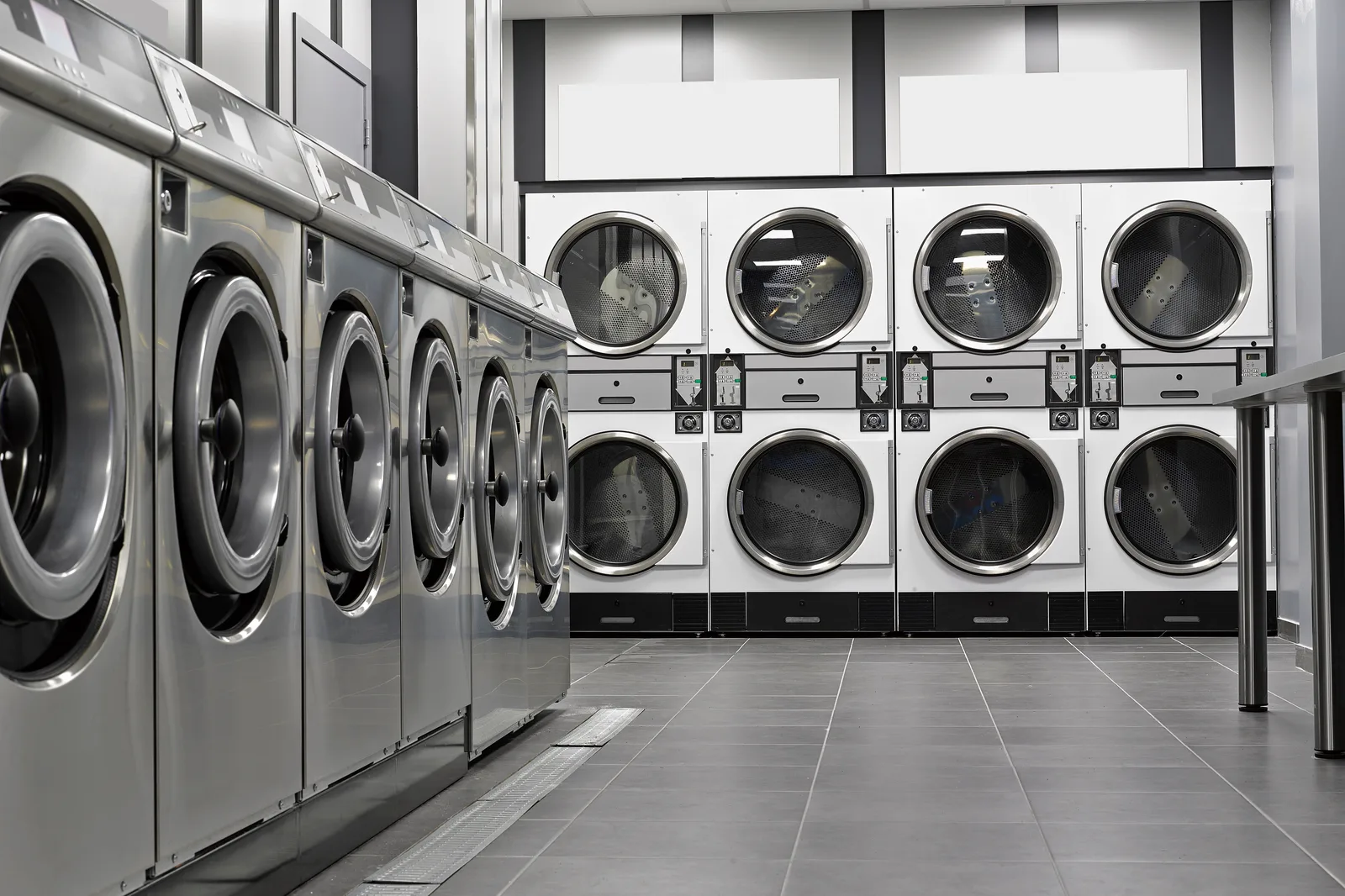

Texas runs the largest coin-laundry footprint in the country outside of California, spread across metros that each carry a distinct peril profile — Houston and the upper Gulf Coast under hurricane wind, the Dallas–Fort Worth Metroplex under spring hail and tornado, and the fast-growing I-35 corridor from Austin to San Antonio under straight-line population pressure. A laundromat program written to a national template misses all three.
The state also carries one genuinely unusual insurance feature. Texas is the only state where private-employer workers’ compensation is elective rather than mandatory — an owner can register as a non-subscriber and opt out. That single rule reshapes how an attended laundromat thinks about employee-injury exposure, and it is the first thing a Texas owner needs to get right.
This page walks through what drives the cost, the regulators and licensing layers that apply, the four coverage lines that build the program, the risks and claims we see most in Texas, and the major metro markets where the underwriting actually changes.
- 48 states licensed and writing laundromat coverage
- 15+ markets specialty carriers on the panel
- 1–2 hr quote turnaround on most submissions
- TX Gulf Coast, DFW, and I-35 corridor coverage
Operating in a coastal county or weighing the non-subscriber decision? Start a Texas quote and we will build the program to your county and your staffing.
What Texas Laundromat Insurance Costs
There is no published price for Texas laundromat insurance, because the premium is assembled from the operation’s specifics. The drivers below are what move the number — a quote sizes them to the actual operation rather than a template.
- County wind and named-storm exposure. A site in a coastal county near Houston or Galveston carries a separate wind or named-storm deductible. The county the operation sits in is one of the largest single property drivers in Texas.
- Payroll and the non-subscriber decision. If the operation carries workers’ compensation, the premium is rated on attendant payroll. If it elects non-subscriber status, the employee-injury exposure shifts to the liability side — a different and often larger cost calculation.
- Wash-dry-fold and drop-off volume. The bailee limit is sized to how much customer property moves through the operation. Higher order volume means a higher bailee exposure.
- Machine count, age, and value. The property and equipment-breakdown premium tracks the number, age, and replacement value of the washers and dryers. West Texas hard water accelerates wear on water-handling components, which underwriters factor in.
- Pickup-and-delivery routes. Running routes across the Houston or DFW metro adds a commercial-auto layer and a bailee transit sublimit.
- Claims history. Prior bailee, slip-and-fall, or wind losses move the rate and can narrow the set of carriers willing to quote.
Texas has no state personal income tax, but that has no bearing on the commercial premium — the cost is driven entirely by the exposure profile above. See the property insurance page for how the wind and equipment-breakdown components are structured.
Texas Laundromat Regulations & Licensing
Insurance regulation
Commercial insurance in Texas is regulated by the Texas Department of Insurance (TDI), which reviews policy forms and rates and handles consumer complaints. The policy forms behind a laundromat program — liability, property, bailee — are filed under TDI authority.
Workers’ compensation — the non-subscriber election
Texas is the only state in which private-employer workers’ compensation is elective. The TDI Division of Workers’ Compensation administers the system, and an employer that opts out registers as a non-subscriber. A non-subscriber gives up the legal protections the workers’ compensation system provides, so an injured attendant can pursue a direct negligence claim. For an attended full-service site, that is the single most consequential regulatory decision in the state.
City and county overlays
Beyond the state layer, Texas laundromats operate under municipal certificate-of-occupancy, signage, and zoning rules that vary by city. A new or relocating operation should confirm the local certificate-of-occupancy and any wastewater-discharge permit before signing a lease.
Environmental — dry-cleaner solvents
Operations that run a dry-cleaning side fall under the Texas Commission on Environmental Quality (TCEQ), which administers the Texas Dry Cleaner Remediation Program for solvent contamination. At the federal level, perchloroethylene use is governed by the EPA Perc NESHAP rule (40 CFR Part 63 Subpart M). A dry-cleaner operation carries this exposure; a pure wash-dry-fold laundromat does not.
Fire and worker safety
The Texas State Fire Marshal’s Office, housed within TDI, oversees fire-safety standards relevant to the dryer-lint fire exposure every laundromat carries. Worker-safety conditions on an attended floor fall under federal OSHA 29 CFR 1910 general-industry standards — machine guarding, lockout/tagout, and hot-surface handling.
Tax
Texas levies no state personal income tax, and laundry services have specific sales-tax treatment under state law. Confirm the current sales-tax classification for coin-operated versus attended laundry with a Texas tax professional before opening.
Texas Laundromat Coverage Lines
A Texas laundromat program is built from four core lines, each sized to the state’s peril and staffing profile.
- General liability. Third-party bodily injury and property damage — most commonly a customer slip-and-fall on a wet floor. On a Texas non-subscriber site, this line also carries the weight of the employee-injury exposure that would otherwise sit on workers’ compensation.
- Property insurance. The building, contents, and machines against fire, wind, hail, and water — with the coastal-county wind deductible and the equipment-breakdown sub-coverage that pays for the mechanical failure of washers and dryers. Business income within this line replaces revenue while a storm-damaged site is closed.
- Bailee’s coverage. Damage to or loss of customers’ wash-dry-fold and drop-off goods while in your care — the exposure general liability excludes by design.
- Workers’ compensation. Employee medical and lost wages for attendant injuries. Elective in Texas, but the line most attended operators carry rather than take on the non-subscriber liability.
Upgrading a coin site to wash-dry-fold in Texas? Start from the self-service program, then request a full-service quote.
Common Laundromat Risks in Texas
The risks that shape a Texas program cluster around the state’s weather and its staffing rules.
- Coastal hurricane wind. Named-storm wind from Houston to Corpus Christi damages roofs, signage, and rooftop equipment, and can trigger a multi-week closure that drives a business-income loss. This maps to property insurance with equipment breakdown.
- DFW hail and tornado. North Texas spring hail damages roofs and exterior units and is a frequent property claim across the Metroplex.
- Attendant injury under the non-subscriber rule. A back strain or dryer burn that would be a routine workers’ compensation claim becomes a direct liability matter for a non-subscriber — a materially larger exposure.
- Slip-and-fall. Wet floors in high-traffic metro sites drive third-party injury claims handled under general liability.
- Wash-dry-fold loss. A ruined or lost drop-off order is a bailee claim that general liability will not pay.
- Hard-water equipment wear. West Texas hard water accelerates scaling on water-handling components, raising the equipment-breakdown exposure.
Common Texas Laundromat Claims We See
The descriptions below are qualitative — appetite and adjuster handling vary across the specialty market, and none name specific carriers.
- Hurricane wind roof loss. A named storm strips part of a roof on a Houston-area site, water reaches the wash floor, and the operation closes for repairs. Property pays the physical damage; business income bridges the revenue gap.
- Spring hail equipment damage. A DFW hailstorm dents rooftop HVAC and damages exterior dryer venting. The property line responds, and equipment breakdown picks up the mechanical failure that follows.
- Non-subscriber attendant injury. An attendant at a non-subscriber site strains a back lifting a heavy wet order and pursues a direct negligence claim — handled on the liability side rather than as a workers’ compensation matter.
- Ruined wash-dry-fold order. A drop-off load processed on the wrong cycle comes back damaged. The bailee line responds, and the intake ticket is the record the adjuster works from.
- Customer slip-and-fall. A customer goes down on a wet floor at a high-traffic Austin-corridor site; general liability handles the bodily-injury claim.
Major Texas Laundromat Markets
Underwriting changes by metro across Texas. The submarkets below each carry a distinct exposure that moves the program.
Houston & the Ship Channel
The Houston metro sits in the upper-Gulf named-storm wind zone, and laundromats clustered near the Buffalo Bayou flood plain carry a wind-plus-flood double exposure that pushes property placement toward higher named-storm deductibles and a separately rated flood layer.
Galveston & the barrier-island coast
Galveston Island operations sit in the most severe Tier-1 windstorm band on the Texas coast, where the state windstorm-pool considerations and high named-storm deductibles make property the dominant line in the program rather than liability.
Dallas–Fort Worth Metroplex
The DFW Metroplex sits squarely in the spring hail-and-tornado belt, so roof age and rooftop-equipment exposure drive the property rate, and underwriters weigh hail-frequency history more heavily here than anywhere else in the state.
Austin & the I-35 growth corridor
The Austin segment of the I-35 corridor pairs rapid population growth with new mixed-use construction, producing high-traffic attended sites where the slip-and-fall liability exposure and the wash-dry-fold bailee volume both run above the state norm.
San Antonio & the South Texas demographic base
San Antonio’s dense, value-conscious residential base supports high coin-volume self-service sites, where the underwriting attention falls on coin-box theft exposure and the cash-handling and security controls rather than on weather.
Corpus Christi & the Coastal Bend
Corpus Christi and the Coastal Bend sit in the lower-Gulf hurricane landfall zone, where the combination of named-storm wind and storm-surge proximity makes business-income sizing — covering a multi-week post-storm closure — the decisive part of the property placement.
El Paso & the far-West hard-water belt
El Paso sits in the far-West Texas hard-water belt and outside the wind-and-hail zones entirely, so the equipment-breakdown exposure from accelerated scaling on water-handling components, not weather, is the line that drives the property conversation here.
The Rio Grande Valley
The Rio Grande Valley combines lower-coast hurricane exposure with a high-density, high-utilization residential laundromat base, so carriers weigh both the named-storm property loading and the heavy machine-wear and equipment-breakdown frequency that constant use produces.
Why Texas Laundromat Owners Choose Laundromat Guard Insurance
We place laundromat coverage across 48 U.S. states through a 15-carrier specialty panel that writes the laundromat and dry-cleaner classes specifically. In Texas that means we underwrite the coastal-county wind deductible, the DFW hail history, and the non-subscriber workers’ compensation decision as part of the same conversation — not as an afterthought on a generic package.
A generic agent quoting a strip-mall package rarely surfaces the Texas non-subscriber trade-off or sizes the bailee limit to a real wash-dry-fold operation. We do both, we add the commercial-auto layer when pickup-and-delivery routes run across a metro, and we structure the business-income component to the revenue a coastal storm could interrupt.
The placement work is done by a CPCU-credentialed broker — the senior property and casualty credential the industry awards — and the panel is reviewed quarterly so carrier appetite shifts do not surprise you at renewal.
Related Reading
Texas shares its Gulf and Atlantic wind exposure with the rest of the South. Compare the program structure in Florida, where named-storm deductibles run statewide, and Georgia, where the combined insurance-and-fire-marshal regulator and the I-285 corridor density change the picture. For shared hurricane context further up the coast, see North Carolina.
On the operating-model side, most Texas programs start from a self-service footprint and add the full-service bailee and workers’ comp lines as wash-dry-fold volume grows; a dry-cleaner side brings the TCEQ solvent considerations into the program.
Texas Laundromat Insurance FAQs
Is workers’ compensation required for a Texas laundromat?
Texas is the one state where private workers’ compensation is elective for most employers — an owner can choose to be a “non-subscriber” and opt out. That choice carries a real trade-off: a non-subscriber loses the liability shield the workers’ compensation system normally provides, so an injured attendant can sue directly for negligence. The Texas Department of Insurance Division of Workers’ Compensation administers the system. Most full-service operators with attendants carry the coverage rather than absorb the non-subscriber exposure.
How does Gulf Coast hurricane wind affect Texas laundromat insurance?
Coastal counties from Houston down to Corpus Christi sit in a named-storm wind zone, and that drives the property side of the program. Carriers apply separate wind or named-storm deductibles in those counties, and the roof, signage, and equipment exposure feeds the property rate. A storm that takes the wash floor offline also triggers a business-income consideration, which is why coastal operators size that component to the revenue at stake rather than treating it as an afterthought.
What does laundromat insurance cost in Texas?
There is no single number, because the premium is assembled from the operation’s specifics — square footage, machine count and age, attended hours and payroll, wash-dry-fold volume, county wind exposure, and prior claims. A coastal site near Galveston carries a different property rate than an inland site in the I-35 corridor. The fastest path to a real figure is a quote routed to the specialty markets that write the laundromat class in Texas.
Do I need bailee’s coverage if I take wash-dry-fold orders in Texas?
Yes. The moment an attendant accepts a drop-off bag or a wash-dry-fold ticket, the customer’s laundry becomes property in your care, custody, or control — and general liability excludes exactly that. A ruined load or a lost garment is paid out of pocket without bailee’s coverage. The limit is sized to order volume, with a separate transit sublimit if pickup-and-delivery routes run across the Houston or Dallas metro.
Does Texas regulate dry-cleaner solvents at a laundromat?
If the operation runs a dry-cleaning side using perchloroethylene, yes. The Texas Commission on Environmental Quality administers the Texas Dry Cleaner Remediation Program and oversees solvent handling, while the U.S. EPA Perc NESHAP rule sets the federal air-emission baseline. A pure wash-dry-fold laundromat without solvent equipment falls outside the dry-cleaner remediation program, but any solvent use moves the operation into that regulated tier.
How does spring hail in the DFW area affect my property coverage?
North Texas sees frequent spring hail and tornado activity, and roof and rooftop-equipment damage is a recurring property claim in the Dallas–Fort Worth area. Carriers watch roof age and construction type closely in that zone, and a documented roof-maintenance record helps the placement. Equipment breakdown sits inside the property program and responds to the mechanical failure that a hail or power event can trigger in the machines themselves.
Are Texas laundromat claims handled differently because of the non-subscriber rule?
For owners who carry workers’ compensation, attendant-injury claims are handled the same way as in any other state — medical and lost wages flow through the policy. For a non-subscriber, an attendant injury becomes a direct liability matter rather than a workers’ compensation claim, which is a materially different and often larger exposure. That distinction is the single most Texas-specific factor in how an attended laundromat structures its program.
Get a real Texas laundromat insurance quote
Tell us about your operation — county and metro, attended hours and payroll, wash-dry-fold volume, the non-subscriber decision, machine count, and prior claims if any — and we will route it to the carriers in our panel that fit the Texas exposure.