
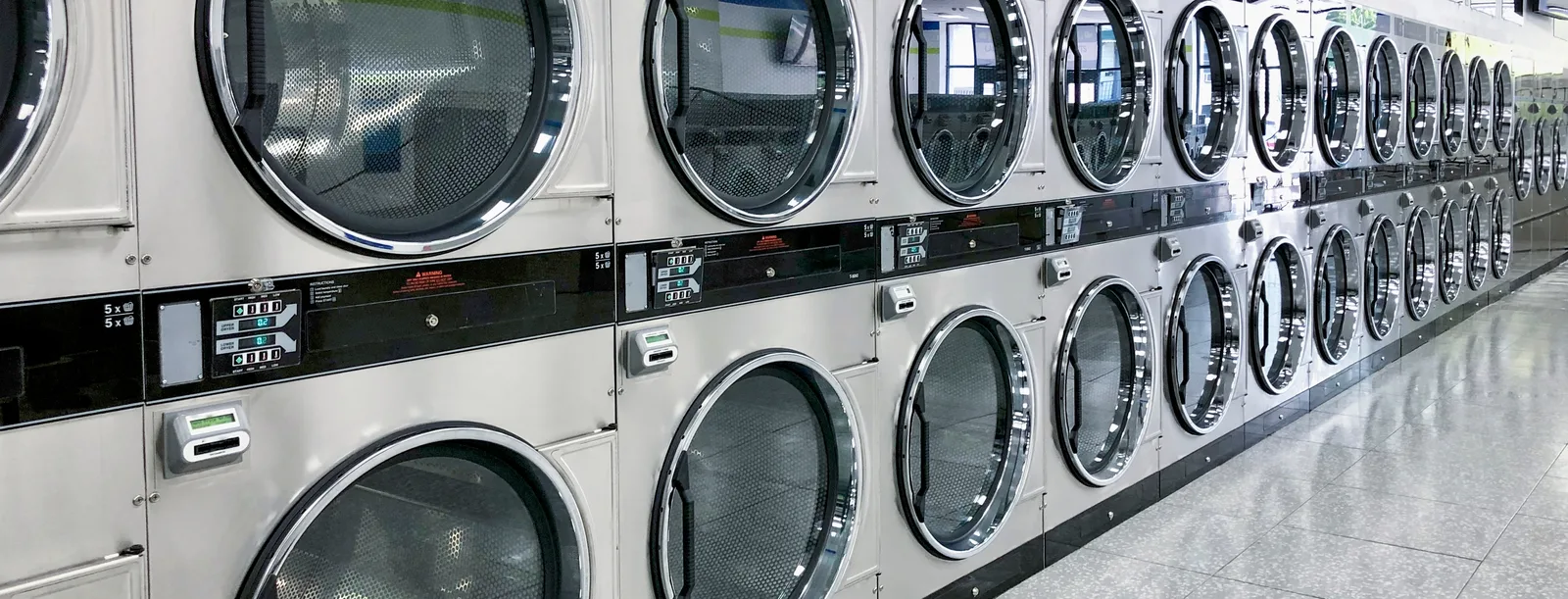

Lint accumulation in dryer exhaust is a documented ignition source, and a written vent-cleaning schedule is the most cost-effective fire-prevention step a laundromat owner can take. Clean the lint screen each shift, clean the cabinet and transition ducting periodically, clean the full exhaust run on a dated cadence, and keep the log where a fire marshal or an underwriter can read it.
Treat dryer venting as the building’s primary fire risk
Dryers and their exhaust systems are the most fire-prone subsystem in a laundromat. Lint is highly combustible, and the combination of heat and airflow inside exhaust ducting creates ideal conditions for ignition once lint builds up. A laundromat concentrates many high-duty dryers under one roof, which multiplies the exposure well beyond a single home unit.
The data backs this up. The U.S. Fire Administration fire-data resources document that clothes-drying equipment is regularly involved in structure fires, and the Consumer Product Safety Commission has long flagged lint buildup as a leading cause of dryer fires. Because fire is one of the largest drivers of property and equipment pricing, controlling this risk is where prevention dollars work hardest.
Build a vent-cleaning cadence and write it down
Commercial dryers run far harder than home units, so a once-a-year cleaning is rarely enough. The right interval depends on machine count and daily run hours, but high-volume locations frequently clean monthly or quarterly. What matters as much as the interval is that it is scheduled, performed, and recorded.
Keep a dated log that records each cleaning, the machines or duct sections serviced, who did the work, and any findings. That log is the single most useful document you can hand a fire marshal or an underwriter — it converts a routine into verifiable evidence of risk control. The same discipline of dated record-keeping protects a slip-and-fall claim defense and underpins the loss history a buyer will inspect when you sell.
Clean more than the lint screen
Wiping the lint screen each shift is necessary but not sufficient. Lint migrates past the screen into the dryer cabinet, collects in the transition ducting behind each machine, and accumulates along the full exhaust run to the building exterior. A complete program addresses all 3 zones:
- The lint screen, cleaned frequently throughout each operating day.
- The dryer cabinet interior and transition ducting, cleaned periodically.
- The full exhaust system to its exterior termination, cleaned on a scheduled cadence using qualified service when the run is long or complex.
Skipping the deeper zones leaves combustible material exactly where heat and airflow concentrate.
Align the exhaust system with NFPA standards
Construction matters as much as cleaning. Exhaust runs should use rigid metal duct, terminate properly outdoors, and avoid excessive length and bends that trap lint and choke airflow. The National Fire Protection Association codes and standards govern dryer-exhaust design, including venting material and termination requirements.
Confirm your venting matches current NFPA guidance and keep records of any modifications. Improperly routed or undersized venting traps lint no matter how often it is cleaned, so a one-time correction of the duct path can do more for fire safety than additional cleaning of a flawed system.
Real-World Scenario: An attended laundromat that had always wiped its lint screens diligently still ran into trouble during a routine fire inspection. The marshal traced the exhaust and found a long flexible duct with several sharp bends behind the dryer bank, packed with lint the screen never caught. The owner replaced the run with rigid metal duct on a shorter, straighter path and added the full exhaust system to a quarterly cleaning log. The next inspection passed without comment, and the maintenance record became a talking point at the following insurance renewal.
Know what the fire marshal will check
A fire marshal’s inspection effectively enforces the same discipline an insurer prices. Inspectors focus on dryer-exhaust condition and termination, the state of any gas-fired equipment, electrical capacity, clear exits and signage, and accessible fire extinguishers. They may ask to see maintenance records.
An open citation for lint-clogged or improperly routed venting can halt operations until it is corrected, so passing the inspection is operationally essential, not just a formality. Locations with employees also fall under general workplace-safety rules — the OSHA general-industry standards (29 CFR 1910) address electrical safety and hazard items that overlap with fire prevention.
Understand why insurers price this risk
Carriers cannot promise a fixed discount for clean vents, but the connection between fire-risk control and pricing is direct. Fire exposure is among the largest drivers of property and equipment-breakdown cost for laundromats, so evidence that you control the building’s primary fire source supports favorable treatment at quote and at renewal. Our overview of what drives laundromat insurance cost and the deeper equipment breakdown premium drivers piece both put fire risk near the top of the list.
The relationship runs through several lines. Property coverage responds to the building and equipment if fire strikes; equipment breakdown coverage for laundromats responds to sudden mechanical or electrical failure of the machines; and a serious fire that closes the doors implicates business income coverage for laundromats. Maintenance discipline supports favorable treatment across all of them.
Separate maintenance from coverage
Maintenance and insurance are related but distinct. Equipment-breakdown coverage responds to sudden mechanical or electrical failure of covered machinery; routine upkeep, including vent cleaning, is the owner’s responsibility and is generally not itself a covered loss. Neglected wear that leads to a slow failure can be harder to present as a sudden event, while a documented maintenance program supports the case that a breakdown was genuinely sudden.
This distinction holds across operating models. A self-service laundromat and a full-service laundromat carry the same fire physics; the attended location simply has staff who can perform and document cleaning during each shift, which is an operational advantage worth using.
Inspect gas-fired equipment and the electrical service
Lint is the fuel, but ignition often comes from elsewhere in the system. Gas-fired dryers add a flame source and a flue that need their own inspection cadence — check burners, gas connections, and flue integrity, and keep records of any service. Electrical faults are the other common ignition source: an overloaded panel, a worn motor, or a failing heating element can spark a fire even in a well-cleaned machine. Treat the electrical service and the gas equipment as part of the same fire-prevention program rather than separate concerns.
This is also where maintenance and coverage intersect most directly. A motor or heating element that fails suddenly may trigger equipment breakdown coverage for laundromats, while the fire that a neglected component causes implicates property coverage. Documenting the inspection of gas and electrical components supports a clean claim under either line by showing the failure was sudden rather than the predictable end of ignored wear.
Plan for the worst case before it happens
Prevention reduces the odds of a fire; it does not eliminate them. A serious fire can close a laundromat for weeks, and during that time the rent and loan payments do not pause. That is why a fire-prevention program should sit alongside a coverage plan that includes business income coverage for laundromats to replace revenue during the repair period. Owners weighing the full cost picture can see how fire risk threads through every line in what drives laundromat insurance cost and laundromat insurance cost by operating model.
Keep an emergency plan posted for staff: where extinguishers are, how to shut off gas and power, and how to evacuate customers safely. A laundromat that has rehearsed the response loses less and recovers faster, and the plan itself is another piece of documentation that demonstrates a disciplined operation to a carrier.
Make prevention part of how the location runs
Fold the vent-cleaning program into daily operations rather than treating it as an annual chore. Post the screen-cleaning routine for staff, schedule the deeper cleanings on the calendar, and review the log monthly. Buyers evaluating a laundromat purchase should ask for exactly this documentation, and owners in larger markets such as Texas, Florida, and Georgia — where high run volumes and heat add to dryer duty — have particular reason to keep the cadence tight.
When fire prevention is documented and routine, the location is safer for customers and staff, more likely to pass inspection, and presents far better to a carrier. The quote form is the place to start once your venting and your log are in order, and the about page explains how we approach laundromat risk.