

Laundromat insurance cost is driven by a handful of measurable factors rather than a single number: building age and construction, equipment mix and fuel source, square footage, whether the store is attended or unattended, prior claim history, and geography. Each one pushes the premium up or down, and underwriters price the combination.
The cost drivers underwriters actually weigh
No two laundromats rate identically because no two share the same risk profile. A carrier builds a premium by stacking modeled exposures: how likely is a fire, a water-damage claim, a slip-and-fall, or an equipment breakdown, and how severe would each be? The physical building, the machines inside it, the way the store operates, and where it sits all feed that model. Understanding the drivers lets you document the favorable ones and improve the unfavorable ones before renewal. The lines most affected are property insurance and general liability.
Building age and construction
Older buildings cost more to insure, all else equal, because age proxies for risks the underwriter cannot inspect directly. Aging electrical service raises fire likelihood; older galvanized or polybutylene supply lines raise the odds of a water-damage loss; an older roof is more exposed to wind and hail. Construction type matters too — masonry and fire-resistive structures generally model better than wood-frame. The most useful thing an owner can do is document improvements: a panel upgrade, a re-roof, or a repipe gives the carrier verifiable reasons to view the structure more favorably, and those updates often surface in the NFPA codes and standards a building was brought up to.
Equipment mix and fuel source
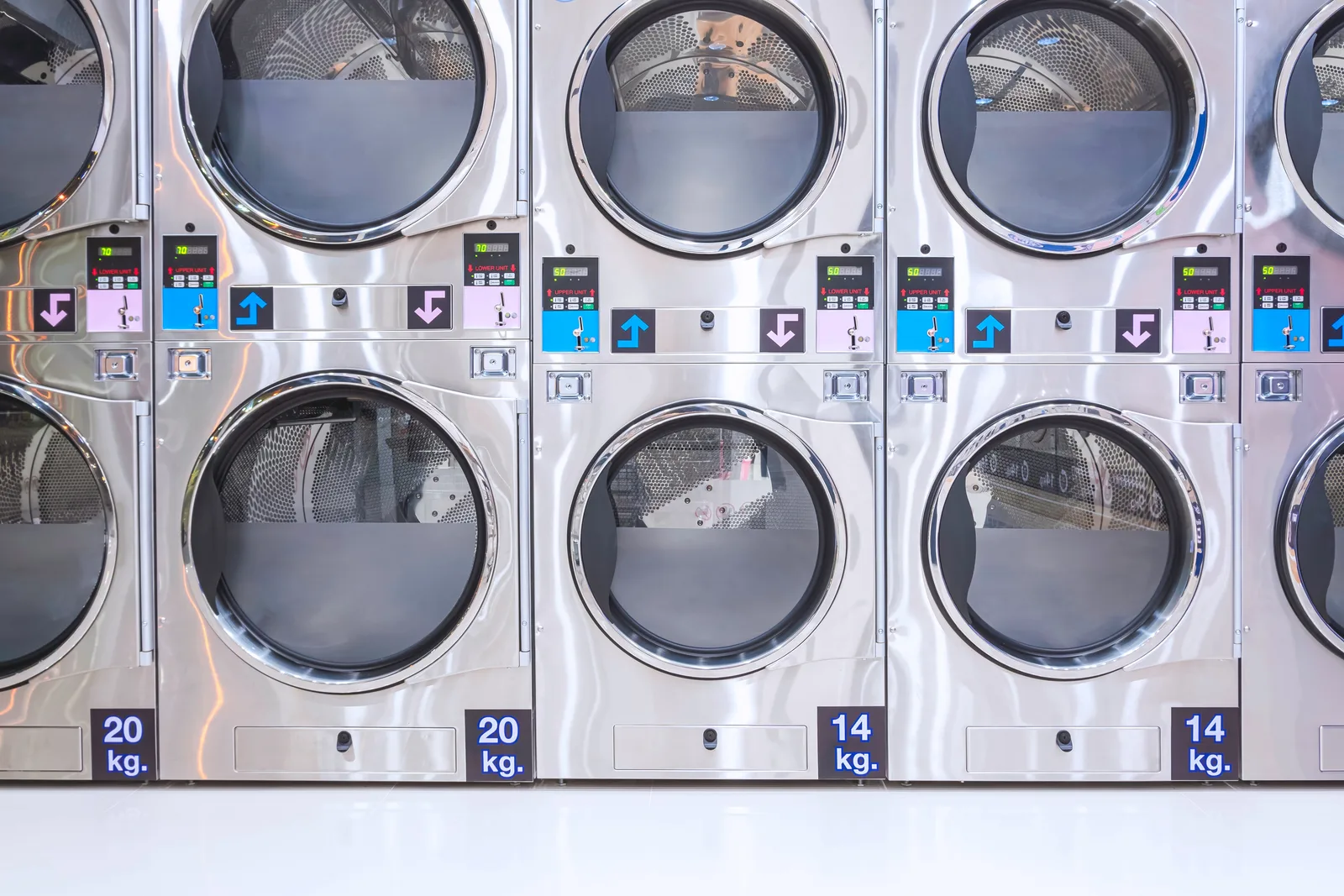
Your machine lineup is a direct premium driver because it sets both property value and breakdown exposure. The count, age, and especially the fuel source of dryers matter: gas dryers and any boiler or commercial water heater introduce combustion and pressure-vessel hazards that electric units don’t carry. A higher machine count concentrates more replaceable value under one roof, raising the modeled severity of a single fire or breakdown. Gas dryers also drive lint-fire risk, a hazard documented in the laundry-equipment fire data published by the U.S. Fire Administration. This is why equipment breakdown coverage is priced on its own drivers, which we unpack in the equipment-breakdown premium guide.
Square footage and store layout
Square footage scales several exposures at once, so it’s a baseline rating input. A larger floor holds more machines, more standing water risk, more walking surface for slip-and-fall, and more contents to replace after a loss. Layout matters alongside raw size — wide aisles, slip-resistant flooring, and clear drainage reduce the housekeeping hazard, while cramped layouts with folding tables crowding wet zones raise it. Owners who keep a documented slip-and-fall risk routine give underwriters a reason to treat the larger footprint more favorably.
Attended versus unattended operation
How the store is staffed reshapes the premium in two directions at once. An unattended, fully self-service store trims payroll-tied exposure and can reduce workers compensation needs, but it raises after-hours liability questions: who responds to a spill, a machine malfunction, or a security incident when no one is on site? An attended or full-service operation adds employees — and therefore workers comp and customer-property exposure — but also brings on-site response that can reduce certain liability claims. We compare the two models in detail in the operating-model cost guide.
Real-World Scenario: Two owners buy nearly identical storefronts on the same commercial strip. The first runs a self-service store in a building re-roofed and rewired three years ago, keeps a lint-cleaning and mopping log, and runs camera coverage with timed door locks. The second operates out of an un-updated building with original wiring, no documented maintenance, and a folding area that crowds the wet zone. At renewal, the first owner’s clean loss run and documented upkeep give the carrier concrete reasons to price favorably; the second owner’s undocumented older building and prior water claim push the other direction. Same square footage, very different premiums — driven entirely by factors the owners could see and, in part, control.
Prior claim history
Loss history is one of the strongest renewal-pricing signals, and frequency often matters more than a single severe claim. A clean multi-year loss run tells the carrier the store is well housekept and maintained. A pattern of small repeat claims suggests an unmanaged hazard the underwriter will price for. Because re-rating follows the documented pattern, loss-prevention work — lint management, coin-box and card-system security, and prompt water-leak repair — tends to pay back across renewal cycles. A new owner inherits this history, which is why the selling-your-laundromat insurance-history guide matters at acquisition.
Geography and catastrophe load
Where the store sits drives a large share of the premium for reasons outside the owner’s control. Coastal and Gulf locations carry windstorm and hail load; cold-climate states carry freeze-burst exposure on supply lines; some regions add earthquake or high-water-table considerations. Local fire-protection class, the distance to a responding station, and area crime statistics all feed the rate. We break this down by climate zone in the state-and-climate cost guide. The state insurance department in your jurisdiction — reachable through the NAIC directory of state insurance departments — regulates how these factors may be used in rating.
Why carrier appetite changes the answer
The same store can draw meaningfully different quotes because each carrier weights these drivers using its own loss data and appetite. One carrier may price coastal wind aggressively; another may discount a well-maintained older building; a third may favor unattended stores with strong monitoring. Comparing several appetites on a single submission is the most reliable way to find the model that treats your specific profile most favorably. That’s the core advantage of working a specialty panel rather than a single market — and it’s why an apples-to-apples quote on documented store details is the right starting point. You can learn more about how the agency works on the about page, and review the full general-liability primer for the line that most often moves with these drivers.
How the lines stack into a single premium
It helps to see the premium as a stack of lines rather than one number, because each driver feeds a specific line. Property responds to building age, construction, square footage, and geography. General liability responds to attended-versus-unattended status, floor layout, and slip-and-fall housekeeping. Equipment breakdown responds to machine count, age, fuel source, and boiler capacity. Workers compensation responds to payroll and staffing. Bailee responds to whether the store takes custody of customer garments. When you change one operational fact — adding staff, adding a wash-dry-fold counter, swapping gas dryers for electric — you move one or more of those lines, and the total shifts accordingly. Understanding which driver feeds which line tells you where a given improvement will actually show up. A documented re-roof helps property, not workers comp; a lint-management routine helps both equipment breakdown and the fire side of property; better lighting and monitoring help general liability on an unattended store. The lines that most owners can influence fastest are general liability and equipment breakdown, because both reward documentation of routines an owner can start this month. The catastrophe-driven portion of property is the hardest to move because it tracks geography, which is why two well-run stores in different regions can still diverge sharply on price.
Putting the drivers to work
Treat the drivers as a checklist you can act on. Document building updates, keep maintenance and housekeeping logs, invest in monitoring for unattended hours, manage lint and water hazards to suppress claim frequency, and present a clean, organized submission. Each step gives an underwriter a verifiable reason to price favorably rather than to assume the worst. Federal workplace-safety expectations under OSHA 29 CFR 1910 also shape the housekeeping standards carriers expect to see in an attended store.