
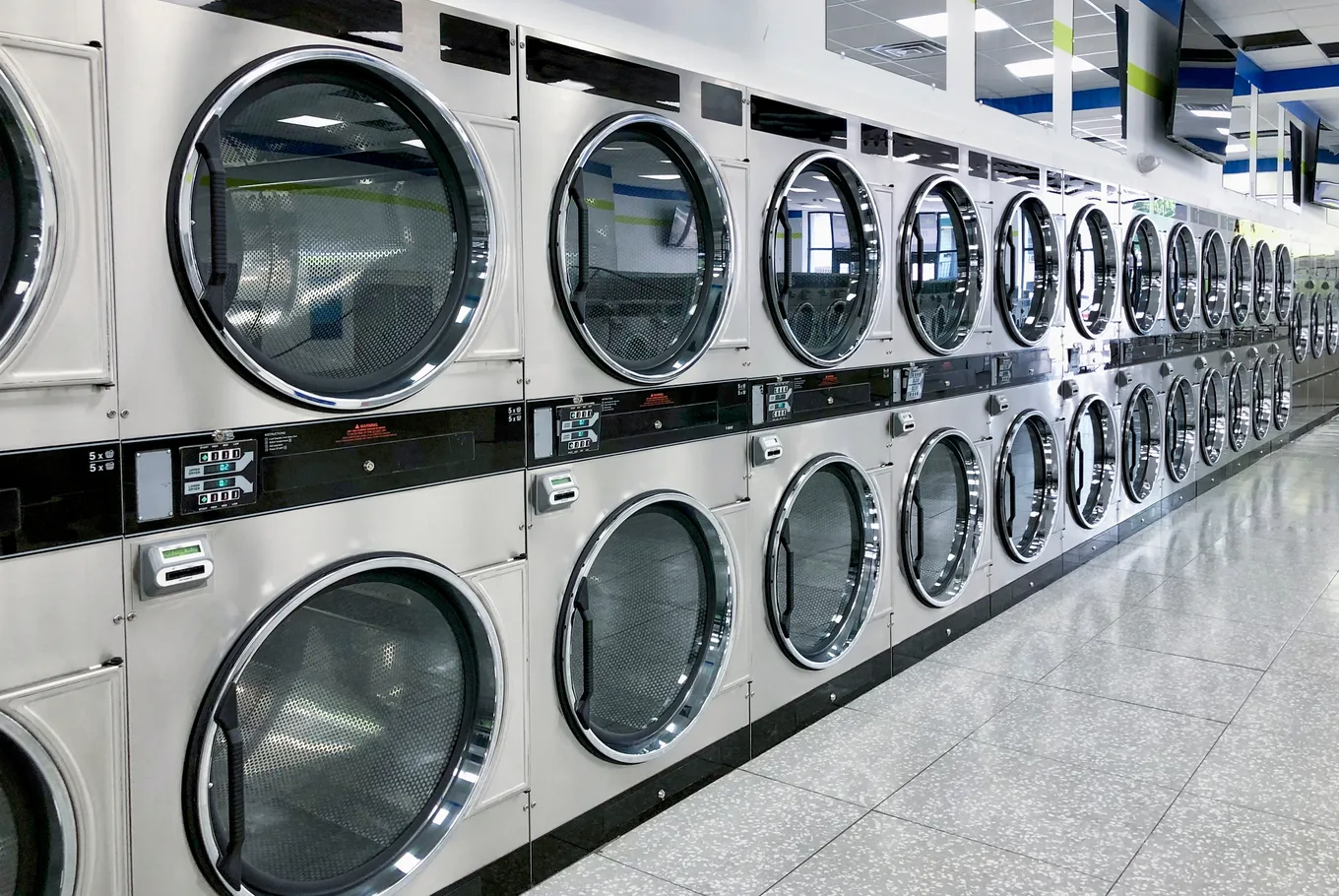

Theft and vandalism cluster at unattended laundromats, and the controls that stop them double as the controls underwriters reward. Reinforce coin boxes, move volume to tokenized card and mobile payment, place cameras to capture entrances and cash points, light the location well after hours, and run a monitored alarm. Each measure reduces loss frequency and strengthens how the location underwrites.
Recognize why unattended locations get targeted
An unattended laundromat holds cash in coin boxes and changers, often runs extended or overnight hours, and has no staff watching the floor. That mix of stored value, public access, and absent supervision is exactly what opportunistic theft and vandalism look for. The same factors that make the self-service model efficient also make it a target, which is why a self-service laundromat needs a deliberate security program rather than a single lock.
The financial case is direct: theft and vandalism claims show up in loss runs and pressure renewals. Reducing their frequency protects both the cash drawer and the property coverage that responds when a break-in succeeds. Our overview of what drives laundromat insurance cost places loss frequency near the top of the pricing factors an owner can control.
Reinforce the coin box and reduce on-site cash
Start with the physical target. Use hardened coin vaults, high-security locks, and anchoring that resists prying and pull-out attacks. Then attack the incentive: collect cash on a frequent, unpredictable schedule so little value ever sits in a machine. The less cash on site, the smaller the prize and the smaller the loss when an attempt succeeds.
Many owners go further and shift volume off cash entirely. Reinforcement slows a thief and limits the take; reducing the cash present removes the reason to try. Both moves matter for recovery and for how the location presents to a carrier.
Move to tokenized card and mobile payment
Modern card and mobile-payment systems shrink two risks at once. They cut the cash on site, and through tokenization they avoid storing customers’ actual card numbers on the laundromat’s equipment — the system substitutes a token during payment, so there is little sensitive data for a thief to capture. That reduces both the value of a break-in and the owner’s exposure to a payment-data incident.
For a higher-touch full-service laundromat that takes payment for wash-dry-fold at a counter, tokenized payment also simplifies the customer-transaction record that supports good bailee documentation when garments are in the operator’s care.
Place cameras where they do the most work
Cameras earn their keep at the entrances, over the coin boxes and change machines, across the main floor, and on any rear or service door. Position them to capture faces and license plates near the door, and make sure lighting supports clear footage at night. Recorded, time-stamped video deters theft, supports recovery, and provides evidence not only for theft claims but for the occasional slip-and-fall dispute as well.
Treat the recording system as part of the security program, not an accessory: confirm it records reliably, retains footage long enough to be useful, and is itself protected from tampering.
Real-World Scenario: An overnight break-in at an unattended laundromat targeted the change machine. The thieves pried at the cabinet but found a hardened, anchored vault that held, and the owner’s collection schedule had emptied most machines the previous afternoon, so the cash exposed was minimal. Well-placed cameras under bright after-hours lighting captured clear images at the entrance, and a monitored alarm had already summoned a response. The property claim that followed was small, the footage aided the police report, and the documented security program became a favorable talking point at the next renewal.
Light the location after hours
Bright, consistent lighting inside and outside an unattended laundromat removes the cover that opportunistic theft relies on and sharpens camera footage. A well-lit space signals that activity is visible and recorded, which deters casual attempts. Lighting is also one of the lowest-cost upgrades available and pulls double duty by reducing slip-and-fall risk, so the same fixtures address two distinct exposures.
State context can matter for after-hours risk. Owners running extended hours in dense urban markets such as New York, California, Illinois, and Pennsylvania often weight lighting and monitoring more heavily, and the broader relationship between location and cost is covered in laundromat insurance cost by state and climate.
Add monitored alarms and central-station response
A monitored alarm with central-station response is the control that turns prevention into reaction. Door, motion, and glass-break sensors tied to a monitoring service mean an attempt triggers a response even with no staff present. Combined with reinforcement, cameras, and lighting, monitoring completes a layered program that addresses the gap unattended operation creates.
Carriers cannot promise a fixed discount, but monitored alarms and recorded video are precisely the controls underwriters look for. A location with documented reinforcement, electronic payment, cameras, lighting, and monitoring presents a lower-frequency theft risk, which supports underwriting credits at quote and more favorable treatment at renewal.
Tie security to property coverage conditions
Property coverage can respond to theft of money and to damage from break-ins and vandalism, subject to policy terms, sublimits, and any required protective safeguards. Some policies require specific security conditions to be maintained. Reinforcement, monitoring, and a documented program help satisfy those conditions and support a clean claim if a loss occurs despite the controls.
After any incident, secure the location, call law enforcement and file a report, photograph the damage, preserve camera footage, and inventory what was taken. Report the loss to your carrier promptly with the police report number, then review how the breach occurred and close the gap. Locations with employees should also align with workplace-safety baselines — the OSHA general-industry standards (29 CFR 1910) address workplace security and electrical items relevant to attended sites, and an attended location with staff also carries workers-compensation obligations described in the U.S. Department of Labor workers-compensation overview.
Defend against vandalism, not just theft
Theft targets cash; vandalism targets the machines and the space itself. Broken changers, damaged dryers, graffiti, and forced doors all cost money to repair and can take equipment out of service, which means lost revenue on top of the repair bill. Many of the same controls that deter theft also deter vandalism — lighting, cameras, and monitoring make a location a poor target for both. Hardened fixtures and tamper-resistant cabinet design add a second layer specifically against destructive attempts.
Vandalism also intersects with business income coverage for laundromats when damaged machines force a partial or full closure. A vandal who disables a bank of dryers does not just create a repair cost; the lost wash-and-dry revenue during the downtime is a separate exposure. Factoring that into the program — and into the security investment — gives a fuller picture of what a single incident can cost.
Layer the controls instead of relying on one
No single measure stops a determined attempt. The strength of a security program comes from layering: reinforcement slows the physical break-in, reduced on-site cash shrinks the prize, tokenized payment cuts the data risk, cameras and lighting deter and document, and monitoring summons a response. An attacker who defeats one layer still faces the others, and the location that defeats a break-in cheaply is the one that had several layers in place.
Document the whole program in one place — the reinforcement specs, the cash-collection schedule, the payment system, the camera coverage map, the lighting plan, and the monitoring contract. That single document is what you hand an underwriter to make the case for credits, and it is the same record a buyer will want to review when you sell. Like the dated logs that defend a slip-and-fall claim, it turns scattered good practices into one provable security posture.
Build security into the value of the business
A documented security program is an operating asset, not just a defensive one. It lowers loss frequency, supports favorable underwriting, and — like a clean fire-prevention log — strengthens the loss history a buyer will inspect when you sell. Buyers evaluating a laundromat purchase increasingly look for exactly these controls.
If you operate across markets and want to confirm local regulator details, the NAIC directory of state insurance departments links to each state’s authority, and the Consumer Product Safety Commission publishes guidance on the safe operation of the equipment your customers use. When your reinforcement, payment system, cameras, lighting, and monitoring are in place, start a quote and see how we approach laundromat risk.