
Choosing coverage
How to Choose Laundromat Insurance
Most owners arrive at this decision looking for a name — the market that is best for laundromats, the one other owners use. This page does not give you one, and it explains why the name is the least useful thing you could be handed. What decides your outcome is which characteristics of your store move it in or out of a market’s appetite, and which terms differ between two quotes that look identical on the summary page. Those are learnable, and they travel with you to whoever you eventually buy from.
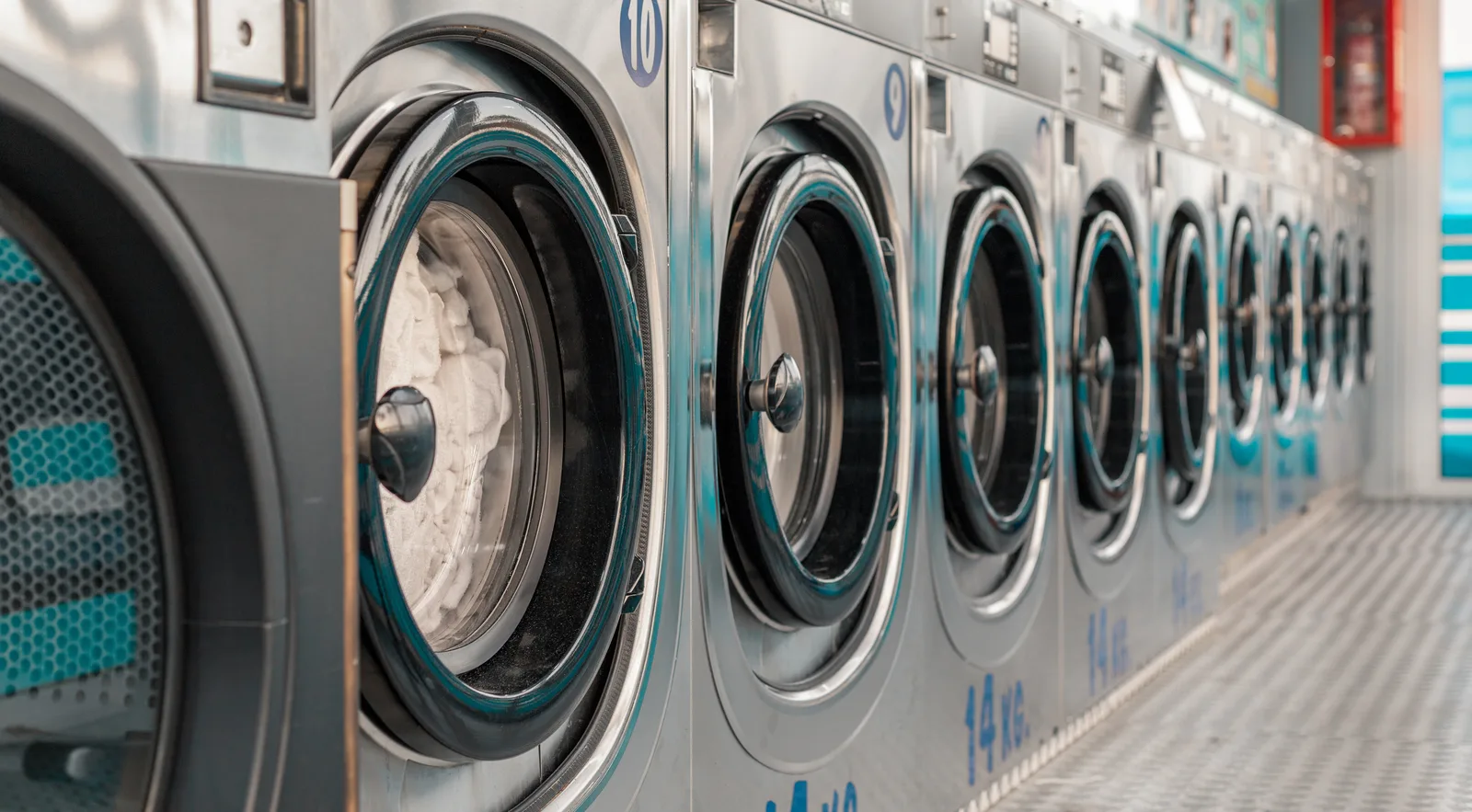

The search that brings owners here is almost always a search for a name. Which market writes laundromats. Which one is cheapest. Which one somebody else is happy with. It is a reasonable instinct and it produces a poor result, because the name is the one variable that transfers least well from one store to another.
Two laundromats a mile apart can be underwritten completely differently. One sits in a masonry building with a replaced roof, updated panel, and an attendant on duty into the evening. The other occupies a strip unit with original wiring, a water heater nobody has looked at, and card readers running unattended overnight. The same market can want the first and refuse the second, and no ranking of companies would have told you that in advance. What would have told you is knowing which of those details the underwriter is reading.
So this page is built the other way around. It explains how appetite is formed and where it breaks, what actually separates two programs quoting the same store, what a quote sheet leaves out that decides the claim, and what you need in hand before the conversation starts. Read it and you will be able to interrogate any quote you are given, including ours — which is the point.
Why a list of company names is not the answer you are looking for
It is worth being direct about the absence rather than leaving you to notice it. You will not find markets named on this page. Some of that is a rule we hold ourselves to about naming the markets we place through outside one disclosure passage. Most of it is that the list would not help you, for four reasons that hold regardless of who publishes it.
Appetite is decided on your store, not on your industry
Underwriting happens twice. A market first decides whether it wants the class at all, which is what an appetite guide publishes. Then it decides whether it wants your submission, which is a separate judgment made against construction, age, systems, hours, goods on hand, safeguards, and losses. A list of markets that write laundromats tells you only about the first decision, and every outcome you care about is settled in the second.
The same market is not one program
A single company can offer a small-business package, a middle-market package, and a specialty product, each with different forms, different valuation defaults, and different appetite. Two owners can both name the same company and hold policies that would settle the same loss differently. The company name is not granular enough to identify what either of them actually bought.
Rankings go stale faster than they are updated
Appetite moves. A market that welcomed unattended coin operations in one year restricts them after a bad run of overnight losses; another re-enters the class after a rate filing. A published list is a photograph of a market that has already moved on, and nothing on the page tells the reader how old the photograph is.
The listicles you found are selling placement, not judgment
The pages that rank insurers for a trade are usually monetized on referral, which means the ordering reflects commercial arrangements rather than fit. That does not make them dishonest, but it does make them a poor instrument for a decision that turns on the specifics of your building. The mechanism below is the part they cannot write, because it does not route anywhere.
How appetite actually works on a laundry submission
Appetite is a set of guidelines an underwriter applies to a described risk. Understanding the described risk is the whole game, because the description is built from a small number of facts that you control the accuracy of and mostly control the substance of.
Classification comes first, and it is not always obvious
Everything begins with how the operation is classed. A coin floor with no attendant, a staffed store taking drop-off, a store with an on-site dry-cleaning plant, and a store acting as a drop station for a plant elsewhere are four different classifications with four different guideline sets. A store that has quietly grown from the first into the second without telling anyone is misclassified, and a misclassified risk is the most common reason a claim gets a longer look than the owner expected.
The building decides more than the business does
For the property side of the program, the underwriter is reading construction type, year built, and the dates of the four updates that matter — roof, electrical, plumbing, and heating. A laundry puts constant humidity, heat, vibration, and water pressure through a building, so an old system in a laundry is read as older than the same system in a dry occupancy. Documented updates are the single most effective thing an owner can put in front of a market.
Water and fire are the two stories the underwriter is testing
Almost every laundry guideline reduces to two questions. Can water escape here without anyone noticing, and how long would it run? Can a fire start in the dryer bank or the electrical, and what would stop it? Supply-line braiding, automatic shutoffs, floor drains, vent-cleaning cadence, lint management, clearance to combustibles, sprinklers, and alarms are all answers to those two questions, and each one is a term the underwriter can price.
Attendance hours change the risk profile more than owners expect
An unattended store is a different risk after dark than the same store staffed. Overnight access without supervision drives theft, vandalism, misuse of machines, and the slow-water loss that runs until morning. Markets differ sharply on this, and it is one of the few characteristics where the answer materially changes which markets will look at all.
Goods belonging to other people are their own question
The moment an attendant accepts a bag, somebody else’s belongings are on your premises under your responsibility. Underwriters want the peak volume, not the average, because the loss happens on your busiest evening rather than on a typical Tuesday. An owner who can state the peak and describe how orders are tagged and reconciled is describing a controlled exposure; an owner who has never counted is describing an unknown.
Loss history is read for pattern, not for total
A single large weather loss reads differently from a run of small water claims. Frequency suggests something structural that has not been fixed; severity from a named storm suggests geography. Owners often assume any claim history is fatal. It is not — what matters is whether the file shows a cause that was addressed, and a short note explaining what changed after each loss is worth more than the loss run alone.
What stops a submission before a quote is ever written
Some characteristics are not priced, they are declined. Knowing which ones apply to you before you go to market is the difference between a placement and a month of silence, because each of these needs a market whose guidelines already account for it rather than one that has to make an exception.
- Solvent used on the premises. An on-site cleaning plant moves the risk into an environmental class with its own markets and its own forms. It is not an add-on to a laundry program.
- Legacy contamination at the site. A location that previously housed a cleaning plant carries a history that a new occupant inherits, and it is underwritten as a site question rather than an operating one.
- Original electrical in an older building. Aluminum branch wiring, fuse panels, and undocumented service upgrades are common declinations in a high-load occupancy.
- An unprotected water heater or boiler with no inspection record. Pressure vessels without documentation are read as unknown rather than as adequate.
- Unattended overnight access with no camera or alarm coverage. Several markets will not quote this at all, and the ones that will attach conditions to it.
- An open claim. Pricing an unresolved file is speculation, and most markets decline to quote until it closes.
- Loss runs that cannot be produced. A missing history is treated as a bad history, which is a harsher outcome than the real one usually deserves.
- A roof past service life in a wind or hail territory. This is a property knockout independent of anything about the laundry operation.
- Vacant or hazardous adjoining occupancies. A shared wall is a shared fire, and the neighbor is part of your submission whether you like it or not.
- A protective safeguard that exists on paper but not on the floor. Where a market has attached a safeguard warranty, an unmaintained system is worse than never having claimed one.
None of these is permanent. Each is either a fixable condition, a documentation gap, or a fact that routes the submission to a different market. What none of them is, is a reason to go quiet and hope the application does not ask.
What genuinely differs between two programs quoting the same store
This is the section to read twice. Two markets can look at one laundromat and produce quotes that appear interchangeable, while the policies behind them would settle the same fire or the same escape of water very differently. These are the terms where the difference lives.
Valuation basis on the equipment
The most consequential term on a laundry property policy and the one least likely to be discussed. Machines settled at replacement cost put comparable equipment back on the floor. Machines settled at actual cash value pay depreciated value on equipment that loses book value every year it runs, which on an older bank of washers is a fraction of what a replacement costs. Both quotes can show the same limit. Only one of them refits the store.
Whether equipment breakdown is a form or a word
Mechanical and electrical failure is not a property peril, so the base form does not respond to a motor, a control board, or a compressor that simply stops. Equipment breakdown is the form that does, and programs differ on whether it is attached at all, what it covers, whether business income follows it, and whether utility interruption off the premises is included. Read the endorsement schedule for the form, not the summary for the phrase.
How goods held for customers are covered, and how much
Belongings in your care are excluded from the general liability form by design, so they are covered either by a sublimit inside the property policy or by a separate line. The two behave differently, and the sublimit is frequently set at a default that has nothing to do with your volume. Check the limit against your busiest evening, and check whether it follows goods in transit if anything ever leaves the store.
Water-damage sublimits and what is carved out
Water is the defining laundry peril and it is also the one carriers restrict most. Programs differ on backup of sewer and drain, on seepage occurring over time, on damage from a system that failed due to wear, and on whether the cost of tearing out and replacing the wall to reach the failed pipe is paid. These carve-outs sit in endorsements and rarely surface in conversation.
Business income basis, waiting period, and how long it runs
An actual-loss-sustained form and a stated-amount form are not the same promise. Beyond that, the waiting period decides whether a short closure pays anything at all, and the extended period of indemnity decides whether income keeps flowing while customers come back after a long rebuild. A laundromat that closes for a month does not return to prior revenue on the day it reopens, and that gap is a term rather than an assumption.
Deductible structure, including the ones that are not a single number
A flat per-occurrence deductible and a separate percentage-based wind or hail deductible behave nothing alike in a storm state. There may also be a distinct deductible for water damage. Two quotes at the same headline deductible can leave you with very different exposure on the loss you are most likely to have.
Which lines sit inside the package and which sit outside
A package can bundle property and general liability while workers’ compensation, commercial auto, and any management-liability line are placed separately. Comparing a package premium against a package-plus-monoline total is a common error that makes the cheaper-looking quote the more expensive program. Compare the whole program or compare nothing.
Exclusions and warranties specific to this class
Assault and battery, protective safeguard warranties, vacancy conditions, and limitations on unattended hours all appear on laundry submissions and all change what the policy does at the moment you need it. Each is an endorsement, and each is invisible on a quote summary.
What a real comparison contains, and what a quote sheet leaves out
A quote sheet is a marketing document with a price on it. It states limits, deductibles, and a premium, and in doing so it tells you almost nothing about how a claim would be paid. A comparison worth the name asks for the documents behind it.
Ask for the schedule of forms and endorsements
This is the list of every form attached to the policy, and it is the policy’s real table of contents. Read it for the endorsements that restrict — safeguards, exclusions, sublimits, valuation changes — rather than for the ones that sound generous. If a market will not produce it before binding, that is itself information.
Ask for the subjectivities in writing
Every condition standing between the quote and bound coverage should be listed and dated. Inspections, photo sets, signed applications, proof of a maintenance program, updated loss runs. A quote with a long subjectivity list is not worse than a clean one, but it is slower, and if you are buying a store with a closing date, slower is the risk you are managing.
Ask what the market assumed that you did not tell them
Underwriters fill gaps with defaults, and a default that flatters your risk becomes a misrepresentation at claim time. Ask what square footage, attendance hours, machine count, and goods-on-hand value the quote was built on, then confirm each one. This single question catches more future problems than any other.
Put the programs on one page, line by line
Write the lines down the side and the markets across the top, and fill every cell: limit, sublimit, valuation basis, deductible, form number, and whether the line is inside or outside the package. The cells that are empty for one market and full for the other are the entire comparison, and they are invisible until you draw the grid.
Read the premium last, and read it as a difference
Once the grid is filled, the question is no longer which is cheaper. It is what the price difference is buying or giving up. A higher premium that moves the machines from depreciated value to replacement cost is not a higher premium, it is a different policy, and the comparison only becomes possible once the grid makes the difference visible.
What the quote conversation requires you to have ready
Everything a market cannot see, it prices as an unknown, and unknowns are priced conservatively. The submission below is the difference between three markets competing for your store and one market guessing at it.
- Currently valued loss runs for every line, from every carrier that has been on the risk. Order them early; they take longer to arrive than owners expect.
- A machine schedule — washers and dryers by capacity and age, fuel source, plus water heaters, boilers, and any air or steam equipment.
- Building facts — construction type, year built, square footage, and the dates of roof, electrical, plumbing, and heating updates, with invoices where you have them.
- Hours and attendance model — when the doors are open, when somebody is on duty, and how after-hours access is controlled.
- Peak customer goods on hand — an honest estimate of the value of other people’s belongings in the store at the busiest moment of the week.
- Payroll by role if anyone works for you, including part-time attendants and anyone who drives.
- A vehicle list if anything is driven for the business, including personal vehicles used for pickup, delivery, or supply runs.
- Your lease, specifically the insurance requirements, the additional-insured wording, and who is responsible for the building shell and the systems in it.
- Protective safeguards — sprinkler, alarm, camera coverage, supply-line shutoffs, vent-cleaning schedule and who performs it.
- Photographs — the floor, the dryer bank and venting, the electrical panel, the water heater, and the back of house. Photographs answer questions before they are asked.
Assemble this once and it serves every market you approach, this year and at every renewal after. It is also the fastest way to be taken seriously by an underwriter who sees incomplete submissions all day.
How to tell a program built for this trade from a general policy wearing the label
Any market can print the word laundromat on a proposal. What separates a program built for the class from a generic small-business policy sold into it is what the submission asks and what the forms contemplate. The tells are consistent.
The application asks about lint, venting, and the dryer bank
Dryer fires are the class’s signature severe loss. An application that never asks how often venting is cleaned, or who cleans it, is not underwriting a laundry.
It asks about water at the point where water fails
Supply lines, shutoffs, water heater age, floor drains, and the machines’ own hoses. A trade program asks; a retail package asks whether you have a sprinkler and moves on.
It contemplates goods belonging to other people
If nothing in the submission asks whether you hold customers’ belongings and how much, the resulting policy will treat that exposure as absent — and it will be absent, in the form as well as in the question.
Equipment breakdown is offered as a form, with its own questions
A program that understands the class knows the machines are the business and asks about their age, service history, and whether business income should follow a breakdown. A generic package treats them as contents.
It knows attendance hours change the answer
Being asked when an attendant is present, rather than only what hours the doors are open, is a reliable sign the underwriter is reading the risk rather than the class code.
It handles the state-specific parts without being told
Workers’ compensation is bought from a state fund rather than a carrier in a small number of states, and a program that operates in the class already knows which. Being the person who has to explain that to your own broker is a signal worth acting on.
The proposal talks about the store, not about the industry
A proposal that recites general facts about laundromats is describing the class. One that references your building, your machines, your hours, and your losses is describing you, and only the second one can be checked for accuracy.
Which page you need next
Choosing well means knowing which parts of the program your operation actually triggers. Start with the operating model, because it decides which lines are in play at all, then read the lines it puts on the table.
Start with the operating model
Operating model is the first underwriting fact and the first thing to be honest about, because a store that has grown into a second model without re-rating is the most common misclassification in the trade.
- Self-Service Laundromat — Start here if the store runs on coin or card with no attendant on duty for some or all of your open hours.
- Full-Service Laundromat — Start here if anyone takes an order across a counter — wash-dry-fold, drop-off, or commercial linen for another business.
- Dry Cleaner — Start here if solvent is used on site, or if a drop station sends garments to a plant. The exposure is environmental and it does not map onto the laundry lines.
Then read the lines your model puts in play
Each of these is a separate decision with its own terms to compare. The one-line test beside each is the condition that makes it your page rather than somebody else’s.
- General Liability — When somebody who does not work for you is hurt on the floor, or their belongings are damaged by something other than your handling of them.
- Property Insurance — When the building, the fit-out, or the machines themselves are damaged, and when the revenue stops while the repair happens. Equipment breakdown sits inside this line.
- Bailee’s Coverage — When a customer hands goods across the counter and something happens to them while they are in your care. This is the line behind almost every ruined-garment worry.
- Workers’ Compensation — When anyone works for you at all, including a single part-time attendant, and in the handful of states where the coverage is bought from a state fund rather than a carrier.
- Professional Liability — When you are paid for judgment rather than for machine time — alterations, restoration, specialty fabric care, or a written service commitment to a business client.
- Commercial Auto — When a vehicle is used for the business at all: pickup and delivery, a route, a supply run, or an employee driving their own car on your errand.
- Employment Practices Liability — When you have employees and the dispute is with them rather than with a customer — hiring, firing, scheduling, wages, or conduct on the floor.
Two of those routinely get confused with each other, and it is worth naming the confusion here so it does not cost you a limit. Damage to a customer’s garment while it sits in your care is a care, custody, and control exposure settled by bailee’s coverage. Professional liability answers a different question entirely — financial loss caused by judgment you were paid to exercise, with nothing physically damaged. If a ruined wash-dry-fold order is what worries you, the limit that pays it is the bailee’s limit, and buying the other line does not touch that claim.
If you would rather work from the menu than from this page, the coverage index and the operating-model index list everything, and the state pages cover the parts of the answer that change with where you trade. The blog goes deeper on individual cost drivers and forms, and who we are explains where our own view comes from.
Why Laundromat Guard Insurance
We are an independent agency built around the laundromat and dry-cleaner class, which means we do not have one product to sell you and a story about why it fits. We take the submission described above, put it to the markets on our panel whose guidelines actually match your store, and bring back the differences rather than the headline.
What that looks like in practice is unglamorous. We check the valuation basis on your machines before we discuss price. We size the goods-of-others limit against your busiest evening rather than against a default. We read the endorsement schedule, tell you which safeguard warranties you are agreeing to maintain, and say plainly when the answer is that your current program is fine and the honest move is to leave it alone.
And we do not publish a ranked list of markets, on this page or anywhere else. If that is the thing you came for, we would rather send you away able to read any quote you are handed than hand you a name that cannot know your building. Ask us anything, or start a submission and we will tell you what we would need to see.
Learn more
A few of the checks above rest on public standards and public directories rather than on anything a market tells you. These are the primary sources worth having open while you compare.
- NAIC State Insurance Departments Directory — every state department of insurance, where a market’s licensing status and complaint record can be checked directly rather than taken on trust.
- NFPA Codes and Standards — the consensus fire standards state fire marshals adopt, covering commercial dryer venting, clearance to combustibles, electrical, and sprinkler protection.
- USFA State Fire Agency Points of Contact — the directory of state fire-marshal offices that enforce those standards at your address.
- U.S. Department of Labor — Workers’ Compensation State Programs — the authority for which states run a monopoly fund, which is the fact a generic package most often gets wrong.
- EPA Dry Cleaning Facilities National Perchloroethylene Air Emission Standards — the federal rule that puts an on-site cleaning plant into a different class entirely.
- OSHA 29 CFR 1910 General Industry Standards — the worker-safety rules that apply to a staffed laundry floor and to anyone servicing the machines.
Frequently asked questions about choosing laundromat insurance
Which insurance company is best for a laundromat?
There is no answer to that question that survives contact with a second store. Appetite is decided on the characteristics of a specific building and a specific operation, so the market that writes the store down the road at a good number may decline yours on the age of its wiring or the hours it stands unattended. What is worth knowing is not a name but a mechanism: which characteristics move a laundry risk in or out of appetite, and which policy terms actually differ between two quotes. That is what this page sets out, and it is the part a ranked list of company names cannot give you.
Why does this site not publish a list of the top laundromat insurers?
Because a list would be worth less to you than it looks, and because naming markets in public content is not something an independent agency should do casually. A published ranking cannot know your building, cannot see the schedule of endorsements each market would attach to your submission, and goes stale the moment a market changes its appetite. We would rather give you the questions that make any quote legible, then place the risk with whichever market on our panel actually wants it once we have seen the details.
A market that writes laundromats declined my store. How is that possible?
Writing the class and wanting your particular risk are two different decisions. A market publishes an appetite for the class, then underwrites the individual submission against building construction and age, the state of the roof and the electrical and plumbing systems, the presence of solvent, attendance hours, the volume of goods held for customers, protective safeguards, and loss history. Any one of those can move a store outside the guidelines without saying anything about the class. A decline is a statement about a submission, not a verdict on your business.
How do I actually compare two laundromat insurance quotes?
Not by reading the premium first. Put the two quote sheets side by side and compare the valuation basis on the equipment, whether equipment breakdown is a real form or a name on a summary, the sublimit on goods held for customers and whether it reaches the busiest moment of your week, the water-damage sublimits and exclusions, the business income basis and waiting period, the deductible structure including any separate wind or hail deductible, and the list of subjectivities each market has attached. If those differ, the premiums are not comparable and putting them next to each other is arithmetic rather than analysis.
What is a subjectivity, and why does it matter more than the price?
A subjectivity is a condition the market attaches before it will bind: a photo set, an inspection, a signed application, proof that a supply-line shutoff or a vent-cleaning schedule exists, updated loss runs. Until each one is cleared, the quote is a conditional offer rather than coverage. The reason it matters is timing — a quote with several open subjectivities and a closing date next week is a very different proposition from one that binds on receipt, and the difference never appears on the premium line.
Is a business owner’s policy enough for a laundromat?
Sometimes, and it depends entirely on what is inside the package rather than on the label. The question to ask about any package is whether it contemplates the way a laundry actually fails: machines that stop working for mechanical rather than perilous reasons, water that escapes behind a wall, goods that belong to somebody else sitting on your premises overnight. A package written for a generic retail storefront rarely reaches those, and the gap is discovered at claim time rather than at quote time.
How can I tell a program built for this trade from a general policy wearing the label?
Read the application rather than the brochure. A submission built for the class asks about dryer venting and lint-cleaning cadence, the age and fuel source of the machines, water heaters and supply lines, whether an attendant is present and during which hours, the peak volume of customer goods on site, the coin or card system and how cash is handled, and whether solvent is used anywhere on the premises. An application that asks none of that is classing you as retail floor space, and it will price and pay like it.
What should I have ready before I ask anyone for a quote?
Currently valued loss runs, a schedule of machines with ages and fuel source, the year the building was built and the dates of any roof, electrical, plumbing, or heating updates, square footage, your open and attended hours, an honest estimate of the customer goods on hand at your busiest moment, payroll by role if you have employees, a vehicle list if anything is driven for the business, your lease and any insurance requirements in it, and photographs of the floor and the back of house. Everything a market cannot see, it prices as an unknown.
Does going direct to a carrier get me a better price than using an agent?
It gets you one appetite instead of several, which is a different thing from a better price. A direct quote tells you what one market thinks of your store; it cannot tell you whether a second market would have valued your machines at replacement cost instead of depreciated value, or written the goods-of-others limit at a figure that reaches your Saturday volume. The comparison is what has value, and the comparison requires more than one submission to exist.
What is the single most expensive mistake owners make when choosing?
Buying on the premium line while the valuation basis on the equipment differs between the quotes. Commercial washers and dryers depreciate, and a policy that settles them at actual cash value pays a fraction of what it costs to put a comparable machine back on the floor. Two quotes can look almost identical and differ by the entire cost of a replacement bank of machines, and nothing on the summary page tells you which one you are holding.
Put a real submission in front of the right markets
Send us what you have — loss runs, machine list, building details, hours — and we will tell you what is missing, which markets fit the store, and what the differences between their quotes actually mean.