
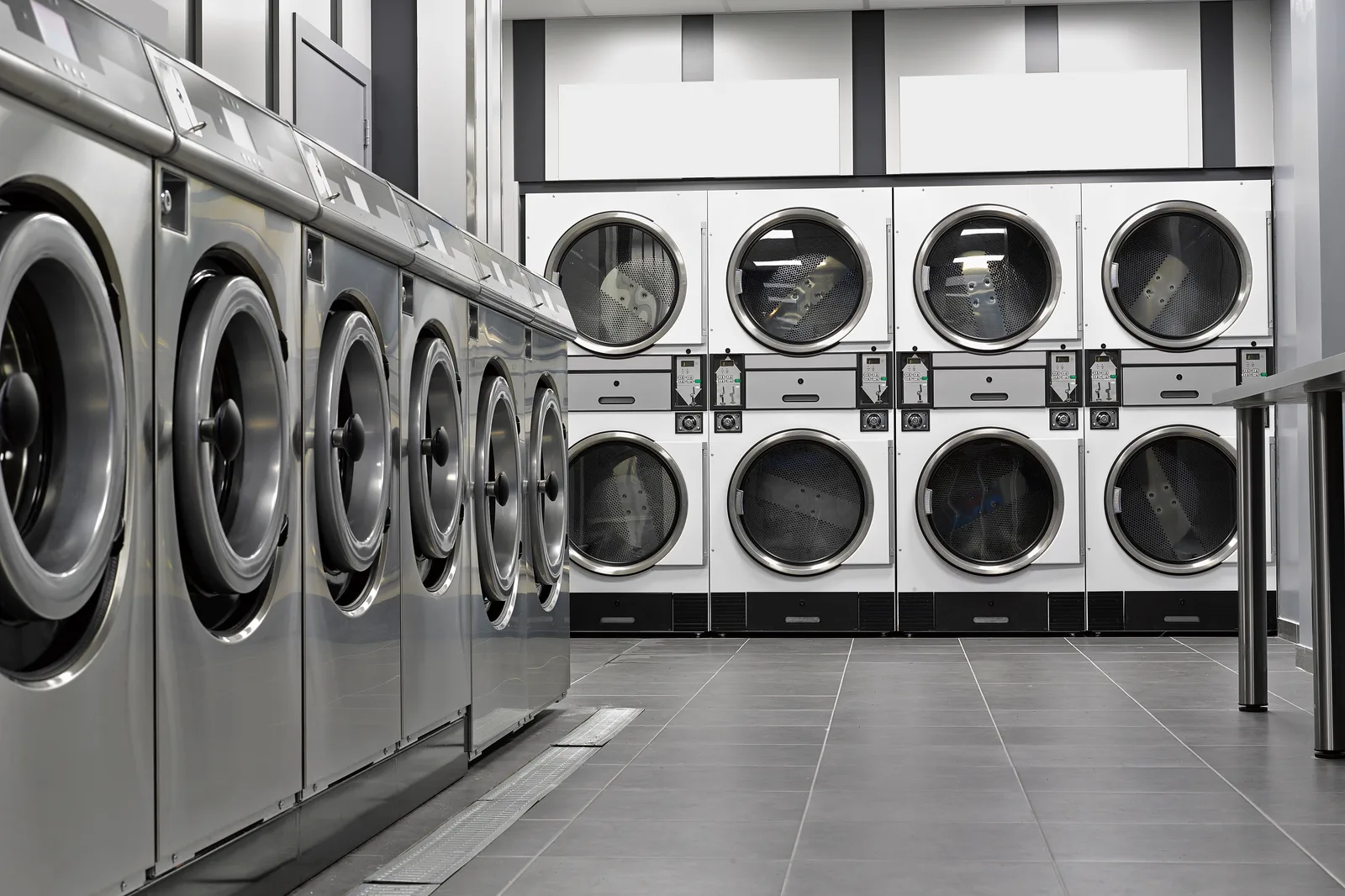

A laundromat needs general liability for customer injuries, property insurance for machines and contents, and equipment breakdown for mechanical failure. From that base, you add bailee’s coverage when you hold customers’ laundry, workers’ compensation when you hire, and commercial auto when you drive. The right program follows what your business actually does.
Start with the liability and property base
Every laundromat, whatever its size, starts from a pair of foundations: general liability and property insurance. Liability answers the claim from a customer who slips on a wet floor, catches a hand in a folding table, or is hurt by a cart. Property answers fire, water, wind, theft, and vandalism against the machines, the fixtures, and any improvements you paid for.
Those lines are the part of a program that nearly every lease and loan assumes you will carry. They also set the tone for everything that follows, because underwriters read a laundromat through its building, its machines, and the foot traffic crossing its floor. If you own the building, the property line insures the structure itself. If you rent, it insures what you put inside and the improvements the lease makes your responsibility.
Add equipment breakdown for the machines
Equipment breakdown covers the sudden mechanical or electrical failure of washers, dryers, boilers, and water heaters, which is a different trigger from the fire or storm perils in a standard property form. Because a laundromat earns its living from machines that run all day, a failed motor or control board is a likelier event than a major fire.
Treat this line as part of the property conversation, not an afterthought. A breakdown that idles a bank of dryers costs repair money and lost sales together, which is why the equipment breakdown guide pairs it with income protection. Ask how the form treats refrigerant, pressure vessels, and the control electronics inside modern commercial equipment, since those are the components that tend to fail.
Protect the income, not only the equipment
A laundromat can have excellent property coverage and still be exposed, because the building and machines are only part of what a loss takes away. Business income coverage, written inside the property program, replaces lost revenue and pays continuing expenses such as rent, loan payments, and base payroll while a covered loss keeps the doors closed. Extra expense coverage pays the added cost of reopening sooner, such as renting temporary equipment.
The important detail is the trigger. Business income generally responds only when the shutdown comes from a peril the policy covers, so the pairing of property perils, equipment breakdown, and income protection should be reviewed together. Owners who finance their equipment feel the gap fastest, since the lender expects payment whether or not the machines are running. Our business income guide walks through waiting periods and indemnity length for readers who want the mechanics.
Match coverage to your operating model
How you operate decides which extra lines matter. A self-service laundromat with no staff on site carries the base program plus business income and sometimes crime or vandalism protection for coin and card equipment. A full-service laundromat that accepts drop-off loads adds exposures that the base program was never built to answer.
The clearest divide is custody. The moment a customer hands you a bag and a claim ticket, that laundry is in your care, and a lost or ruined load is no longer a liability claim in the ordinary sense. Bailee’s coverage is the line designed for it. An owner who adds wash-and-fold to a self-service site is changing the risk profile of the business, and the policy should change at the same time, a transition our guide to wash-dry-fold services explores for commercial operations.
Real-World Scenario: A coin laundry owner starts accepting drop-off orders to build a steadier income stream. A few weeks later, a customer’s bag of delicate garments comes out of a dryer cycle damaged beyond repair. The general liability policy declines the claim because the garments were in the owner’s care. The owner pays out of pocket, then asks an agent why the policy was never updated when the service launched.
Add workers’ compensation when you hire
Workers’ compensation is a staffing trigger, not a size trigger. States generally require it when you have employees, and a laundromat with attendants, folders, or part-time help has a clear payroll exposure from the day a new hire starts. The coverage pays medical care and a share of lost wages for job-related injuries such as burns, strains, and slips.
Owners often assume that part-time or seasonal staff fall outside the requirement, and that assumption is where mistakes begin. Rules on owners, family members, and small-employer thresholds differ by state, so confirm yours with the state agency and with your agent. The workers’ compensation page explains the line, and our post on attendants and part-time staff covers the staffing questions in more detail. Federal workplace-safety rules under OSHA general industry standards also apply to the laundry floor.
Add auto and contract coverage as the business reaches outward
Any vehicle used for the business changes the picture. A personal auto policy is not built for a van that carries customers’ laundry on a route, and an accident on a delivery run can lead to a claim the laundromat policy will not touch. If you run pickup and delivery, a commercial auto policy belongs in the program.
Contracts do the same thing from the other direction. A lease may require you to name the landlord as an additional insured, and a loan may require a lender clause on the property policy. Those requests turn into specific policy wording, and it helps to read the paperwork before the quote, a process our post on landlord, lender, and city requirements lays out in detail.
Cover the fire risk most owners underestimate
Dryer lint is a persistent fire source in commercial laundries, and it deserves a place in any discussion of what a laundromat needs. Insurance pays for a fire, but the program works better when the building is maintained to the standards that fire officials expect. The National Fire Protection Association codes and standards are the consensus references, and state fire marshals, listed through the U.S. Fire Administration directory, adopt and enforce the local versions.
Underwriters ask about vent cleaning schedules because the answers predict losses. An owner with a written maintenance routine and a record of service visits is easier to place than an operator who cannot show when the ducts were last cleaned. Good housekeeping is part of the coverage story, not separate from it.
Know what the base program leaves out
Even a well-built base program has edges, and the edges are where owners get surprised. Liability excludes the owner’s own employees, who are the subject of workers’ compensation. Property excludes wear, gradual deterioration, and most flood and earth-movement losses unless you buy them separately. Neither responds to a customer’s laundry in your custody, and neither responds to an accident involving a vehicle the business drives.
None of that means the base program is weak. It means each line is built for a specific job, and the job of a good agent is to name the gaps before a claim does. When you read a quote, look for the exclusions section and ask what happens to the situations you worry about most. A short list of questions at that stage is cheaper than a long argument after a loss.
Sort the list into required, expected, and situational
Not every coverage is equal in urgency, and sorting the list helps you decide where to start. Some lines are required by law or contract: workers’ compensation when you have employees, commercial auto for registered vehicles, and whatever your lease and lender dictate. Others are expected by any sensible underwriter, including liability, property, and equipment breakdown.
Situational coverages respond to a particular feature of your business. Bailee’s coverage fits any site that holds customer goods. Business income fits any site that cannot afford a long closure. Employment practices fits a site with staff turnover and a handbook to defend. Crime and vandalism protection fits sites with coin boxes and card systems exposed to theft. Sorting your needs this way keeps an initial quote from ballooning into lines you do not need or shrinking into a program with a hole in it.
Bring the right facts to the quote conversation
A quote is only as accurate as the facts behind it. Before you call, gather the building details, the machine inventory with ages, the services you sell, your staffing pattern, any vehicles, and your claims history. Your state insurance department, listed in the NAIC directory of state insurance departments, is the authority on licensing and consumer questions in your state.
Be candid about the parts of the business that feel awkward, such as a recent water loss, a deferred maintenance item, or a service you plan to add. Underwriters adjust to known facts far more readily than to surprises that surface at claim time. Federal references on state programs, such as the U.S. Department of Labor workers’ compensation page, can help you confirm what your state expects of employers.
When you are ready, request a quote and describe the operation as it runs today and as you intend it to run next year. A program built on those facts will fit the business you actually have.