
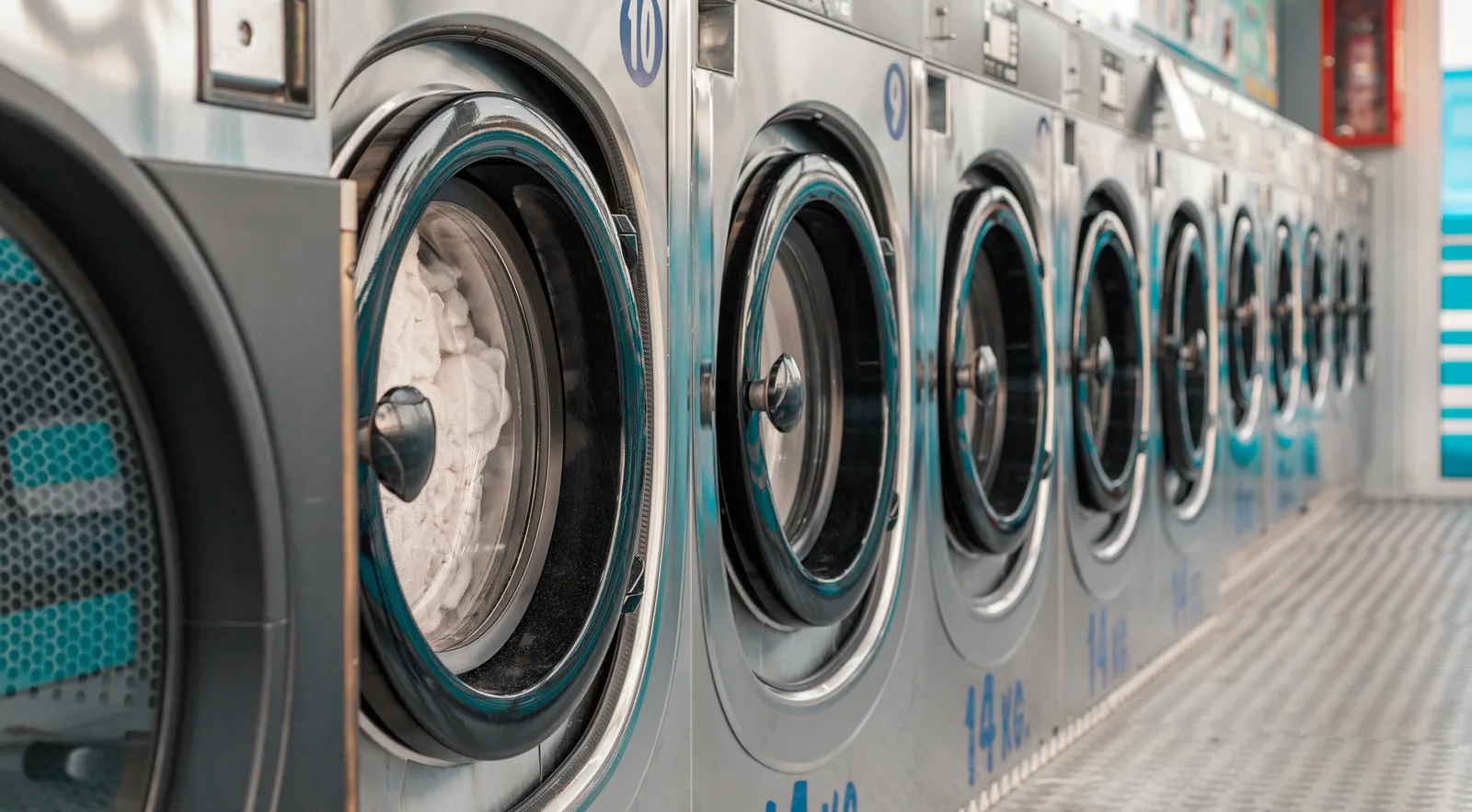

An Atlanta laundromat needs general liability sized to heavy customer traffic, property insurance that answers spring storms, bailee’s coverage for drop-off orders, and workers’ compensation for staff. Those lines carry different weight depending on where in Georgia the store sits, and metro Atlanta puts the liability line at the front.
Why metro Atlanta changes the program
Georgia concentrates a large share of its laundromats inside a metro region ringed by the Perimeter interstate and threaded by major highways. Our Georgia laundromat insurance page describes that density in detail: busy coin and full-service stores where premises liability frequency is the leading exposure rather than weather.
That shapes everything else. Underwriters rating an Atlanta store look early at floor maintenance, signage, and traffic. A store with a cleaning log, good mats, and clear wet-floor signs presents differently from a store without them, even at the same size and machine count. Our post on reducing slip-and-fall risk at your laundromat covers the controls underwriters ask about.
General liability for heavy foot traffic
General liability answers when a customer or visitor is injured on your premises or their property is damaged and you are held responsible. In a metro Atlanta store, the claim underwriters expect is a slip on a wet floor near the washers or the folding tables. The policy pays defense costs and any settlement or judgment, up to its limits.
Choose limits with the lease in front of you. Many metro shopping center leases require a stated limit and additional-insured status for the landlord. If the total required exceeds the primary policy, an umbrella fills the gap; our guide to umbrella insurance for laundromats explains how. Keep incident reports for every fall, even minor ones, because a clear record helps the defense of a claim that arrives months later.
Property insurance and the spring storm belt
Property insurance protects the building or your improvements, the washers and dryers, and the contents. Inland Georgia sits in a spring severe-weather belt that reaches from Atlanta through Columbus and Macon, and tornado and hail damage to roofs and rooftop equipment is a frequent property claim. Underwriters look closely at roof age and construction before they quote.
Equipment breakdown, usually part of the property program, pays for mechanical and electrical failure of the machines, which a storm-damaged roof can set off when water reaches control boards. Business income replaces revenue while a damaged store is closed. The base property form does not cover internal failure on its own, which is why equipment breakdown belongs in the program.
Bailee’s coverage for wash-dry-fold growth
The interstate corridors north of the Perimeter are growing fast, and new mixed-use sites often open as attended stores with wash-dry-fold service. The moment an attendant accepts an order, the customer’s laundry is property in your care, and general liability excludes it by design. Bailee’s coverage pays for a ruined or lost load.
Size the limit to the volume you actually hold at peak, and add a transit sublimit if you deliver across the metro. Revisit the limit as order counts climb, because a limit set when the service opened can fall behind quickly. Keep intake tickets complete, with the bag count and any special instructions, since the ticket is the record the insurer works from when a customer reports a ruined or missing item. Our post on adding wash-dry-fold to a self-service laundromat walks through the insurance changes that come with the service.
Workers’ compensation for attended stores
An attended store generally needs workers’ compensation once it reaches the employee threshold Georgia sets. The State Board of Workers’ Compensation administers the system, separately from the insurance commissioner’s office, and its employer information page explains the obligations. Premium is rated on attendant payroll, so headcount and wages move the cost.
The injuries are familiar: back strains from lifting wet orders, burns from hot dryer drums, and slips on a wet work floor. Classify employees accurately and keep payroll records by duty so the year-end audit matches the policy. Our post on workers’ compensation for laundromat attendants and part-time staff covers who must be included.
Real-World Scenario: A busy coin and wash-dry-fold store inside the Perimeter has a strong cleaning routine but no written log. A customer slips near the folding tables on a rainy afternoon and later files a claim. The general liability policy responds, but the defense spends weeks reconstructing what the floor looked like that day. The owner adopts a timed cleaning log and photo checks, and at renewal the underwriter notes the improvement in the file.
Pickup and delivery across the metro
Pickup and delivery has become common for metro Atlanta stores, and it adds a line the core package does not carry. Vans used for the business need commercial auto coverage, because personal auto policies usually exclude business delivery use. The laundry riding in the van needs a transit sublimit on the bailee coverage. Long routes across a congested metro mean more time on the road, which underwriters weigh when they rate the auto policy.
Keep a current list of drivers, check their records, and set a rule about whether employees may use personal cars for deliveries. Hired and non-owned auto coverage responds when an employee’s own car is used for an errand, and it is inexpensive to add. Our guide to commercial auto for pickup-and-delivery vans covers the details.
Theft, fire and the claims Atlanta owners see
Beyond slips and storms, metro stores see theft and break-ins, especially at locations open late or left unattended overnight. Coin boxes, card kiosks, and change machines draw attention, and the damage from forced entry often costs more than the money taken. Our guide to whether laundromat insurance covers theft and break-ins explains how the property policy treats each part of that loss.
Dryer fires remain the most serious property loss a laundromat can suffer. When a fire happens, property insurance pays to repair the building and replace machines, and business income replaces revenue while the store is closed. Our guide to what laundromat insurance pays after a dryer fire walks through the claim from the initial call to reopening.
Georgia’s combined insurance and fire office
Georgia runs a regulatory structure worth knowing. The Office of Commissioner of Insurance and Safety Fire holds the insurance commissioner role and the State Fire Marshal role together. The same office that reviews insurance forms and rates also oversees the fire-safety standards relevant to dryer-lint fires, so a laundromat’s fire prevention record and its insurance file sit under the same authority.
Dryer-lint buildup remains a leading cause of laundromat fires, and a documented duct-cleaning schedule is among the earliest things a property underwriter asks about. Our dryer-lint fire prevention checklist covers the routine. Beyond the state, stores operate under municipal certificate-of-occupancy, signage, and zoning rules, and owners should confirm any wastewater discharge permit before signing a lease.
Savannah and the rest of the state
Savannah and the coast carry Atlantic hurricane wind that inland metros do not face. A coastal store’s property program includes a wind consideration, and business income becomes important because a storm can close a store for repairs. Columbus and Macon lead with spring tornado and hail, while Augusta, along the interstate toward South Carolina, and Athens, with its university-driven customer turnover, are rated more on liability frequency and machine wear.
A store with a dry-cleaning side falls under the Environmental Protection Division for solvent handling and contamination, which brings a separate pollution conversation. That exposure is written separately from the laundromat lines.
Preparing an Atlanta quote
Underwriters need a clear picture of the store. Start early, because a new location, a change of ownership, or a lease signing often comes with a deadline for proof of insurance, and a rushed placement leaves little room to compare options. Gather documents before you request quotes so each agent works from the same facts. Have the address and building details, attended hours, wash-dry-fold volume, attendant payroll, machine count and age, any pickup and delivery, and prior claims ready. Describe your floor safety routine and duct cleaning schedule.
The NAIC directory of insurance departments and the NAIC glossary of insurance terms are useful references, and the SBA guide to business insurance covers risk assessment in plain terms. Our Georgia laundromat insurance page lists the markets we serve, and our guide to what insurance a laundromat needs shows the full program. When you are ready, request a quote for your Atlanta store.