
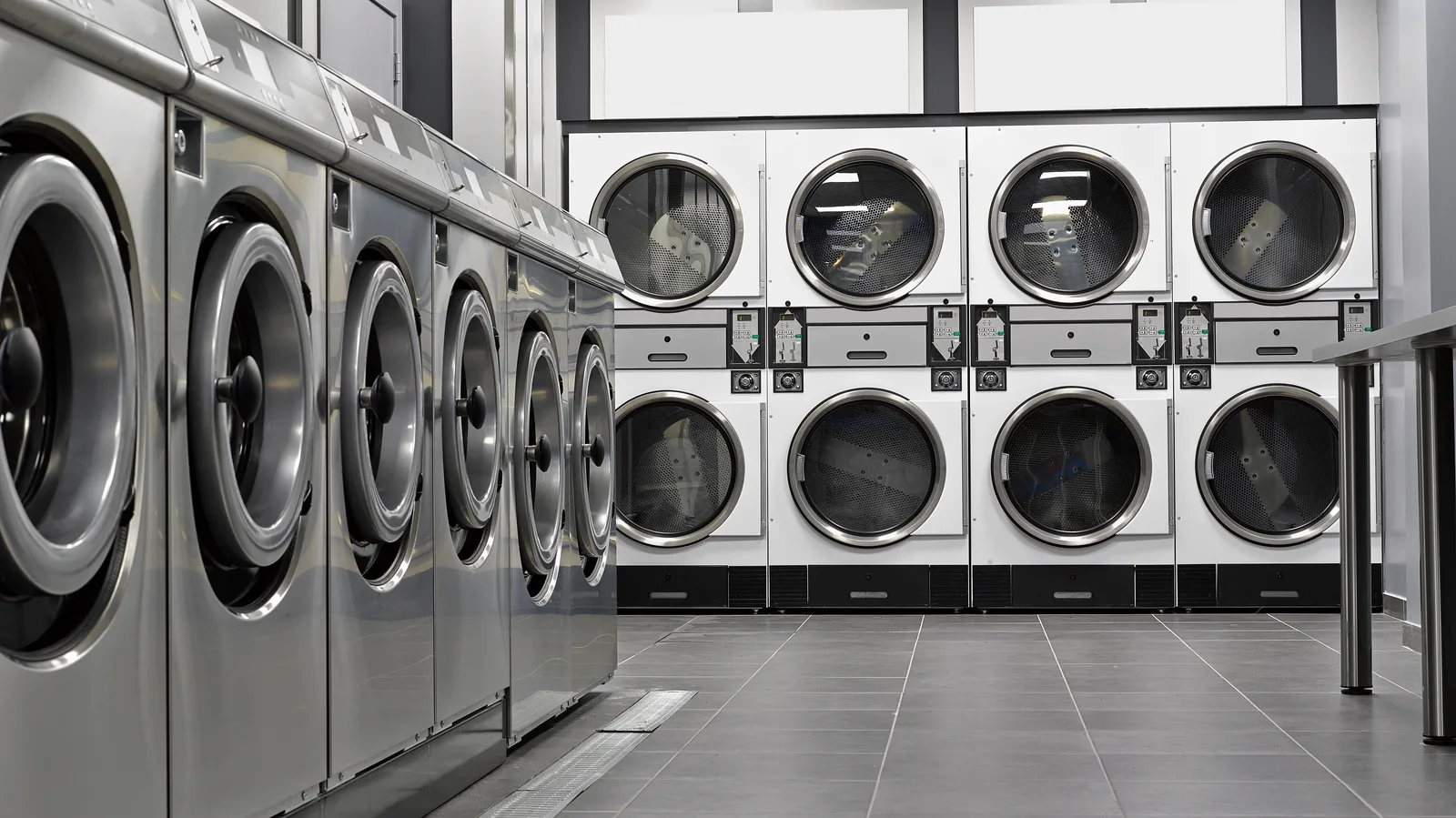

Pennsylvania laundromat insurance costs are built from the store’s own exposures, starting from a national baseline. Nationwide, a laundromat’s general liability, property and workers’ compensation insurance usually ranges from $1,000 a year for a small store to over $3,000 a year for a larger one, and a Pennsylvania store’s winters, rivers, older buildings, and staffing decide where its quote lands.
What the nationwide range includes
The range above covers the core package most laundromat owners carry. General liability answers for injuries to customers and visitors. Property insurance protects the building or your improvements, the washers and dryers, and the contents. Workers’ compensation pays medical care and lost wages when an attendant is hurt on the job.
Several coverages sit outside that core and add to the total when a store needs them. Bailee’s coverage for customer laundry, commercial auto for a pickup-and-delivery van, a separate flood policy, and an umbrella are the common additions in Pennsylvania. Our guide to how much small business insurance costs for laundromats explains what moves a store within the range and what sits on top of it. This post focuses on the factors specific to the state.
Why Pennsylvania stores land where they do
Pennsylvania has a deep laundromat market built on older building stock, and that history shapes underwriting. Our Pennsylvania laundromat insurance page describes the regional picture in detail: dense rowhouse storefront corridors in Philadelphia, hillside river-valley neighborhoods in Pittsburgh, larger strip centers in the Lehigh Valley around Allentown, a coal-region market at Scranton and Wilkes-Barre, and the Lake Erie shore at the city of Erie.
Each region brings a different mix of fire, water, and liability exposure, but they share a few drivers. Water is the biggest. The attended counter is next, because it turns customer laundry into property in your care. Payroll, machine age, and prior claims round out the picture. Underwriters price the combination, so stores of the same size in different parts of the state can receive very different quotes.
Water is the leading property driver
A hard freeze can rupture an aging supply line and flood a wash floor overnight. In Pennsylvania that is among the most common large property losses a laundromat suffers, and it is why the property line, with equipment breakdown and business income attached, carries so much weight in a program here.
River flooding is a separate problem. Stores in floodplain neighborhoods along the Allegheny, Monongahela, and Susquehanna, including river-valley sites in Pittsburgh and Harrisburg, face flood exposure that the standard property form does not cover. Flood needs its own placement. In the northwest, lake-effect snow near the city of Erie adds roof snow load to the freeze problem. Our guide to whether insurance covers a flooded laundromat walks through how flood, burst pipes, and sewer backup are treated differently.
Fire risk in attached buildings
Dryer lint is a leading cause of laundromat fires everywhere, and Pennsylvania’s building stock makes the consequence larger. In Philadelphia’s attached-rowhouse blocks, a fire that starts in a dryer duct can spread to the neighboring unit. That raises the property exposure on each side of the wall and can turn a fire into a liability claim from the neighbor.
State and local fire authorities enforce the fire code that applies to laundromats, and underwriters ask about duct maintenance early. A documented cleaning schedule is among the earliest things a property underwriter wants to see. Our dryer-lint fire prevention checklist covers the routine, and our guide to what laundromat insurance pays after a dryer fire explains how the claim side works.
Workers’ compensation for attended stores
Pennsylvania requires nearly every employer to carry workers’ compensation the moment an employee is hired, including a part-time laundry attendant. The Bureau of Workers’ Compensation, within the Department of Labor and Industry, administers the system, and the Pennsylvania workers’ compensation program page explains the employer side.
Coverage comes from a commercial insurer or the competitive State Workers’ Insurance Fund. Premium is rated on payroll, so attended hours and headcount are among the largest drivers for a full-service store. The injuries that produce claims are familiar: back strains from lifting wet orders, burns from hot dryer drums, repetitive strain from long folding shifts, and slips on a wet work floor. Our post on workers’ compensation for attended laundromats covers classification and audits.
The attended counter and customer laundry
The moment a store accepts a wash-dry-fold ticket or a drop-off bag, the customer’s laundry becomes property in your care. General liability excludes that property by design, so a ruined load, a bleach event, or a bag that cannot be matched to its ticket is paid out of pocket unless the program includes bailee’s coverage.
Size the bailee limit to the volume of orders you actually hold, and add a transit sublimit if you run pickup and delivery. Dense Philadelphia corridors with heavy drop-off traffic need a higher limit than a coin-only store. The intake ticket is the record the insurer works from, so keep it complete.
Real-World Scenario: A Pittsburgh river-valley laundromat in an older building loses a supply line during a hard January freeze. Water spreads across the wash floor overnight and reaches the electrical panel, and the store closes for repairs. Months later, spring rain pushes the nearby river over its banks and floods the same floor again. The property policy responds to the burst pipe and the business income coverage replaces revenue while the store is closed. The river flood is a different matter: only the separate flood policy the owner added after the winter loss responds to it.
Lehigh Valley, coal-region and Erie stores
Outside the largest cities, the drivers shift. The Lehigh Valley around Allentown supports larger strip-center laundromats with extended attended hours and pickup-and-delivery routes serving commuters and warehouse workers. Those stores carry higher machine counts, which raises the equipment breakdown exposure, and their routes add a commercial auto policy plus a transit sublimit on the bailee coverage for laundry riding in the van. Our guide to commercial auto for pickup-and-delivery vans covers the vehicle side.
The coal-region market at Scranton and Wilkes-Barre runs neighborhood laundromats in late-industrial buildings that predate current electrical and fire-suppression standards. Dated electrical service feeding heavy dryer loads and older vent runs concentrate the dryer-lint fire exposure, so an underwriter will ask about wiring updates and duct cleaning before quoting. On the Lake Erie shore, stores in the city of Erie serve a renter-heavy population and face some of the heaviest seasonal snowfall in the state, which keeps roof load and freeze-burst at the center of the property program. Harrisburg stores along the Susquehanna combine a river flood footprint with hard groundwater that builds scale in water heaters and boilers.
Regulators and documents Pennsylvania owners deal with
The Pennsylvania Insurance Department regulates insurers and the commercial policy forms used for laundromat programs, and it licenses the agents and brokers who place coverage. Its business insurance needs page is a reasonable starting point for owners. The NAIC directory of insurance departments links every state regulator if you operate across state lines.
If your building once housed a dry cleaner, expect questions about perchloroethylene history, which the Department of Environmental Protection oversees. Leases in multi-tenant and attached buildings usually require additional-insured status and certificates for the landlord. The state also expects registration for sales and use tax on vending and retail sales. These are operating requirements rather than insurance requirements, but they confirm the business structure an underwriter reviews.
What owners can do about the price
Several levers belong to you. Winterize supply lines and keep a record of it, especially in older buildings. Keep a dryer duct cleaning log, wet-floor procedures, and machine maintenance records. Choose deductibles you can afford, and describe your services accurately so the store is classified correctly from the start.
Ask your agent to separate the core package from the additions on every quote, so you can see what flood, bailee, and auto add. Our guide to why laundromat insurance costs more in cold-climate states explains the regional load, and our post on equipment breakdown coverage covers the machines. The SBA guide to business insurance is a plain reference on assessing risk before you choose limits.
Bringing it together for a Pennsylvania quote
A useful quote request describes the store the way an underwriter needs to see it. Include the region and building type, whether the site is attended, wash-dry-fold volume, attendant payroll, machine count and age, any pickup and delivery, and prior claims. Mention flood zone status and any dry-cleaning history in the building.
The NAIC glossary of insurance terms is handy for the vocabulary in a quote. Our Pennsylvania laundromat insurance page lists the markets we place coverage in across the state. When you want a program built to your store and compared against the nationwide range, request a quote.