
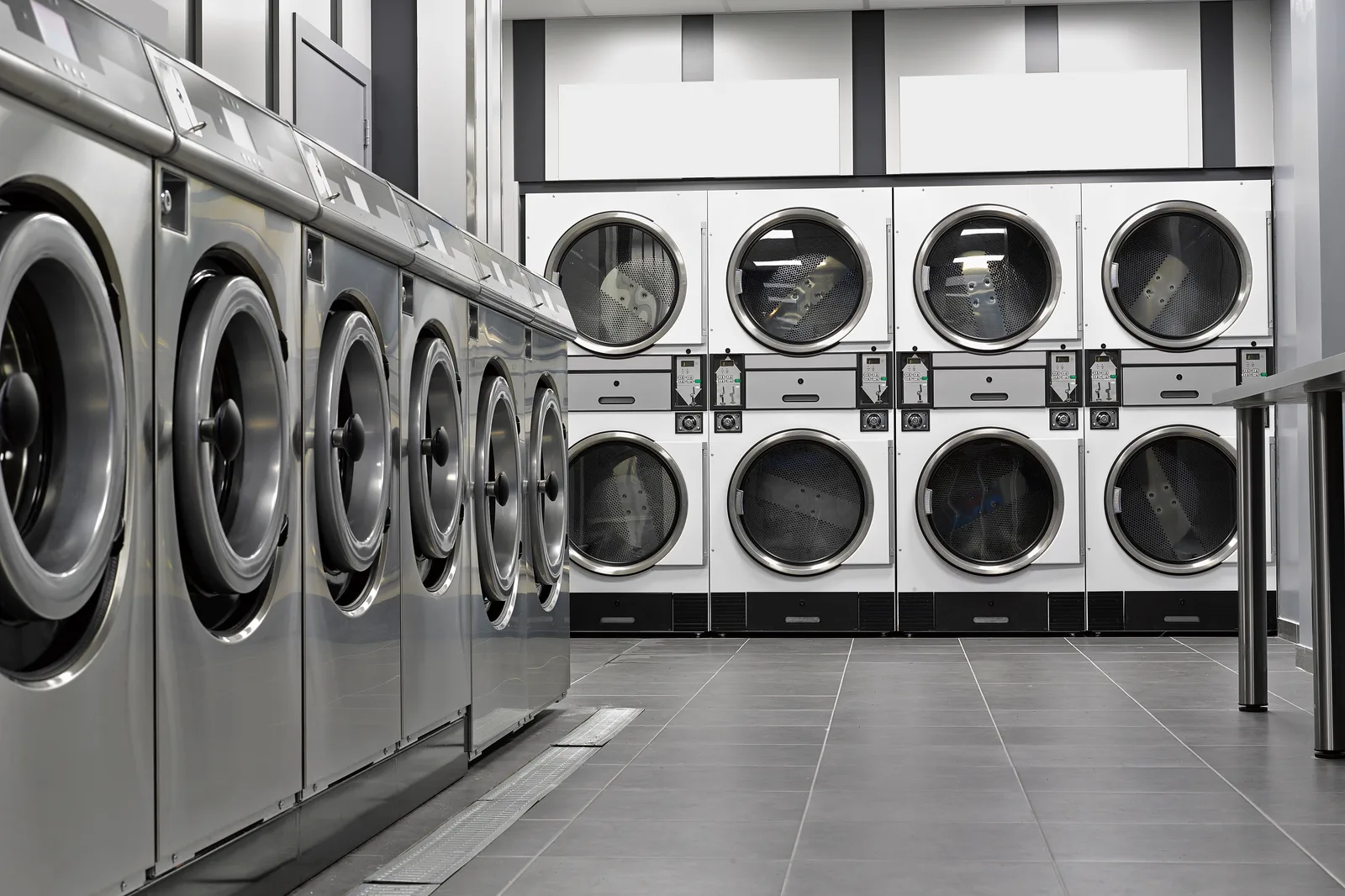

Opening a new laundromat calls for insurance in stages, starting before you sign the lease and finishing before anyone on staff clocks in. The sequence runs from the lease’s insurance clauses, through coverage for the build-out and the equipment, to property, general liability, and business income on opening day, then workers’ compensation before anyone is hired and commercial auto if you run pickup and delivery.
Before you sign the lease
The lease is the earliest insurance document you will deal with. It usually spells out the coverage you must carry, the limits, who must be named as additional insured, whether a waiver of subrogation is required, and who insures the building versus your improvements. Those terms are easier to change before signing than after.
Send the draft lease to your agent and ask which requirements are standard and which are unusual. Our guide to laundromat business insurance requirements explains the clauses landlords and lenders typically use. Pay special attention to who is responsible for plumbing, drains, and venting you install, because a laundromat adds more of those than most tenants.
Protecting the build-out
A laundromat build-out is a construction project. Plumbing, drains, gas lines, dryer venting, electrical service, and flooring go in before any machine arrives. While that work is underway, fire, theft of materials, vandalism, or a water leak can set the project back. Builders risk or an installation coverage form is designed for this period.
Decide who carries the coverage. Sometimes the general contractor insures the project, sometimes the tenant does, and sometimes the landlord’s policy picks up part of it. Get the answer in writing and confirm that the coverage ends only when your permanent property policy begins. A gap between the end of construction coverage and the start of the store’s policy is a common and avoidable mistake.
Certificates from every contractor
Plumbers, electricians, and installers working in your space should each carry general liability and workers’ compensation. Ask for a certificate of insurance before they start and, where the contract allows, ask to be named as an additional insured on their liability policy.
This protects you in practical ways. If a contractor’s worker is hurt on your site and the contractor has no coverage, the claim can come back to you. If their work causes a fire or leak that damages the building, their liability policy is the place to start. Keep the certificates with the contracts, and check the dates so coverage is active for the whole job.
Equipment financing and lender requirements
Many owners finance washers, dryers, and payment systems. The lender or lessor will usually require property coverage on that equipment and ask to be named as loss payee, so insurance proceeds for a damaged machine go toward the loan. Some lenders need a certificate before they release funds.
Send the financing agreement to your agent early. Confirm that the equipment is insured from the moment it is delivered, not only after the store opens, and that the limit reflects what it would cost to replace the machines. Our post on equipment breakdown coverage covers the separate question of mechanical and electrical failure.
The core policies on opening day
By opening day, the store needs its permanent program in place. Property insurance covers your improvements, machines, and contents. General liability responds when a customer is hurt or their property is damaged and you are held responsible. Business income replaces lost income when a covered loss closes the store. Many owners buy these together in a package, which our post on the business owners policy for laundromats explains.
On cost, nationwide, a laundromat’s general liability, property and workers’ compensation insurance usually ranges from $1,000 a year for a small store to over $3,000 a year for a larger one. Where a new store lands depends on its size, equipment, location, staffing, and services. Our guide to how much small business insurance costs for laundromats walks through what moves the price.
Real-World Scenario: A new owner signs a lease, hires a contractor, and schedules equipment delivery for the week before opening. The store’s property policy is set to start on opening day. Shortly before, a dryer vent installation sparks a small fire that damages new machines still on pallets. The contractor’s policy disputes the claim, and the store’s own policy has not started. Binding property coverage on the delivery date, rather than opening day, would have closed that gap.
Coverage for services you add at launch
The services you offer shape the rest of the program. If you take wash-dry-fold or drop-off orders, you will hold customers’ laundry, and bailee’s coverage protects it. If you plan pickup and delivery, vehicles used for the business need commercial auto, because a personal auto policy usually excludes business deliveries.
If you plan to run unattended hours or a card payment system, those choices affect underwriting too. Our posts on insurance for around-the-clock and unattended laundromats and cyber liability insurance for laundromats explain the questions insurers ask.
Before anyone is hired
Workers’ compensation is governed by state law, and many states require it from the start of hiring, including part-time attendants. Bind the policy before anyone starts work. The Department of Labor list of state workers’ compensation officials leads to the agency that sets the rule where you operate.
Once you have staff, employment practices liability becomes worth considering, since hiring, scheduling, and discipline can lead to claims. The EEOC small business resource center is a reference for employer obligations, and our post on getting EPLI coverage for a laundromat with employees covers the buying side.
Limits and deductibles for a store with no history
A new laundromat has no loss record, so insurers rely on the application, the build-out details, and the owner’s experience. That makes the information you provide unusually important. Describe the construction, the age and type of each machine, the dryer fuel source, the venting design, the security system, the hours, and the services. Gaps in the application tend to be filled with cautious assumptions.
Choose limits based on what it would cost to rebuild your improvements and replace every machine at current prices, not on what you paid for used equipment. Pick deductibles you can pay from cash on hand without straining the business in its early months. A higher deductible lowers the premium, but a new store’s reserves are usually thin, so the balance matters more than it will later.
Plan for the losses a new store sees most often. Fire from lint, water from a failed hose, theft from coin boxes, and slips on wet floors are the familiar ones. Our posts on what laundromat insurance pays after a dryer fire and whether laundromat insurance covers theft and break-ins explain how those claims are handled.
Opening a store you bought versus building new
Buying an existing laundromat and opening a new store share most of these steps, but the risks differ. A purchase brings an existing building, existing machines, and a claims history you inherit in practice if not on paper. A new build brings construction risk and no loss history at all.
If you are buying rather than building, our pre-purchase insurance checklist covers due diligence on the seller’s coverage and claims. For either path, the SBA guide to business insurance is a useful general reference, and your state insurance department, listed in the NAIC directory of insurance departments, can confirm that an agent or insurer is licensed.
Renewal and the end of the startup period
The coverage you bind at opening is built on estimates: expected sales, expected payroll, and expected services. After the policy period, the insurer may audit actual payroll and sales and adjust the premium up or down. Keep clean records from opening day so the audit is quick and the result is fair.
Plan a review with your agent before your earliest renewal. By then you will know your real hours, staffing, order volume, and any losses. That is the time to adjust limits, revisit deductibles, and add coverage for services you started after opening, such as a delivery route or a vending area. A program that matched the business on opening day can drift out of date within months.
In short, bring this list to your agent: the draft lease, the contractor agreements and their certificates, the equipment financing documents, the planned opening date, the services you will offer, your expected staffing, and any vehicles. With those in hand, the program can be built in the right order so nothing is left uninsured between stages.
Owners comparing water risk for the new space can read whether insurance covers a flooded laundromat, and those planning several stores can read multi-location laundromat insurance. When you are ready to put the opening program together, request a quote and tell us your timeline.