
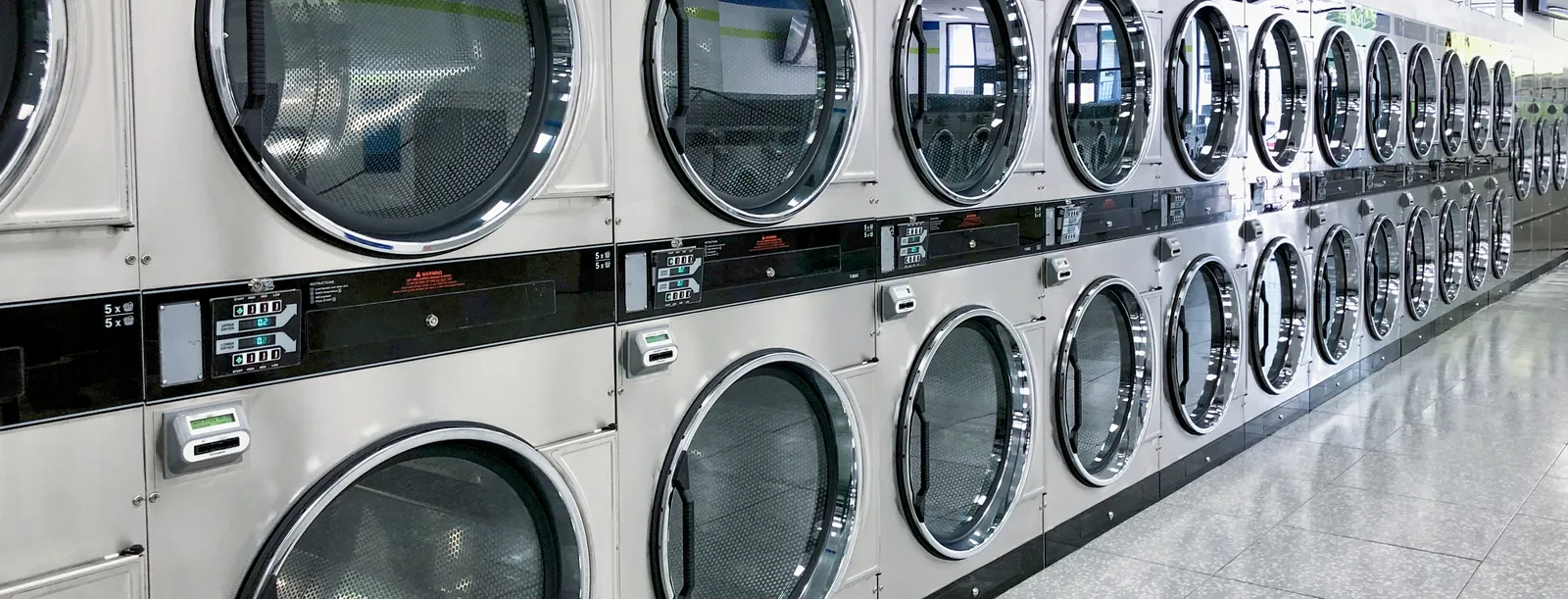

A Washington dry cleaner places general liability, property with equipment breakdown, garment coverage, and pollution protection with insurers, adds earthquake separately in the Puget Sound metro, and buys workers’ compensation from the Department of Labor and Industries rather than an insurance company. Those layers make a Washington program look different from a garment-care program in most other states.
The layered structure of a Washington program
Most of the program comes from commercial insurers. General liability responds when a customer or visitor is injured at the counter. Property insurance covers the building or your improvements, the cleaning and finishing equipment, and contents, with equipment breakdown for boilers, presses, and machines and business income for revenue lost during a covered closure. Coverage for customers’ garments, often written as bailee’s coverage, pays when clothing in your care is damaged, lost, or stolen.
Other pieces sit outside that package. Earthquake is excluded from the base property form and has to be added as its own layer, and workers’ compensation comes from the state fund. Pollution coverage for solvent is written to the system in use. Our dry cleaner insurance page describes the core program, and our Washington state page explains the state structure.
Workers’ compensation through Labor and Industries
Washington is an exclusive-state workers’ compensation jurisdiction. A business with employees buys the coverage from the Department of Labor and Industries, the state fund, and only qualified employers can self-insure. You cannot buy it from an insurance company. The agency’s page on whether you need a workers’ comp account is the place to confirm your obligation.
That structure splits the program. Your agent places the commercial lines with insurers and coordinates the state-fund account for staff injuries, which the state rates on payroll and risk class as a separate cost. Dry-cleaning work produces familiar injuries: burns from presses and steam, strains from lifting and repetitive finishing work, and slips on wet floors. Our post on workers’ compensation insurance for dry cleaners explains the injury profile in more depth.
Earthquake in the Puget Sound metro
The Cascadia subduction zone offshore and the Seattle fault beneath the urban core put a real earthquake exposure under Seattle, Tacoma, and Bellevue. Standard property forms exclude the peril. A plant there needs shaking addressed separately for the building, the anchored cleaning and finishing equipment, and the income lost during a long rebuild.
Location within the metro matters. Softer South Sound soils near Olympia can amplify shaking, so the earthquake layer is sized to the local soil profile. Bellevue and the Eastside carry some of the highest commercial rents in the state, which pushes up the business income limit needed to cover rent during a closure. Ask how the earthquake deductible is calculated, since it usually works differently from the standard property deductible.
Solvent, pollution, and the Department of Ecology
A dry-cleaning plant carries solvent and pollution exposure that a coin laundry does not. In Washington, environmental oversight for dry cleaners runs through the Department of Ecology, and federal solvent-emission rules apply where solvent is in use. Standard general liability excludes pollution, so a plant needs pollution coverage underwritten to its actual cleaning system.
As general dry-cleaning practice, insurers ask which solvent you run now and which ones were used on the site before, how waste is stored and removed, and how the machines are maintained. The EPA dry cleaning sector page gathers the federal rules for the trade. Our post on pollution coverage for dry cleaners explains how the coverage responds, and our post on wet cleaning and eco dry cleaner insurance covers what changes when a plant moves away from traditional solvent.
Garments in your care
Customers hand over garments that matter to them, and a damaged or lost item is the claim a dry cleaner sees most often. Garment coverage should say how an item is valued, whether goods in transit and at an outside processor are covered, and how a fire or theft that affects many customers at once is handled. The per-piece value at a dry cleaner usually runs higher than at a laundromat, which affects the limit you need.
As a matter of general practice, the intake ticket is your record. Note the item, visible damage, and any stain or care instructions at drop-off. Our post on what happens when a dry cleaner ruins a customer’s garment walks through the claim from the counter to the adjuster.
Real-World Scenario: A Seattle dry cleaner runs a plant with a boiler, presses, and a cleaning machine in an older building near the urban core. The owner reviews the renewal and notices that the property policy excludes earthquake and that no pollution coverage is listed. Working with the agent, the owner adds an earthquake layer sized to the building and anchored equipment, places pollution coverage written to the solvent system, and confirms the staff account with Labor and Industries is current. None of those gaps would have shown up until a claim.
Freeze risk in Eastern Washington
Spokane and other eastern sites carry a continental freeze profile that the maritime west side largely avoids. A frozen supply line or boiler line can flood the floor and close the plant, producing a property loss along with a business income loss. Keep heat on in back rooms, insulate exposed lines, and ask how the policy treats freezing when heat is not maintained.
Fire safety and local rules
Fire prevention standards in Washington are administered through the State Fire Marshal’s Office within the Washington State Patrol, alongside local fire departments. Dryer and press areas, lint, and solvent storage are the fire questions an underwriter raises early, and documented maintenance helps. Local business licensing, zoning, and signage rules vary across the Puget Sound cities and the eastern counties, so check with your city before opening or expanding.
Combined laundromat and dry-cleaning operations
Some Washington businesses run a laundromat and a dry-cleaning counter under the same roof. The Washington state page notes that a combined operation carries solvent and pollution exposure a coin laundry does not, and that the per-piece value of garments at a dry cleaner runs higher than at a laundromat. That changes the program in practical ways.
The pollution coverage has to match the solvent system actually on site, and the garment limit has to reflect higher-value items, not just bags of household laundry. If the dry cleaning is sent to an outside plant, the exposure shifts toward garments in transit and at the processor, and the business should confirm that its coverage follows the clothing while it is away. Describe the operation fully when you apply. An application that lists only the laundromat side can leave the dry-cleaning exposure uninsured even though the services share an address.
Staffing changes too. A dry-cleaning counter usually adds pressers, spotters, and counter staff whose work differs from a laundromat attendant’s, and workers’ compensation is usually rated by the kind of work each person does. Report each role accurately so the premium matches the work and a later audit does not produce a surprise bill. Update the account whenever duties or headcount change during the year.
Our full-service laundromat page covers the laundry side of a combined store, and our post on tailor and alterations shop insurance for dry cleaners covers another service many counters add.
Who regulates the program
The Washington State Office of the Insurance Commissioner oversees rate filings, insurer licensing, and consumer complaints for commercial lines, and its business insurance pages explain how coverage works. The OSHA dry cleaning overview is the federal starting point on the trade’s workplace hazards, and the NAIC glossary of insurance terms explains the vocabulary in a quote.
What moves the price
The commercial premium follows the business: plant or drop store, solvent in use and site history, equipment value, building construction and seismic location, garment volume, and claims. The earthquake layer and pollution coverage are priced on their own terms, and workers’ compensation is a separate state-fund cost. Our post on how much small business insurance costs for dry cleaners gives a nationwide range for the core lines, and our guide to commercial property insurance for dry cleaners explains the property side.
Owners comparing other markets can read our Salt Lake City dry cleaner guide, which covers another seismic region. When you want a Washington program built in the right layers, request a quote and tell us your location, solvent system, equipment, garment volume, and payroll.